
贵阳
Guiyang
Guiyang is a cool, mountainous provincial capital with a close proximity to forested ridges, karst water systems, Ming Dynasty landmarks and vibrant Guizhou culinary traditions. It is not only a transportation base for traveling to various places in Guizhou, but it is also worth a separate stop: the urban area is suitable for visiting museums and riverside monuments, while Qingyan or Tianhetan require half a day each.
At a glance
- Stay
- 2–2 days
- Best seasons
- Apr–Oct
- Airports
- Rail or road access
- Region
- Southwest China
Last updated: 9/29/2026
First visit
Arrive and settle in Guiyang
Start with arrival and where to stay, then choose your sights. Recheck transport and accommodation details before booking.
Getting there+
Guiyang North is the high-speed hub: Chongqing two hours, Kunming two and a half, Changsha two and a half, Chengdu three, Guilin two, Guangzhou four. Metro lines 1 and 2 connect it, the old Guiyang station and Longdongbao (KWE) airport, which is 10 kilometres from the centre.
Rail tip. Your passport is your ticket. Book on 12306 or Trip.com, then go straight to the gate. See Getting around. The Trip.com link earns us a small commission at no cost to you (how that works).
Stay online. Google, WhatsApp and Instagram are blocked on Chinese networks; a travel eSIM that roams gets around it. Install one before you fly — Saily takes US$5 off a first plan with the code CHINA. See Staying online. The code earns us the same amount in Saily credits, at no cost to you (how that works).
Where to stay+
Nanming riverside
南明河
The old centre around the Jiaxiu Tower, with the night market a walk away.
Hotels between Qianling Park and the river. Everything central is within twenty minutes on foot, and metro line 1 runs through.
first visitfoodconvenience
Qingyan
青岩古镇
The stone garrison town south of the city. A night here is the slow option.
Guesthouses inside the walls. Day visitors leave by five; the town is yours after that.
atmospherequiet
Booking. Compare hotels in Guiyang on Trip.com, filtered to its China travel essentials list: English-speaking staff, foreign cards, guest rating 8 or higher. See Where to stay. Booking through this link earns us a small commission at no cost to you (how that works).
Overview+
HUNANGUANGXICHONGQINGSICHUANYUNNANGuiyang
Guizhou is the wettest, greenest, most mountainous province in the south, and its capital is a compact, friendly city with a river through the middle, macaques in the park, and a night market that runs on sour and spicy. The high-speed lines have made it easy to reach; the villages beyond are why you come.
Qingyan, half an hour south, is a Ming garrison town of stone walls and lanes. Huangguoshu, two hours west, is the biggest waterfall in Asia. Xijiang, three hours east, is the largest Miao village in the country, a hillside of wooden houses that lights up at night. Each is a day, and Xijiang is better with a night.
Summer in Guiyang is mild while the rest of the south bakes. Winter is grey and damp. Bring a raincoat in any month.
Where next?
Save places you like, then use your saved list to build a trip.
Practical travel guides
Places to explore in Guiyang
Huangguoshu Waterfall
黄果树瀑布
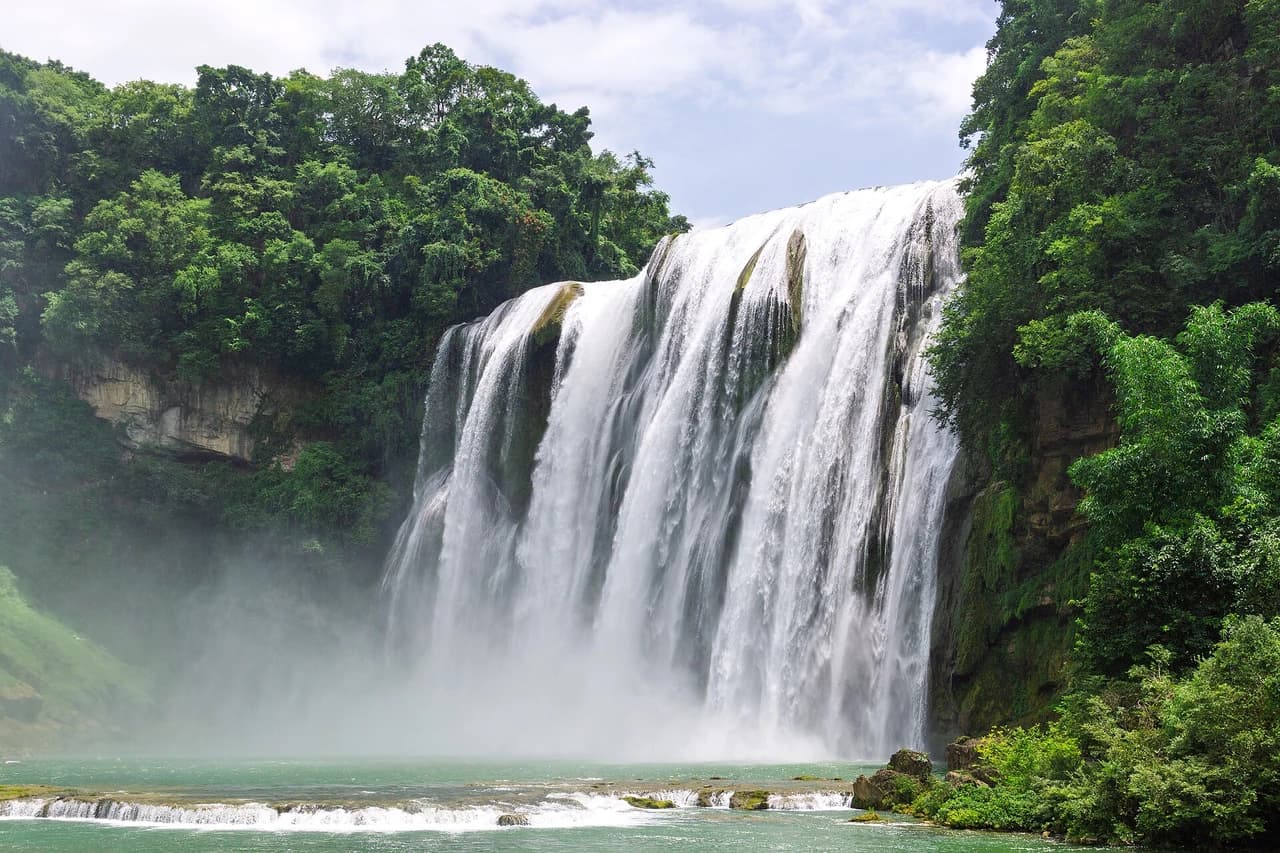
Huangguoshu Waterfall is located in Anshun City, Guizhou Province, not in Guiyang City. The scenic spot consists of the Great Falls, Tianxing Bridge and Doupo Pond, and needs to be arranged according to the cross-city itinerary.
Qianling Park
黔灵山公园
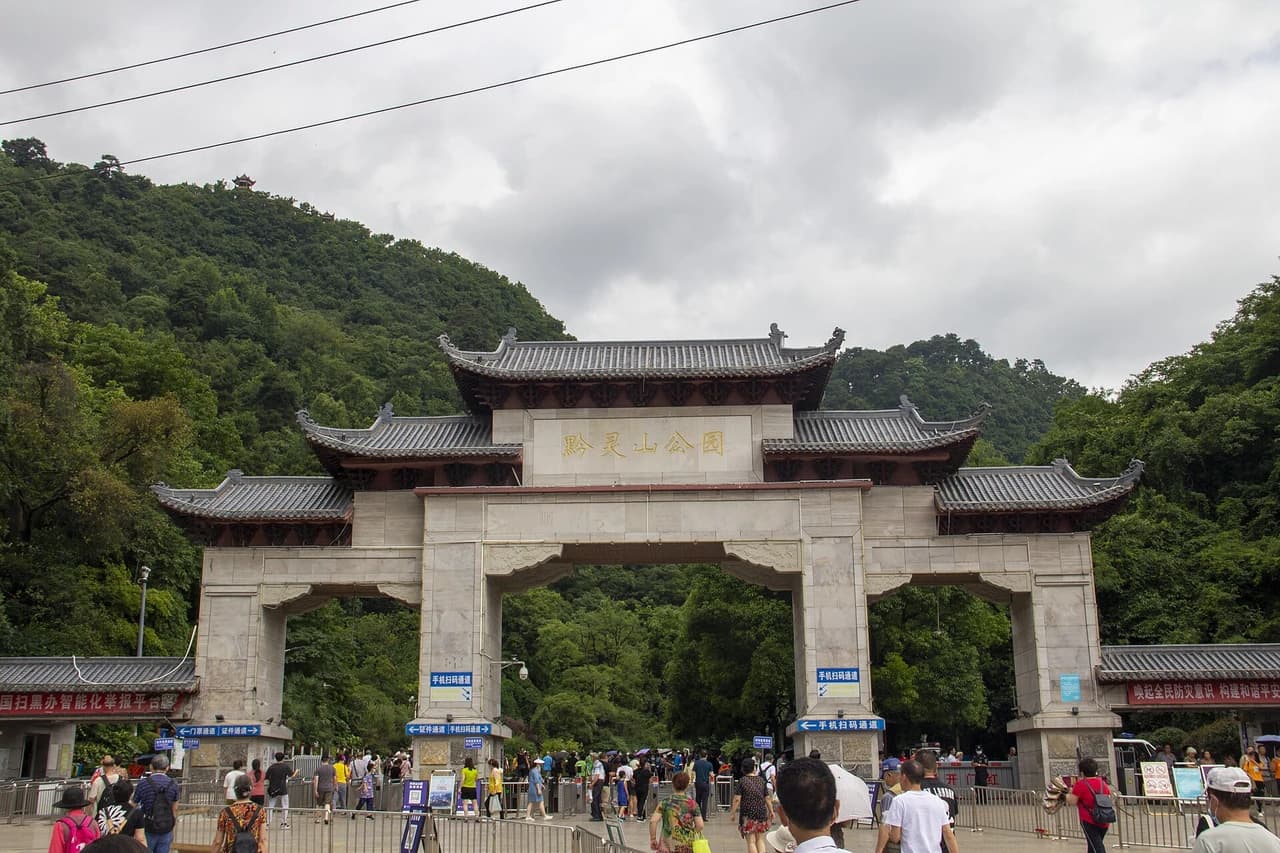
Qianling Mountain Park is a large forest park in Guiyang City, a 4A scenic spot, and is known as the "No. 1 Mountain in Southern Guizhou". There are about a thousand wild macaques in the park, as well as free giant panda pavilions (two giant pandas, Xingbao and Haibang), Hongfu Temple (the first temple in Guizhou, 1672), Qianling Lake and Qilin Cave (where Zhang Xueliang and Yang Hucheng were once imprisoned).
Qingyun Road night market
青云路夜市
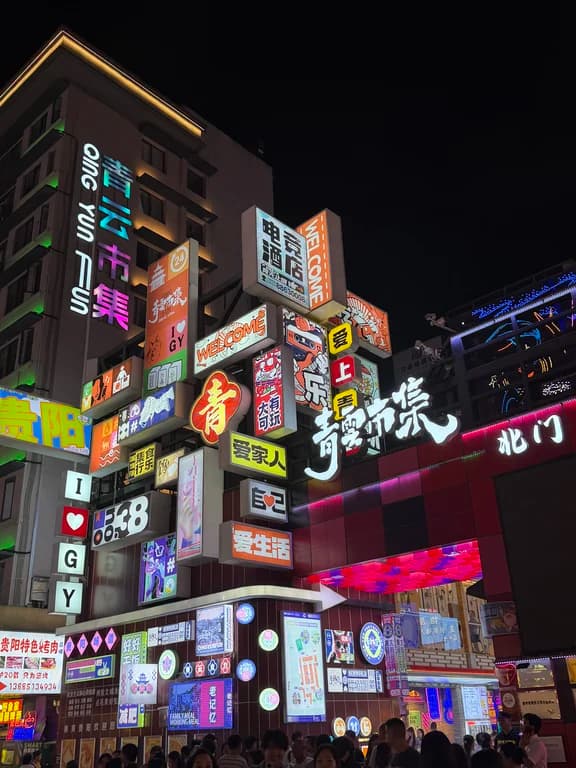
Qingyun Road Night Market (Qingyun Market) was renovated from an old knitting factory. It retains industrial relics such as red brick walls and old machine tools, and injects trendy toys, neon and cultural creativity to create "Old Guiyang, New Tune". It has won the title of a national-level night-time cultural tourism consumption cluster and a national-level tourist and leisure district. It brings together authentic snacks and original cultural creations such as silk dolls, crispy duck, beef in sour soup, and ice syrup.
Jiaxiu Tower
甲秀楼
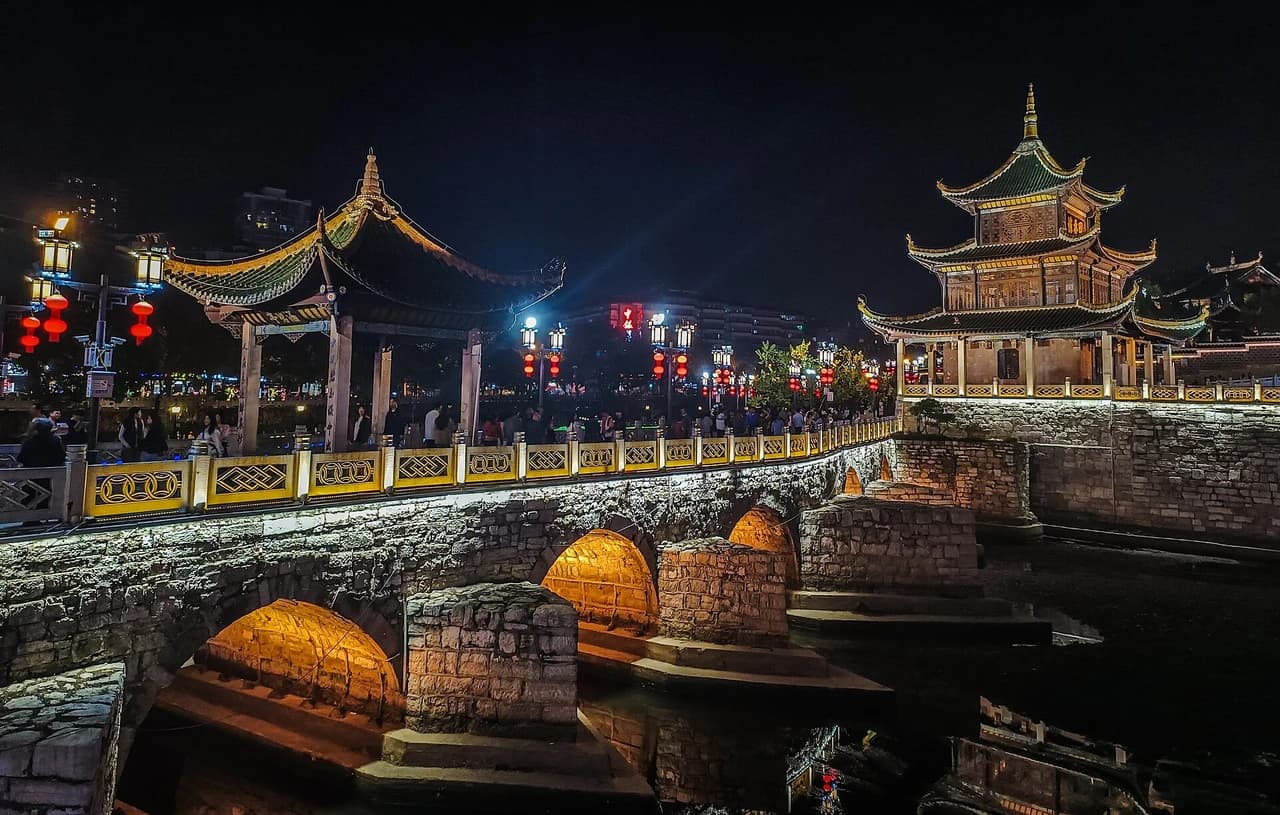
Jiaxiu Tower was built in the 26th year of Wanli in the Ming Dynasty (1598). It is located on the Aoji Rock in the Nanming River. It means "Kejia Tingxiu". It is a Guiyang city landmark and a national key cultural relics protection unit. It is a three-story wooden structure with three eaves and four corners and a pointed roof, about 20 meters high. The floating jade bridge connects the two sides of the bank, with Bitan under the bridge. The Cuiwei Garden on the south side is a Ming Dynasty garden. There are 206 long couplets hidden in the building. Guizhou talents emerged in large numbers during the Ming and Qing dynasties.
Xijiang Miao Village
西江千户苗寨
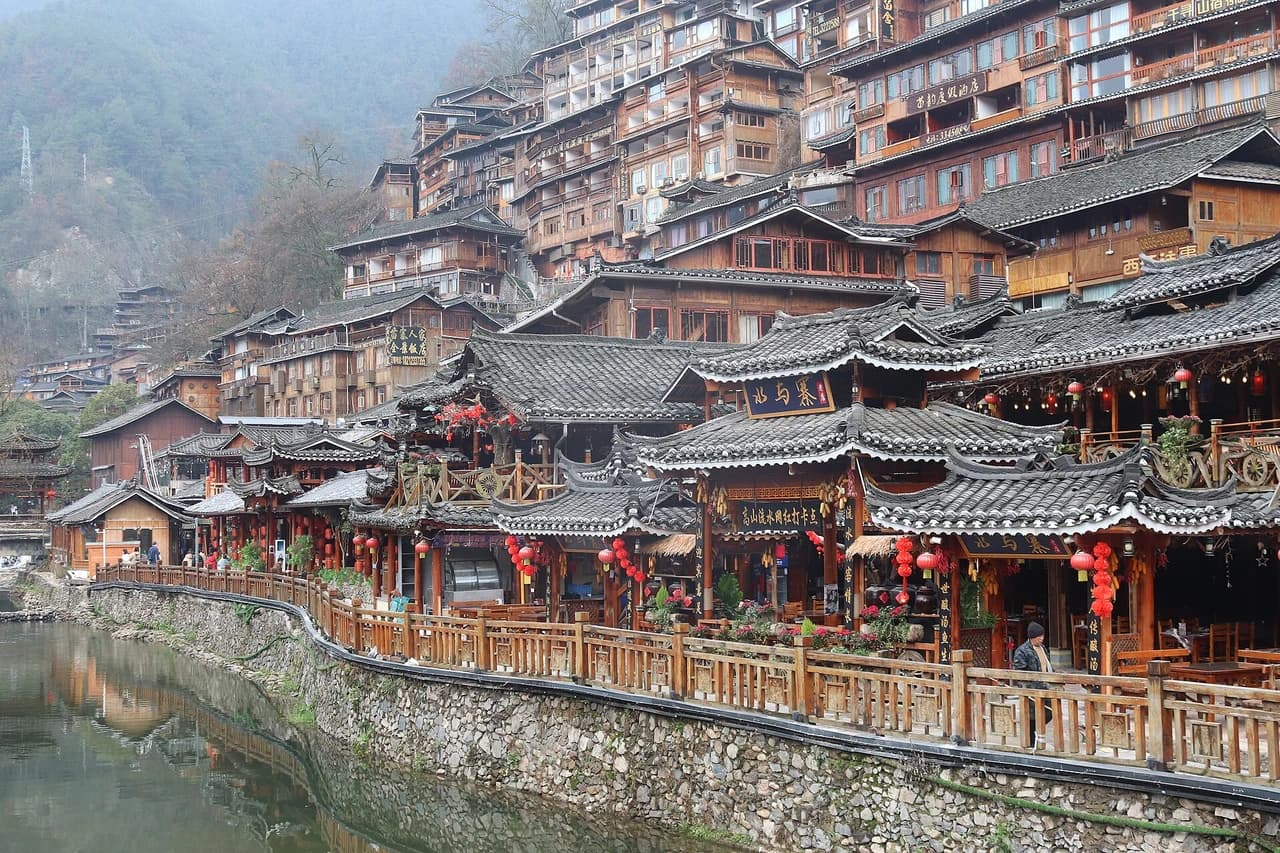
Xijiang Qianhu Miao Village is located in Leishan County, Qiandongnan Miao and Dong Autonomous Prefecture, not within Guiyang City. It is the largest Miao settlement village in the world and is known as the "living museum" of Miao culture. The panoramic views of the stacked stilted buildings, wind and rain bridges, terraced fields and observation decks are the core attractions.
Guizhou Provincial Museum
贵州省博物馆
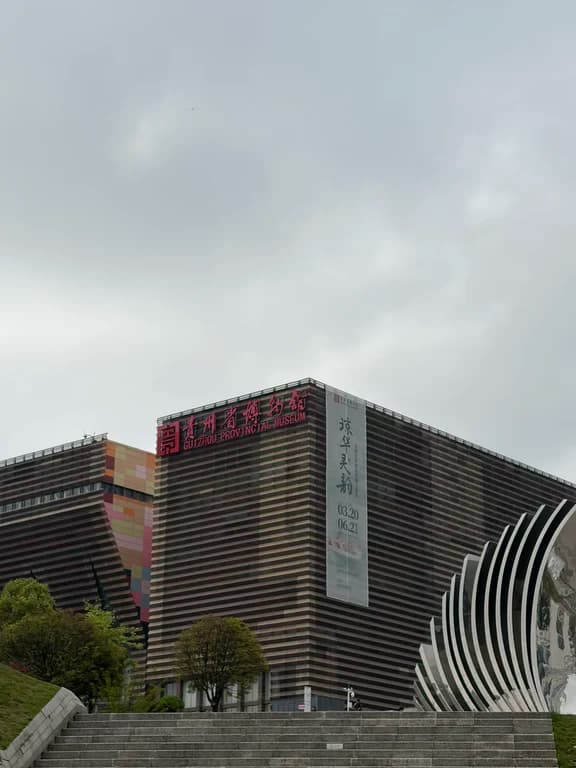
The Guizhou Provincial Museum is the most complete introduction before traveling to Guizhou. Archaeological and historical exhibitions establish a regional timeline, textiles, silver jewelry, clothing and daily utensils present the skills and diversity of different communities in Guizhou; paleontology and natural history materials extend the horizon beyond just scenic tourism. When visiting, group names and ritual artifacts should be understood as living culture rather than anonymous decoration.
Qingyan Ancient Town
青岩古镇
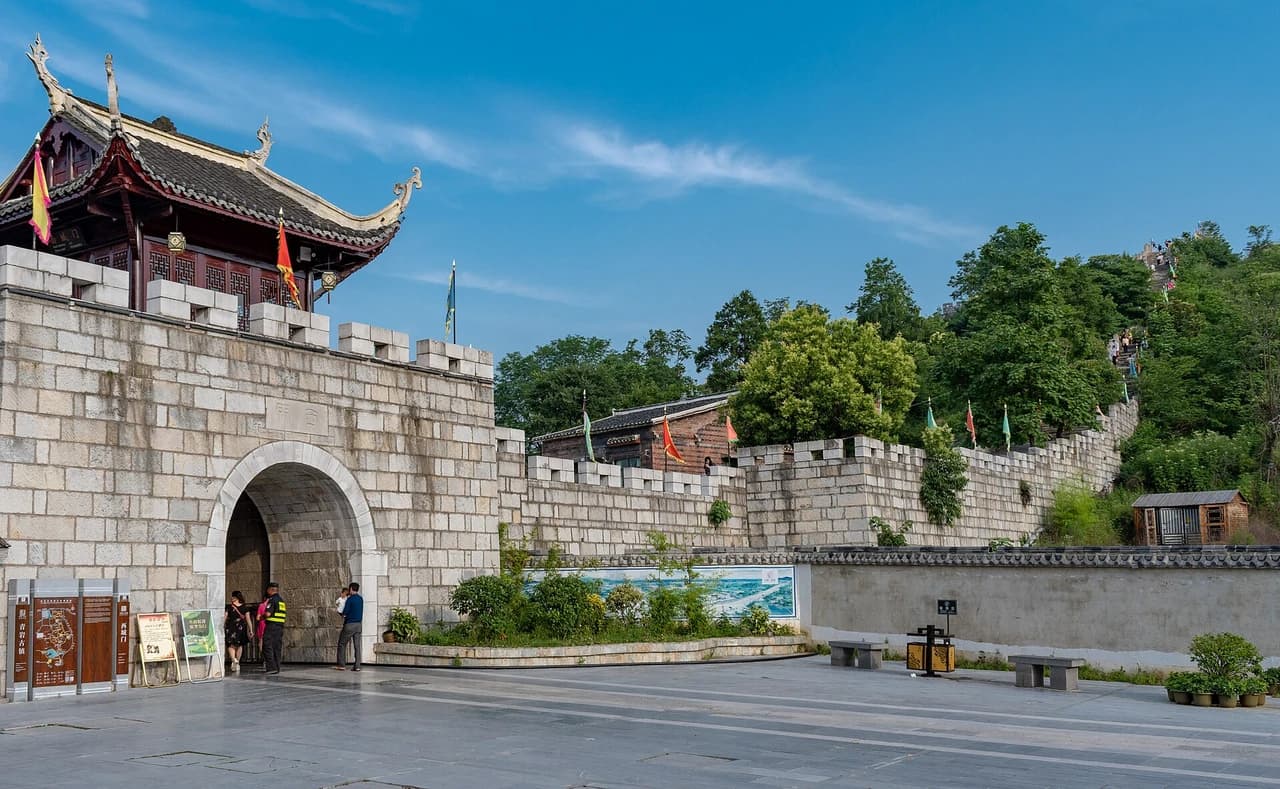
Qingyan developed from a military settlement in the Ming Dynasty into a compact ancient town composed of stone lanes, city gates, courtyards and religious buildings. Courtyards such as Ciyun Temple and Wenchang Pavilion show the multi-layered local construction tradition, and the houses and food shops that are still inhabited make this place more than just a commemorative scenic spot. The tour should not just stop at the most photogenic street, but also distinguish between historical relics and later commercial restoration.
Tianhetan Scenic Area
天河潭
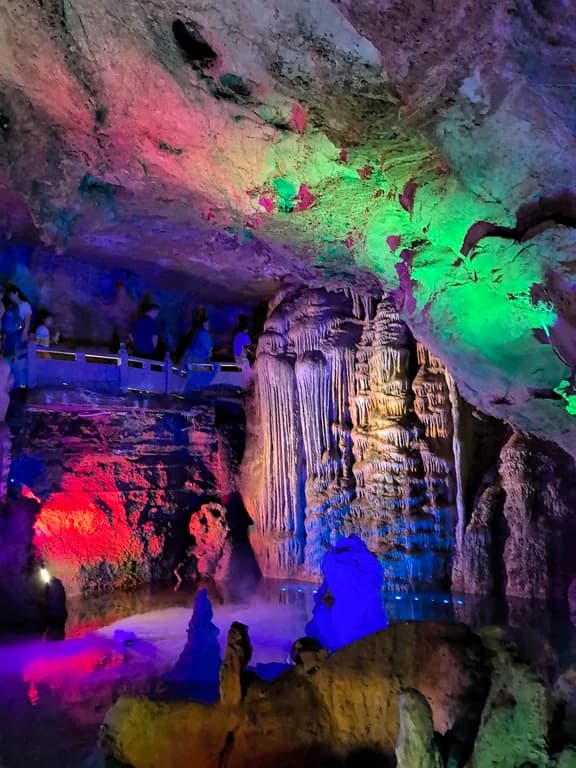
Tianhetan gathers surface karsts, canyons, waterfalls, pools and water-eroded caves within a day trip in the suburbs of Guiyang, making the underground drainage and limestone erosion processes visible. However, the tour experience will be affected by water level, weather and operating conditions; cave lighting and artificial trails are scenic facilities, and the natural geology should be distinguished from the tour system built around it.
Local snacks
What to eat in Guiyang
These cards describe dishes, not restaurants.
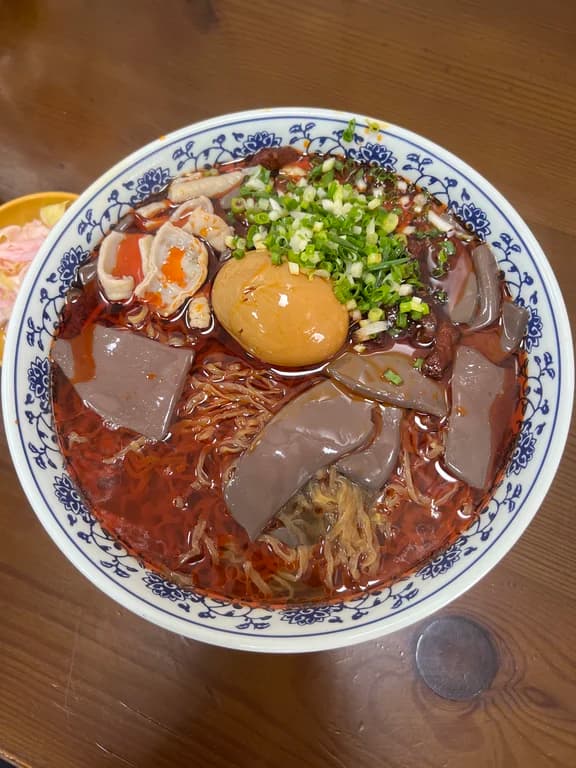
Spicy, rich, salty and crispy
Guiyang Changwang Noodles
贵阳肠旺面
The chewy egg noodles are served with bright red spicy soup, pig intestines, blood and crispy whistle. It has multiple textures such as soft, tender and crispy in one bowl.
It should be eaten while hot. If you are afraid of spicy food, you can ask for less spicy food. Contains pork, offal, blood products, eggs and gluten. You should choose a store with stable customer flow, hygienic handling and adequate heating.
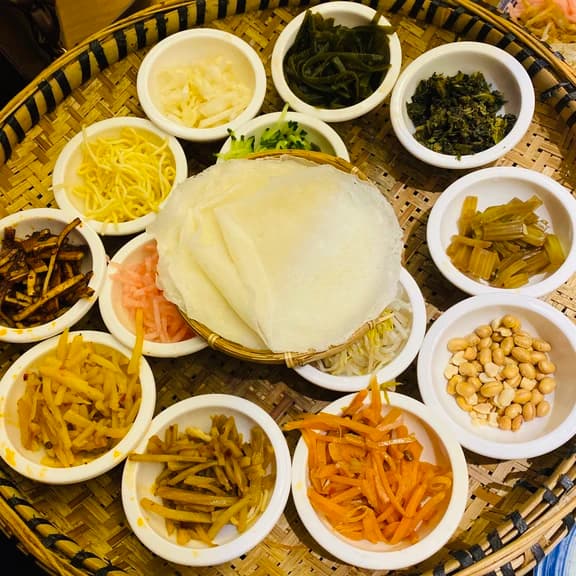
Fresh, crispy, sour and spicy, appetizing
Silk Doll Rolls
丝娃娃
The paper-thin wheat dough is wrapped with shredded vegetables, pickles and herbs at the table, and then drizzled with hot and sour dipping water. It is a refreshing and layered Guiyang snack.
Wrap a little less at a time to prevent the dough from cracking. Contains gluten, and ask about the water used to wash peanuts, sesame seeds, and raw vegetables.
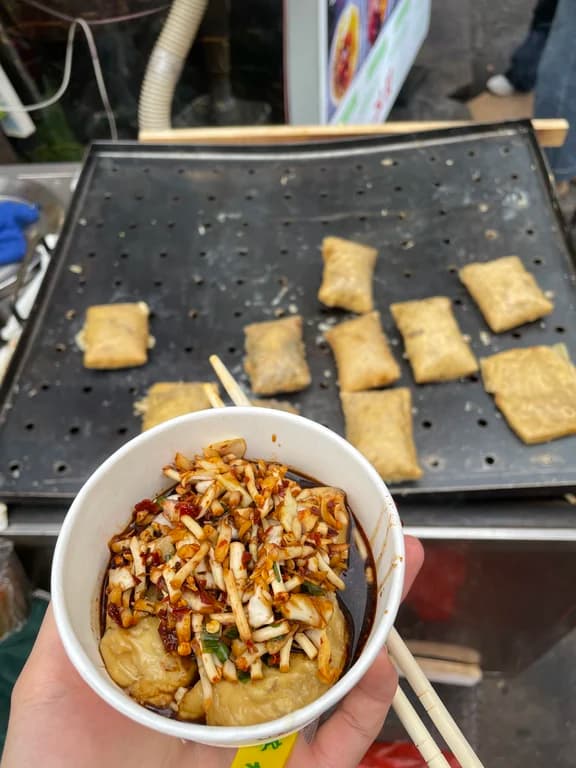
Firework aroma, soft and tender inside, spicy herbs
Guiyang Grilled Tofu Parcels
贵阳恋爱豆腐果
The tofu is grilled until the skin is set and the inside is swollen, then cut into pieces and stuffed with chopped radish, folded ear root, chopped green onion and chili seasoning. It is a common hot food on the streets of Guiyang.
It should be eaten freshly baked and careful with hot filling. Contains soy, sauce may contain gluten, sesame or peanuts; has a very distinct flavor.
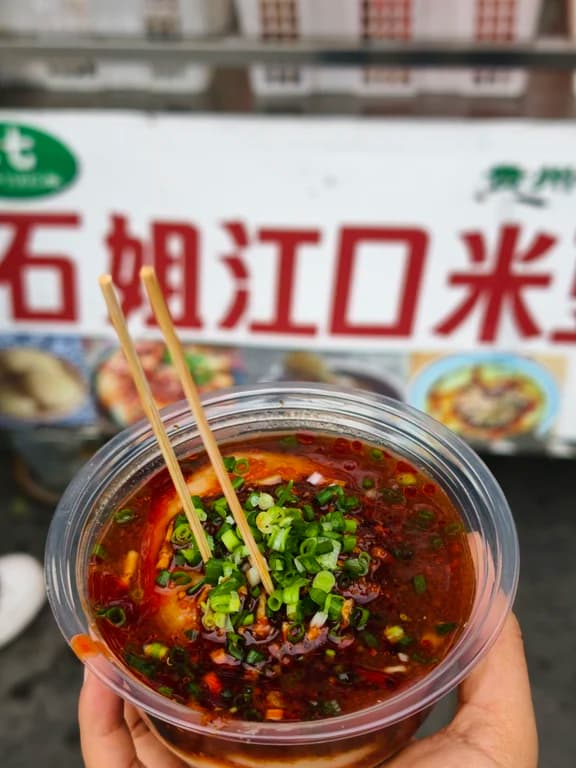
Soft, smooth, sour and refreshing
Guiyang Rice Tofu
贵阳米豆腐
Rice is processed into a tender, salty gel that is cut into cubes or strips and served with chili peppers, vinegar, pickles and aromatic seasonings. Although it is called tofu, it is not usually a soy product.
Confirm cold or hot food options and ask about shared sauces. Rice tofu itself may be gluten-free, but ingredients may contain soy, gluten, sesame, or peanuts.