
开封
Kaifeng
Kaifeng was once the capital of the Northern Song Dynasty, but repeated Yellow River floods, wars, and reconstructions left that metropolis largely archaeologically layered beneath later cities. Museums, evidence of city stacks, ancient pagodas, guild halls, and Ming and Qing city walls can provide better historical anchors than simple modern Song-style landscapes. The central city is more walkable, but the monuments visible everywhere belong to different eras.
At a glance
- Stay
- 1–2 days
- Best seasons
- Apr–May, Sep–Nov
- Airports
- Rail or road access
- Region
- Central China
Last updated: 9/29/2026
First visit
Arrive and settle in Kaifeng
Start with arrival and where to stay, then choose your sights. Recheck transport and accommodation details before booking.
Getting there+
Kaifeng North on the high-speed line is 20 to 30 minutes from Zhengzhou East, two and a half hours from Xi'an. Intercity trains from Zhengzhou and its airport stop at Songchenglu , closer to the old town, in about 40 minutes. Zhengzhou Xinzheng (CGO) is the airport, an hour away by that train.
Rail tip. Your passport is your ticket. Book on 12306 or Trip.com, then go straight to the gate. See Getting around. The Trip.com link earns us a small commission at no cost to you (how that works).
Stay online. Google, WhatsApp and Instagram are blocked on Chinese networks; a travel eSIM that roams gets around it. Install one before you fly — Saily takes US$5 off a first plan with the code CHINA. See Staying online. The code earns us the same amount in Saily credits, at no cost to you (how that works).
Where to stay+
Drum Tower and the old town
鼓楼·老城
The night market, Shudian Street and the Daxiangguo Temple within a walk.
Small hotels around the Drum Tower square and along Shudian Street. Everything in Kaifeng is close, and taxis are cheap for the rest.
first visitfoodwalking
Longting and the lakes
龙亭·包公湖
Parks and lakes on the site of the Song palace. Quieter.
Guesthouses near Longting Park and Bao Gong Lake, a fifteen-minute walk to the night market.
quietparks
Booking. Compare hotels in Kaifeng on Trip.com, filtered to its China travel essentials list: English-speaking staff, foreign cards, guest rating 8 or higher. See Where to stay. Booking through this link earns us a small commission at no cost to you (how that works).
Overview+
SHANXIJIANGSUANHUISHANDONGHUBEISHAANXIKaifeng
The Qingming Scroll, the famous painting of a Song city at festival time, shows Kaifeng in about 1100. The river that made it also destroyed it: six cities lie stacked under the present one, and the Yellow River now runs above the level of the streets, held back by dykes ten kilometres north.
What is left is low, flat and pleasant. The Iron Pagoda has stood since 1049 through every flood. Shudian Street is an old lane of bookshops and calligraphy suppliers. The night market around the Drum Tower is one of the best in the north, and the town's soup dumplings are its pride.
Kaifeng also had China's oldest Jewish community, whose descendants still live around Teaching Torah Lane. Come for a night from Zhengzhou or Luoyang; the town closes early and the morning is calm.
Where next?
Save places you like, then use your saved list to build a trip.
Practical travel guides
Places to explore in Kaifeng
Gulou Night Market
鼓楼夜市
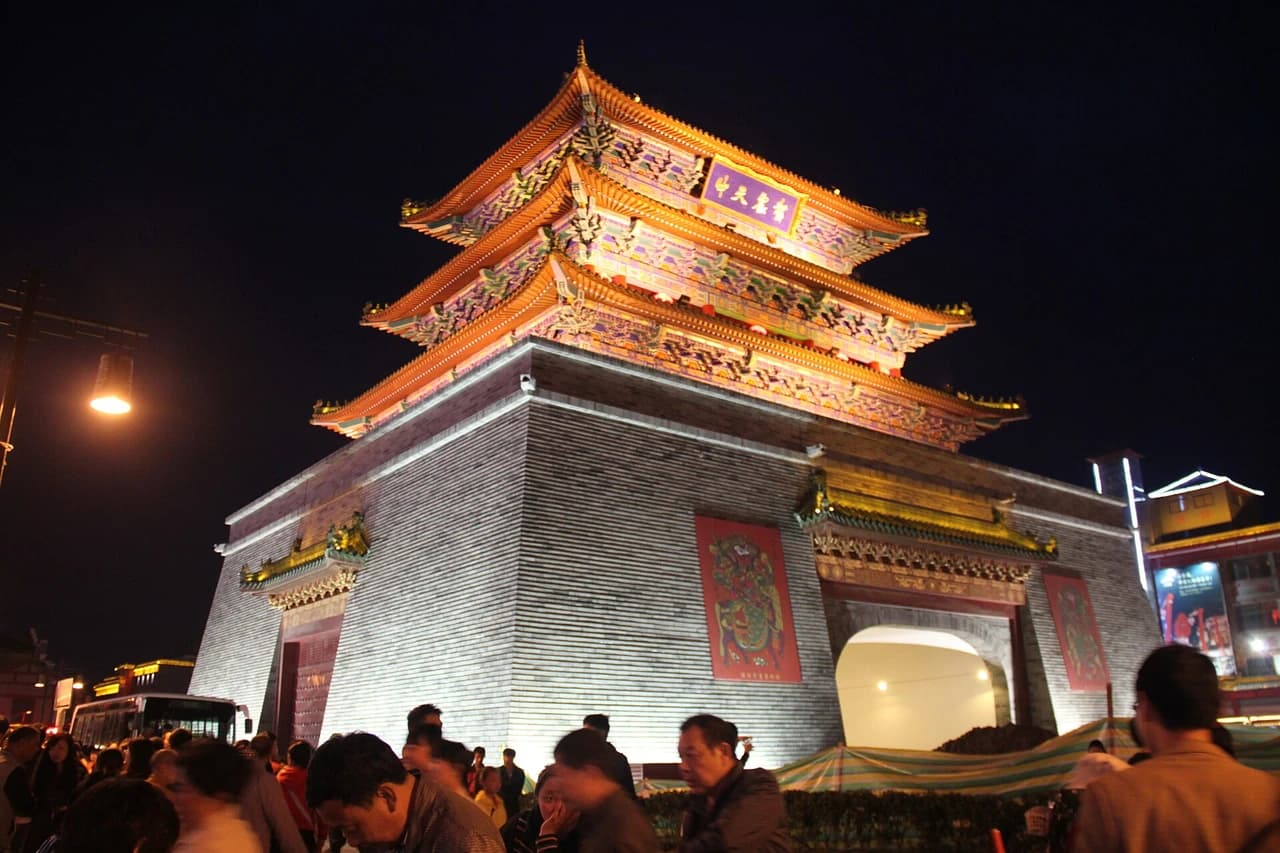
Gulou Night Market is the most representative night market in Kaifeng. It is also one of the earliest night markets in China and the only night market open all year round in Henan Province. It was recorded as early as "Tokyo Menghualu". With the Drum Tower as the background, the night view that blends the ancient and the modern is unique, making it an iconic place to experience the "Bianjing" night market. The core highlights are snacks and everyday atmosphere: soup dumplings, fried jelly, mutton steamed buns, almond tea, baked carp noodles, peanut cakes, etc. There are also experiences such as ordering tea from the Song Dynasty and checking in with Hanfu.
Millennium City Park
清明上河园
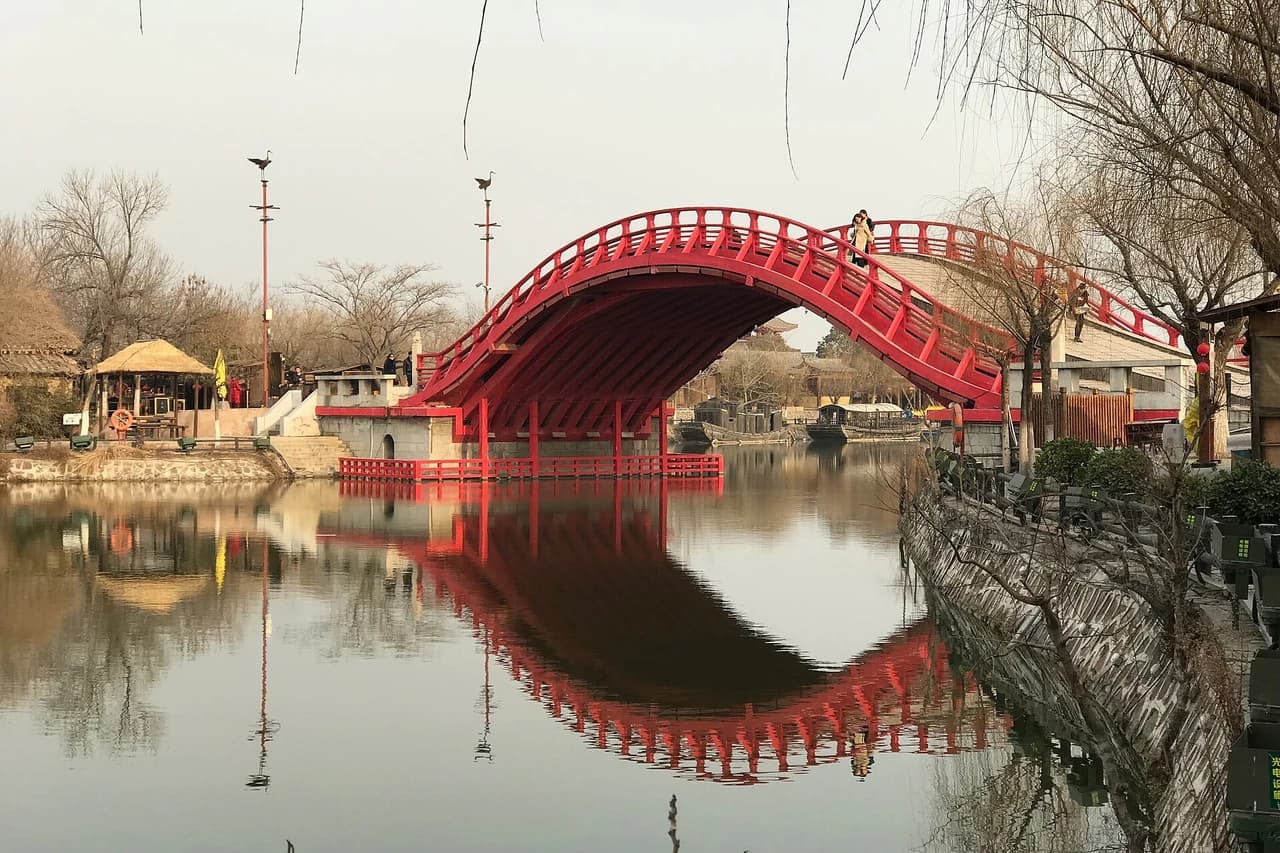
Qingming Riverside Park is located at No. 5 Longting West Road. It is a Song Dynasty cultural theme park that has been restored 1:1 based on "Qingming Riverside Scene" by Zhang Zeduan of the Northern Song Dynasty. It is a national 5A-level scenic spot and reproduces the prosperity and royal atmosphere of Bianliang City in the Northern Song Dynasty. The core attractions are Hongqiao, Bianhe River, antique streets and alleys, as well as more than 100 Song-style performances throughout the day, such as the horse battle of "Yue Fei Gun Challenges Xiao Liang Wang", the water scene of "The Defense of Tokyo in the Song Dynasty", "The Iron Flower" and the large-scale water scene drama "The Song Dynasty - Tokyo Dream".
Longting Park and the lakes
龙亭公园
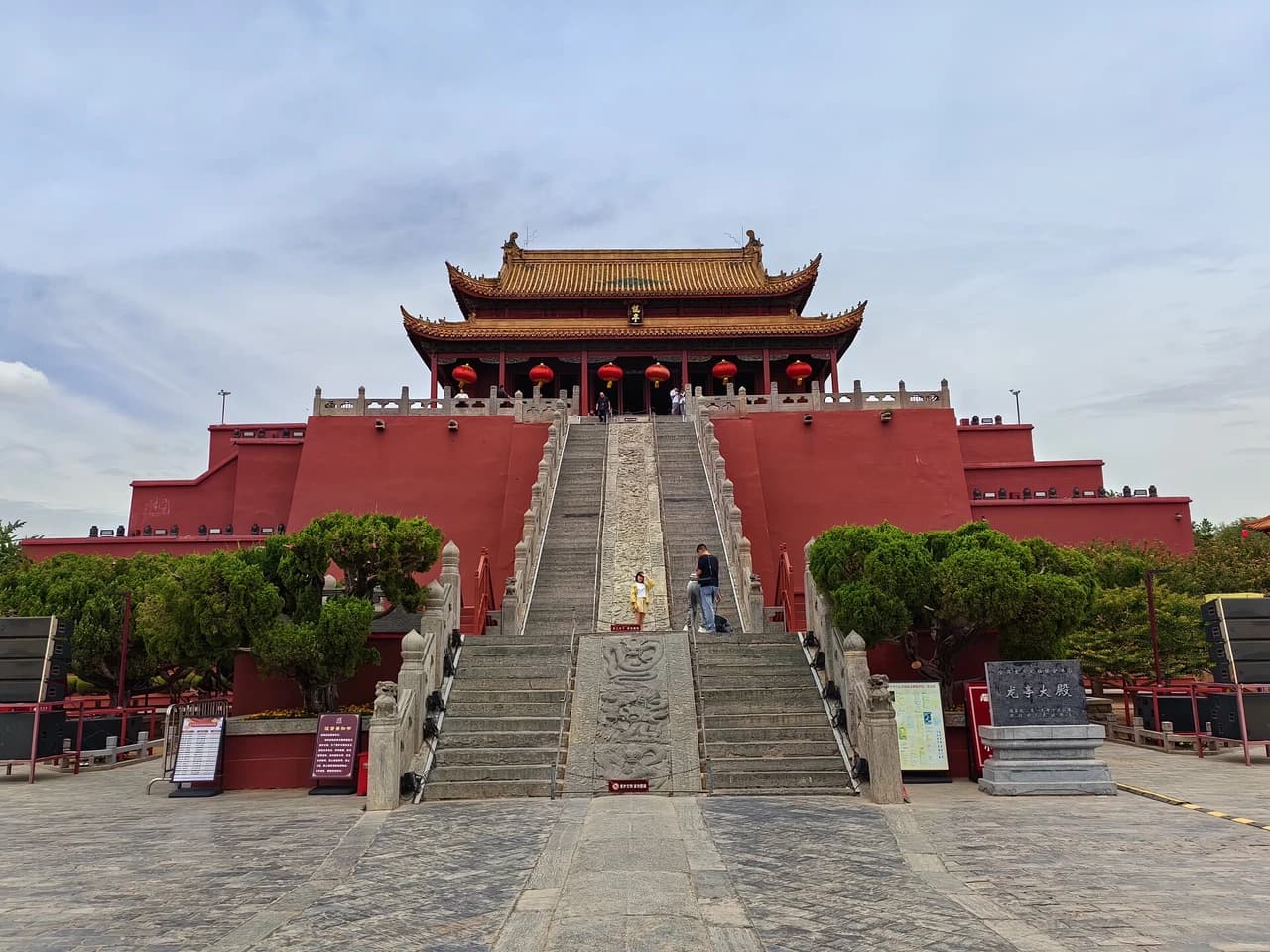
Longting Park is located at the north end of Zhongshan Road, Longting District. It is a national AAAA-level scenic spot and a national key cultural relics protection unit built on the royal palace sites of the Later Liang, Later Jin, Later Han, Later Zhou, Northern Song and Jin Dynasties. The core attraction is the Longting Hall - a 13-meter platform with 72 steps. From the top, you can overlook the panoramic view of Panyang Lake and the ancient city. The Panjia Lake and Yangjia Lake in the park have beautiful scenery and are the main venue of the Kaifeng Chrysanthemum Cultural Festival. The main body of the Northern Song Dynasty palace is buried about 9 meters underground. The existing main hall is the remains of the Wanshou Palace of the Qing Dynasty.

Daxiangguo Temple
大相国寺
Located in the west section of Ziyou Road in the city center, it was built in the sixth year of Tianbao in the Northern Qi Dynasty (555). It was originally named Jianguo Temple and was renamed Daxiangguo Temple in the Tang Dynasty. In the Northern Song Dynasty, it was the largest royal temple in the capital and the national Buddhist activity center. The treasures of the temple are the Thousand-Armed and Thousand-Eyed Guanyin carved from a whole ginkgo tree in the Octagonal Glazed Hall, which is exquisitely crafted. There is also the "Xiangguo Frost Bell" weighing more than 10,000 kilograms, which is one of the eight scenic spots in Kaifeng. The Main Hall is known as the "No. 1 Hall in the Central Plains". There is also a scene in the temple where Lu Zhishen uprooted a weeping willow in "Water Margin".
Shudian Street
书店街
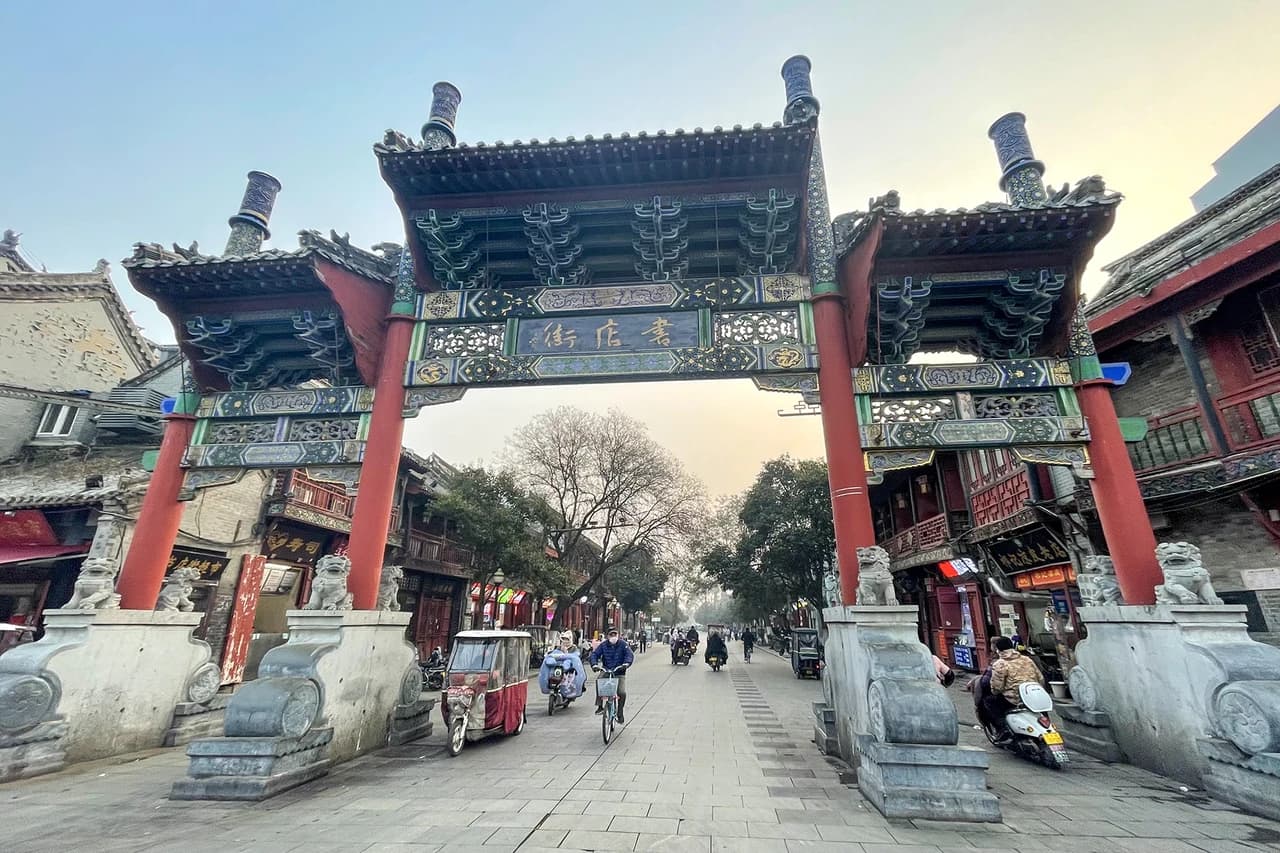
Bookstore Street is located on the north side of the Drum Tower, with a total length of about 600 meters. It continues from the "Gaotou Street" in the Northern Song Dynasty to this day. It is a rare thousand-year-old street named after a bookstore in the world. It is also the core part of the national-level night-time cultural tourism consumption area. During the day, you can peruse the old buildings and handwritten store signs from the Republic of China and the early days of the founding of the People's Republic of China. At night, it is connected to the Gulou Night Market, where snacks, cultural creations, and intangible cultural heritage markets are bustling. Core attractions: Old buildings and shop sign art, snacks such as Zhangji Mahua, Baiji peanut cake, iced glutinous rice balls, as well as intangible cultural heritage interactions such as pot throwing and lantern riddle guessing.
Iron Pagoda
铁塔
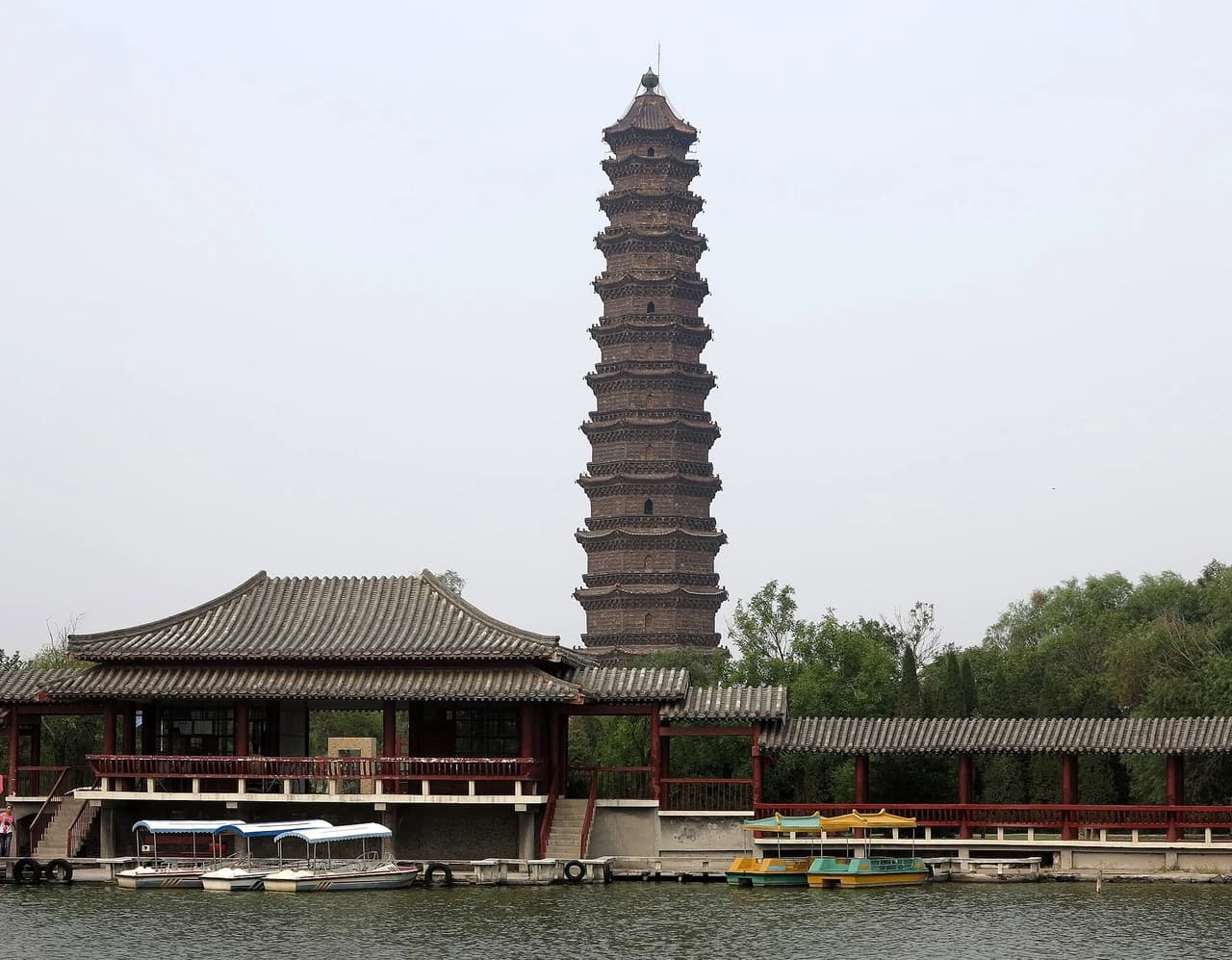
The Iron Pagoda is located in the Iron Pagoda Park at No. 210 Beimen Street, Shunhe Hui District. It was originally named Kaibaosi Pagoda. It was built in the first year of Emperor You of the Northern Song Dynasty (1049). It is the earliest, tallest and best-preserved glazed brick pagoda in the Northern Song Dynasty and is known as "the best pagoda in the world". It is not made of iron, but is made of brown glazed bricks, which makes it look like iron from a distance. The tower body is octagonal and has 13 floors, about 55.88 meters high, and is inlaid with more than 50 kinds of glazed bricks such as flying apsaras, unicorns, and bodhisattvas. After earthquakes, Yellow River floods, and anti-Japanese war bombardments, it still stands tall, which is the most faithful testimony of Kaifeng City's "repeated flooding and repeated construction".

Kaifeng Museum
开封市博物馆
The Kaifeng Municipal Museum is the best starting point to distinguish the stages of multiple capital establishments and understand why the remains of the Northern Song Dynasty are often buried deep underground. Archaeological artifacts, models, city maps, and different versions of "Along the River During the Qingming Festival" reconstruct administration, commerce, and daily life without pretending that the modern surface is anything but its original appearance. The subsequent contents of Jewish communities, guild halls, the Yellow River and local crafts also make the urban narrative transcend a single dynasty.

Fan Pagoda
繁塔
Fan Pagoda was built in the 10th century and is one of the earliest existing buildings in Kaifeng. Only the lower part of the original tower is preserved today. The outer wall is densely covered with glazed bricks with Buddha statues, forming a dense religious surface that is different from the later iron towers. The altered contours directly reveal the damage and reconstruction, rather than diminishing its value.

Shanxi–Shaanxi–Gansu Guild Hall
山陕甘会馆
Guildhalls built by merchants in Shanxi, Shaanxi, and Gansu during the Qing Dynasty combined business contacts, sacrifices, and mutual assistance with fellow villagers. Dense wood carvings, brick carvings and stone carvings turn the facades and screen walls into auspicious images, operas and records of merchants' identities. It shows that after the Song Dynasty, Kaifeng was still a commercial city connecting long-distance trade, and was not just a memorial to the former capital.
Kaifeng City Wall
开封城墙
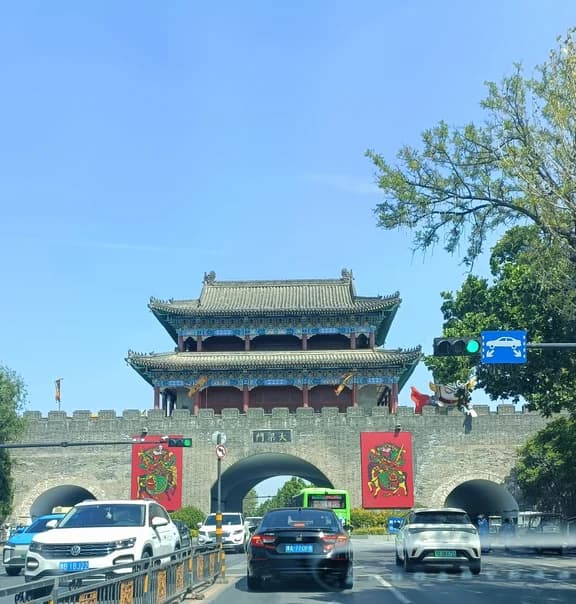
The main body of the existing city wall belongs to the Ming and Qing Dynasties. It is a layer of the city that was repeatedly buried and rebuilt after the Yellow River floods. Gates, walls and archaeological evidence illustrate how later defensive structures were superimposed on earlier capital layers. A short walk will help you understand the "city on top of the city", but it cannot be directly called the original city wall of Tokyo City in the Northern Song Dynasty.
Local snacks
What to eat in Kaifeng
These cards describe dishes, not restaurants.

The soup is juicy, salty and fragrant
Kaifeng Soup-filled Steamed Buns
开封灌汤小笼包
The thin wheat skin wraps the meat filling and hot soup. After being folded and steamed, the skin is thin and the soup is retained inside.
Take a small bite to let the soup cool down before eating, and check the meat; the bun contains gluten and the temperature of the soup inside is very high.

Peanut flavor, crispy and sweet
Kaifeng Peanut Cake
花生糕
Roasted peanuts and sugar create a crispy, layered dessert that is easy to eat and is often served as a boxed local souvenir.
People with peanut allergies should not eat it, as the sugar content is usually high; the crispy texture easily absorbs moisture, so you should check the production date and sealed packaging.
Warm, smooth, nutty and sweet
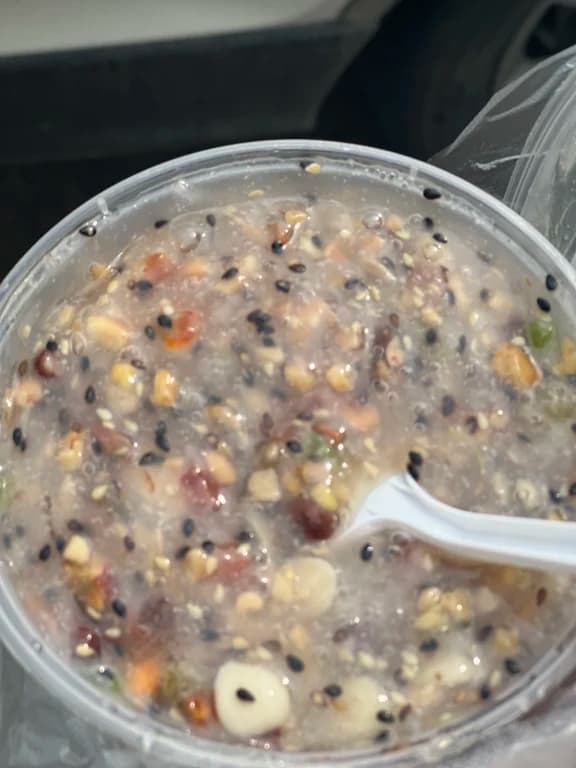
Kaifeng Almond Tea
杏仁茶
A warm, thick, sweet drink based on a grain or starch base, flavored with almonds and topped with nuts, seeds, raisins and candied fruits.
Ask for full ingredients, nut, sesame and dairy allergies vary by store; stir well and allow thick drinks to cool slightly before serving.

Rich salty aroma and firm meat texture
Kaifeng Spiced Chicken
桶子鸡
The whole chicken is salted and cooked with spices. The skin is golden and the meat is firm and fragrant. It is often sliced and eaten cold.
Confirm weight, price and storage before purchasing. Food with bones and high sodium content should be kept cold for refrigerated takeout.