
绍兴
Shaoxing
Shaoxing is a canal city where Vietnamese archeology, calligraphy, classical gardens, modern literature and rice wine culture are still embedded in the living neighborhoods. The famous former residences and landscapes span completely different eras, from the legend of Dayu, Wang Xizhi's calligraphy to Lu Xun's 20th century world. The ancient city is suitable for slow travel, but peripheral points such as Lanting require the use of transportation.
At a glance
- Stay
- 1–2 days
- Best seasons
- Mar–May, Oct–Nov
- Airports
- Rail or road access
- Region
- East China
Last updated: 9/29/2026
First visit
Arrive and settle in Shaoxing
Start with arrival and where to stay, then choose your sights. Recheck transport and accommodation details before booking.
Getting there+
Shaoxing North is on the high-speed line: Hangzhou East in about 20 minutes, Shanghai Hongqiao in about an hour and 20. From the station, metro line 1 runs into the old town in about 40 minutes and connects at the other end with Hangzhou's metro. The old Shaoxing station near the centre serves slower trains. Fly to Hangzhou (HGH).
Rail tip. Your passport is your ticket. Book on 12306 or Trip.com, then go straight to the gate. See Getting around. The Trip.com link earns us a small commission at no cost to you (how that works).
Stay online. Google, WhatsApp and Instagram are blocked on Chinese networks; a travel eSIM that roams gets around it. Install one before you fly — Saily takes US$5 off a first plan with the code CHINA. See Staying online. The code earns us the same amount in Saily credits, at no cost to you (how that works).
Where to stay+
Cangqiao Straight Street and the old town
仓桥直街·古城
The canal street at the centre. Stay in a stone house by the water.
Guesthouses along and behind Cangqiao Zhijie, with the Lu Xun quarter fifteen minutes south. Everything is walkable.
first visitatmospherewalking
Shusheng quarter
书圣故里
The lanes around Wang Xizhi's old home. Quieter canals, fewer visitors.
North-east of the centre around Jiezhu Temple and the Bazi Bridge. Small inns in old courtyards, and the most photogenic water in town.
quietcanals
Booking. Compare hotels in Shaoxing on Trip.com, filtered to its China travel essentials list: English-speaking staff, foreign cards, guest rating 8 or higher. See Where to stay. Booking through this link earns us a small commission at no cost to you (how that works).
Overview+
SHANGHAIANHUIFUJIANJIANGXIShaoxing
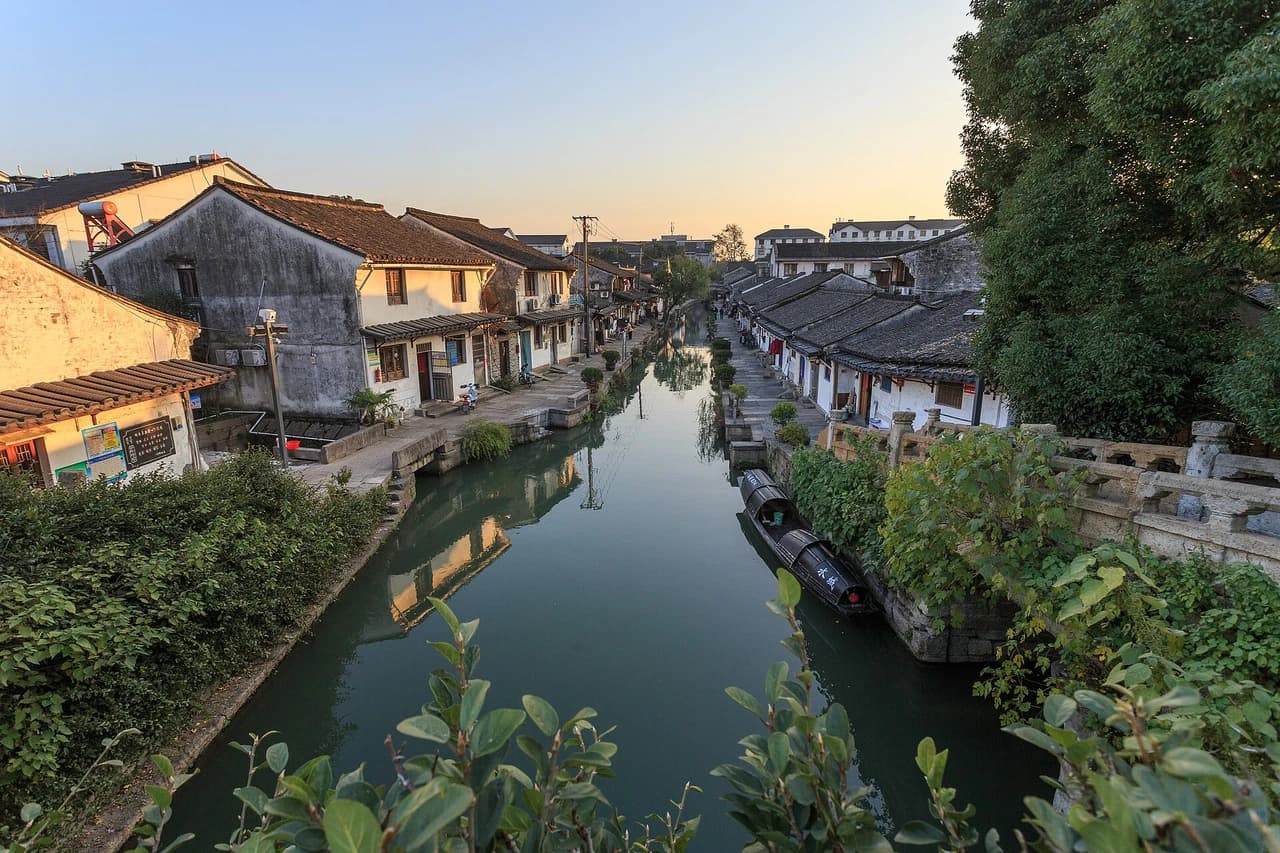
The water towns around Shanghai have mostly become open-air museums. Shaoxing has the same canals and stone bridges and never stopped being a working city, so the laundry hangs over the water and the boatmen paddle with their feet because that is how it is done. The old centre is small enough to walk in a morning and interesting enough to stay two nights.
Lu Xun grew up here and his house, school and the garden he wrote about are open and free. Shen Garden is where the poet Lu You met his lost wife. The Orchid Pavilion, outside town, is where Wang Xizhi wrote the most famous piece of calligraphy in the language in 353.
Then there is the wine: amber, warm in winter, drunk from bowls with fennel beans. Yellow wine has been made here for two and a half thousand years. Spring and autumn are the seasons; summer is hot and wet.
Where next?
Save places you like, then use your saved list to build a trip.
Practical travel guides
Places to explore in Shaoxing
Lu Xun's Hometown
鲁迅故里
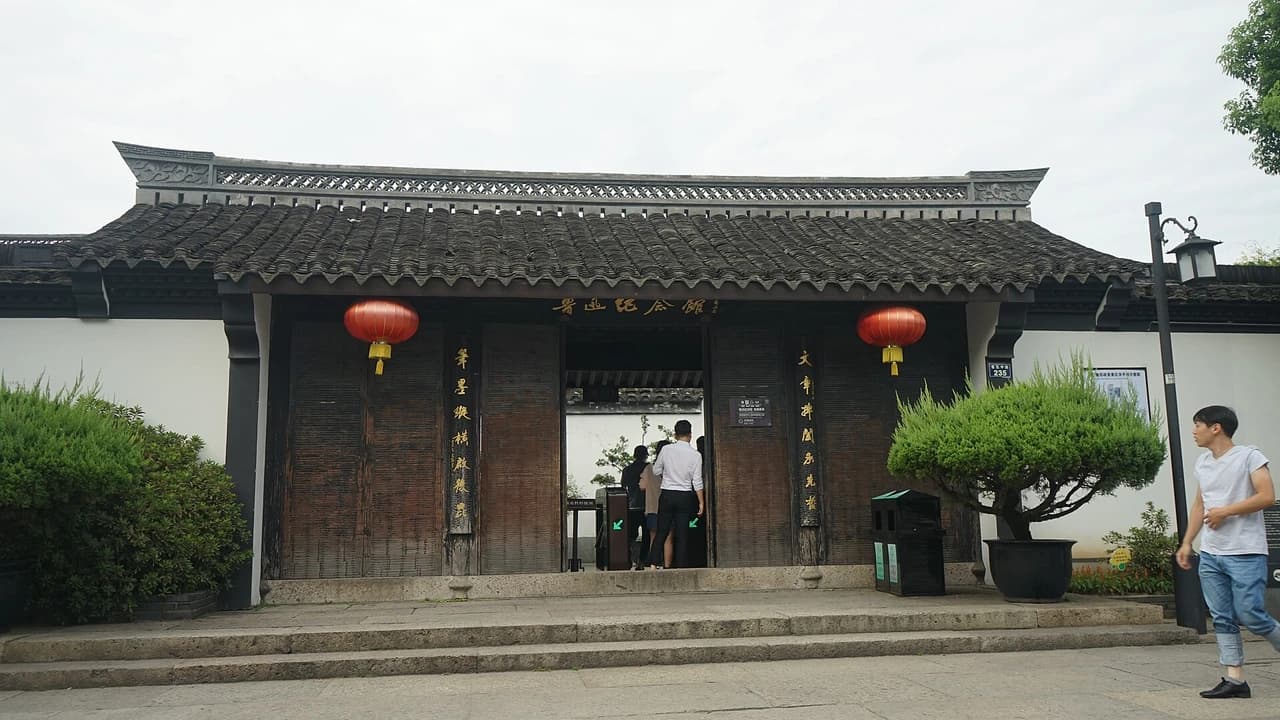
Lu Xun’s hometown is located at No. 241 Lu Xun Middle Road, Yuecheng District. It is a national 5A-level scenic spot and the most representative cultural landmark in Shaoxing. The core points include the ancestral residence of Lu Xun (the old Taimen of the Zhou family), the Sanwei Bookstore (the desk engraved with the word "morning"), the former residence of Lu Xun, the Baicao Garden, and the Lu Xun Memorial Hall. The scene "From the Baicao Garden to the Sanwei Bookstore" in the textbook is restored here.
Shen Garden
沈园
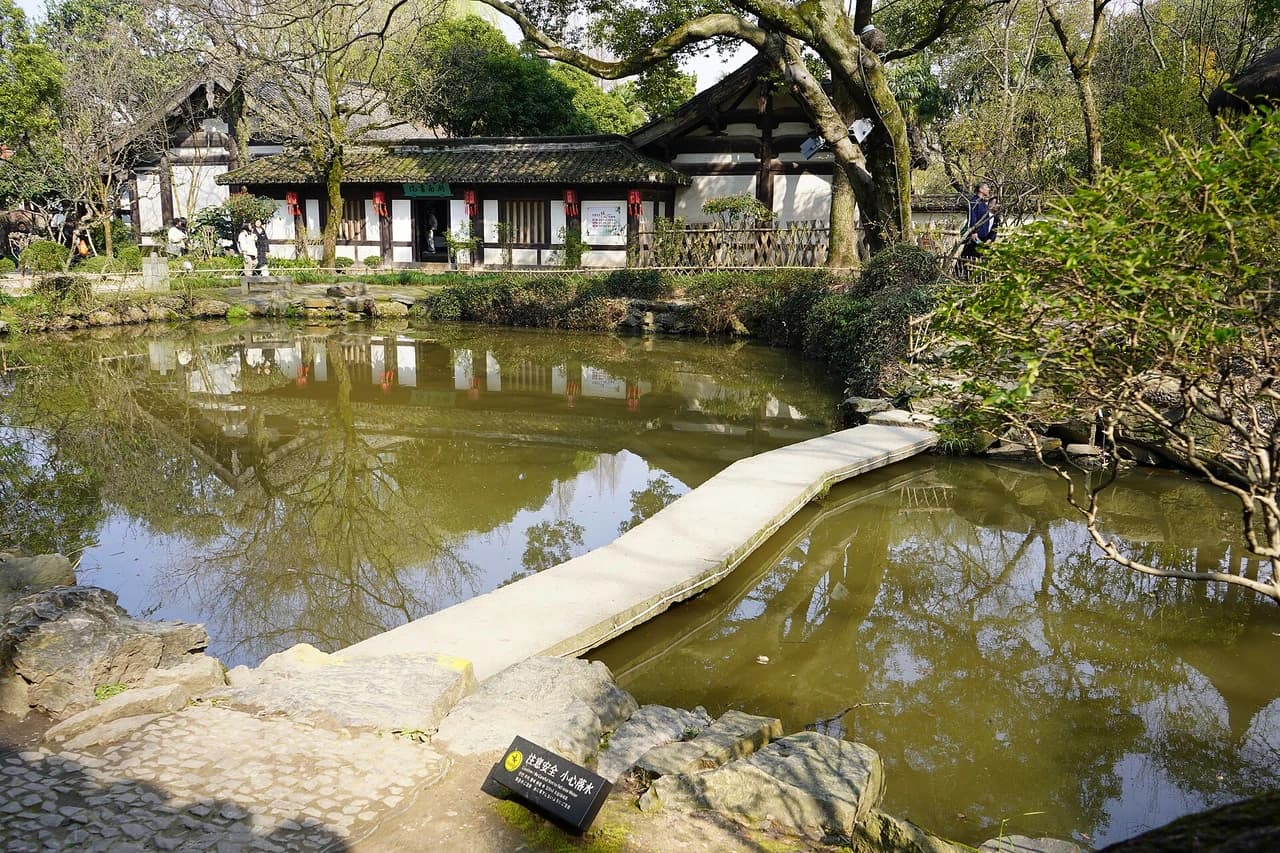
Shen Garden, also known as Shen's Garden, is located at No. 318 Lu Xun Middle Road, Yuecheng District. It is the only private garden from the Song Dynasty that has been preserved in Shaoxing. It has a history of more than 800 years. It is famous for the love story of Lu You and Tang Wan's "The Hairpin Headed Phoenix", and is called the "Love Garden". There are pavilions, pavilions, Quchi rockery, and each scene is a scene at every step. The core attractions include the Chai Tou Feng Monument, Lu You Memorial Hall, Dongyuan, Nanyuan, etc.; at night, there is also an immersive live performance "Dream Return to Shen Garden·Chai Tou Feng".
Anchang
安昌古镇
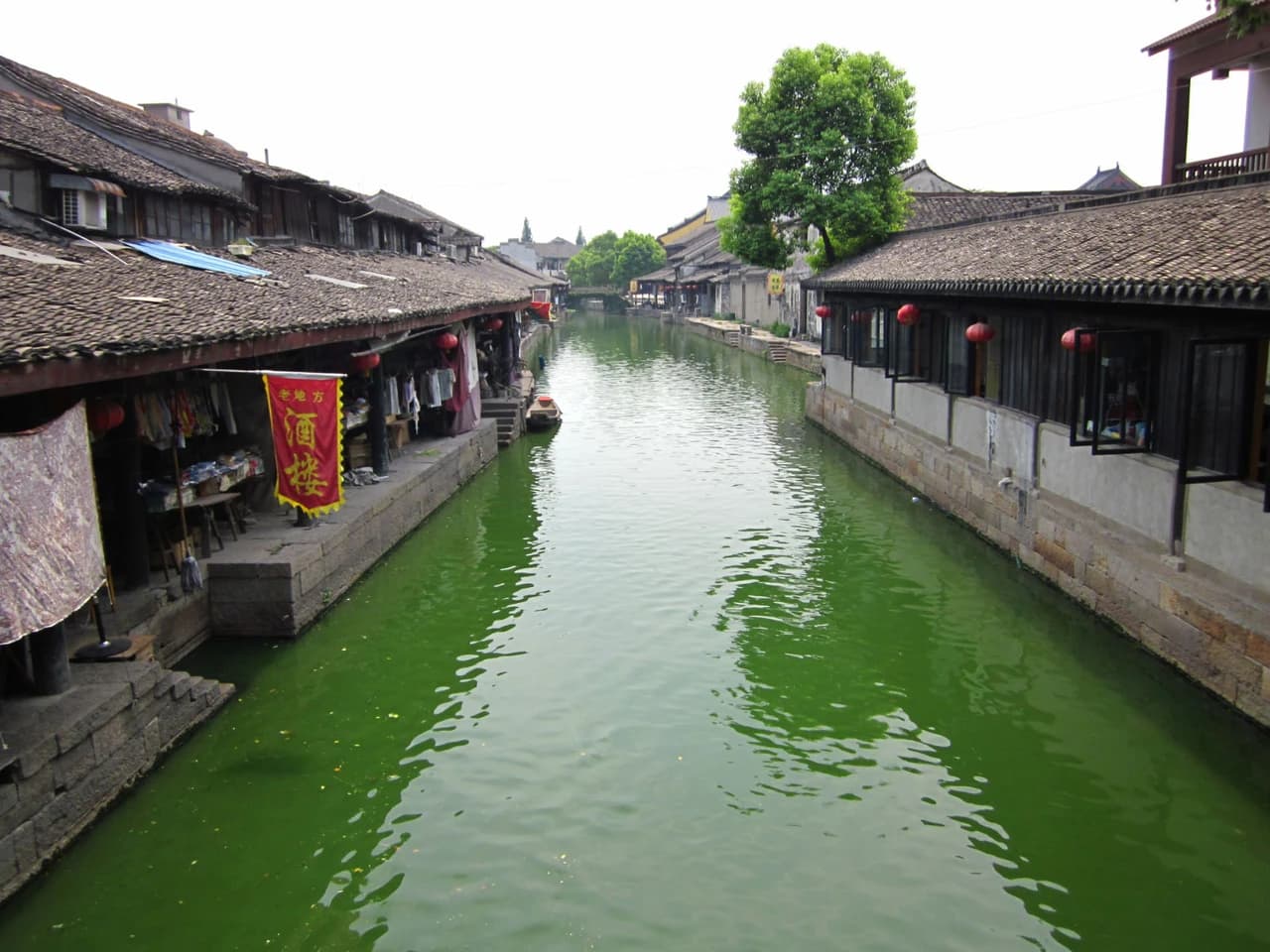
Anchang Ancient Town is located in Keqiao District. It is one of the four ancient towns in Shaoxing. It was built in the Northern Song Dynasty. Most of the existing old streets were built in the Ming and Qing Dynasties. It is known as "the clear water runs through the streets and the seventeen bridges across the river are rainbows". It is also the hometown of a famous master. The ancient town is based on an east-west river, with businesses on the north bank and people living on the south bank. It is connected by seventeen ancient bridges. The corridors and sheds along the river are hung with sausages and duck sauce. The ancient method of drying the sauce in Renchang Sauce Garden is the source of the flavor, and it is full of everyday atmosphere.
Bazi Bridge
八字桥
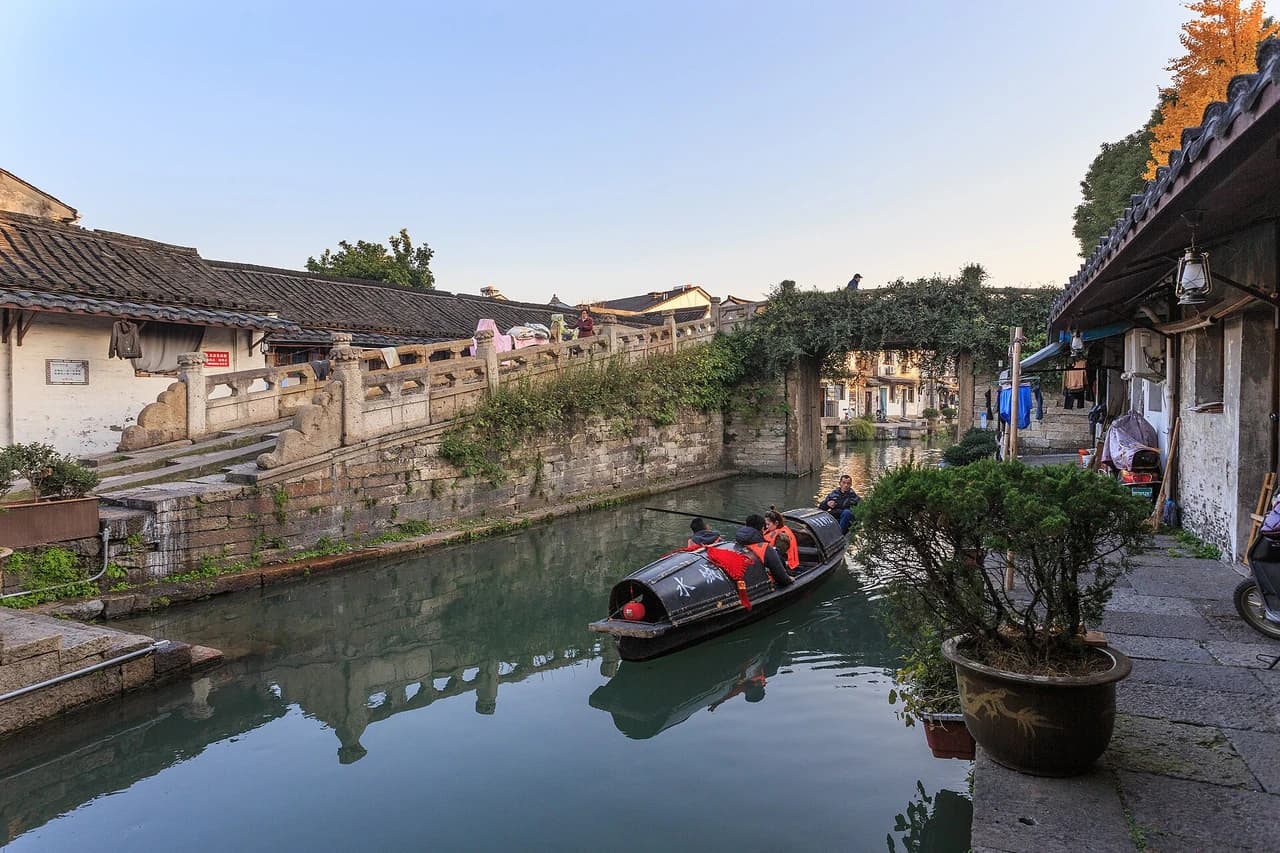
The Eight-Character Bridge is located in the north of the ancient city of Shaoxing. It was first built during the Jiatai period of the Southern Song Dynasty (1201-1204), more than 800 years ago. It is named after the two bridge holes facing each other and shaped like the character "eight". It spans three rivers and connects four streets. It is known as "China's earliest urban overpass". It is a national key cultural protection unit and a World Heritage Site of the Grand Canal. The bridge connects three streets and three rivers, allowing pedestrians and boats to go their own way, integrating into the texture of the old city without demolishing houses or changing streets. The surrounding Baziqiao historical district is still home to a large number of aboriginal people, and there is almost no commercialization. The bluestone road, Zhenshui folk houses, and Huanyi in the river port are the most authentic daily life of Shaoxing's water town.
Cangqiao Straight Street
仓桥直街
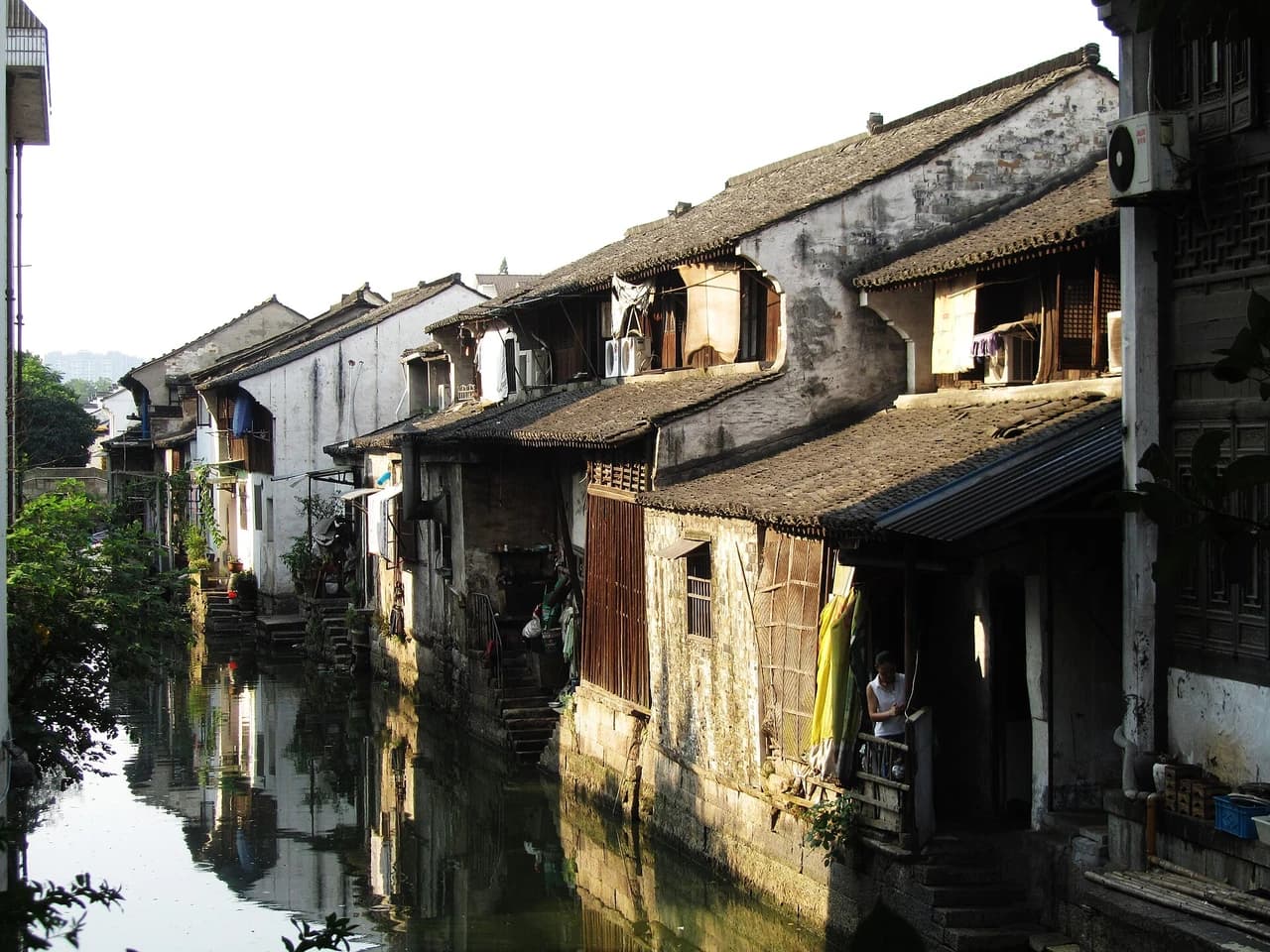
Cangqiao Straight Street is a historic neighbourhood in Shaoxing where canals, stone bridges and residential lanes form the setting for a slower walk. Look beyond the shopfronts to the relationship between homes and waterways. Nearby museums and courtyards have their own access conditions; the street is not a single attraction ticket or a guarantee that every building is open.
Orchid Pavilion
兰亭
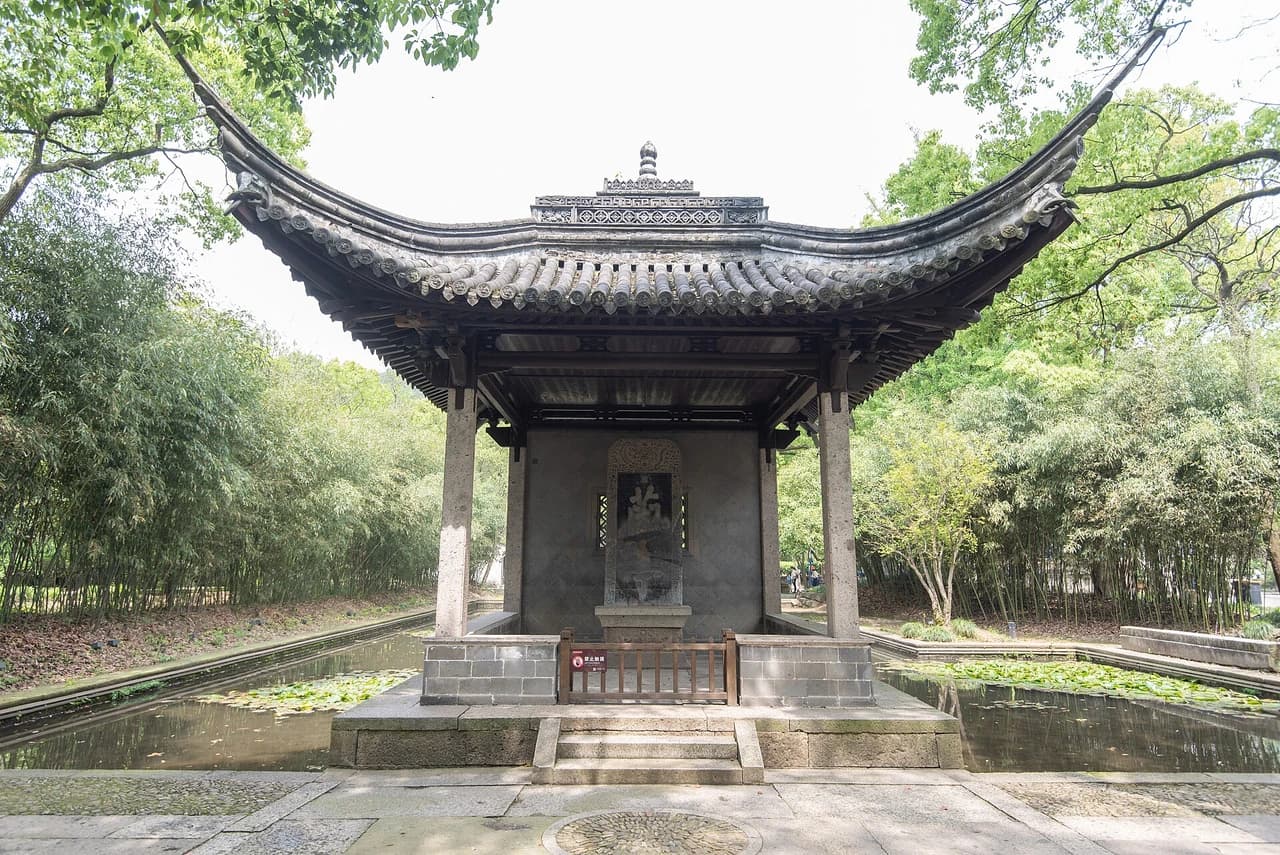
Lanting is located at the foot of Lanzhu Mountain about 13 kilometers southwest of Shaoxing City. It is famous all over the world because Wang Xizhi of the Eastern Jin Dynasty wrote the "Preface to the Lanting Collection", "the best running script in the world" here. It is a pilgrimage place for calligraphy lovers. The scenic spot is famous for the Chinese garden aesthetics of lush forests and bamboos and winding water bottles. The core attractions include Echi ("Echi" monument of father and son), Lanting Stele Pavilion (Kangxi imperial pen), winding water bottle ruins, Wang Youjun Temple, Imperial Stele Pavilion (the same stele for the ancestors of Kangxi and Qianlong), Linchi Eighteen Tanks, Tianzhang Temple Ruins and Lanting Calligraphy Museum.
Mausoleum of Yu the Great
大禹陵
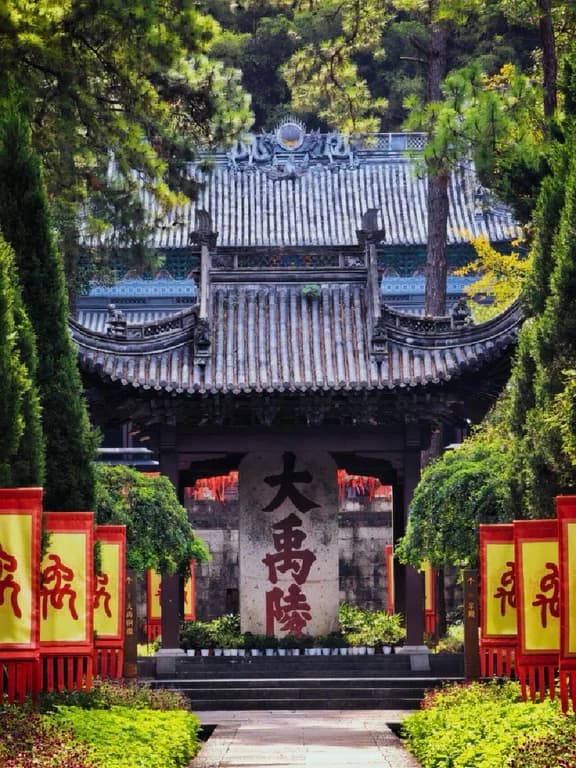
The site connects Kuaiji Mountain with the memory of Dayu, the flood control hero and founder of the dynasty in early Chinese tradition. Temples, inscriptions, sacrificial axes, and later monuments represent national and local commemorations of past dynasties, not archaeologically confirmed tomb life. A careful visit should distinguish between mythology, sacrificial history and physical landscape, and at the same time understand the importance of the combination of the three.
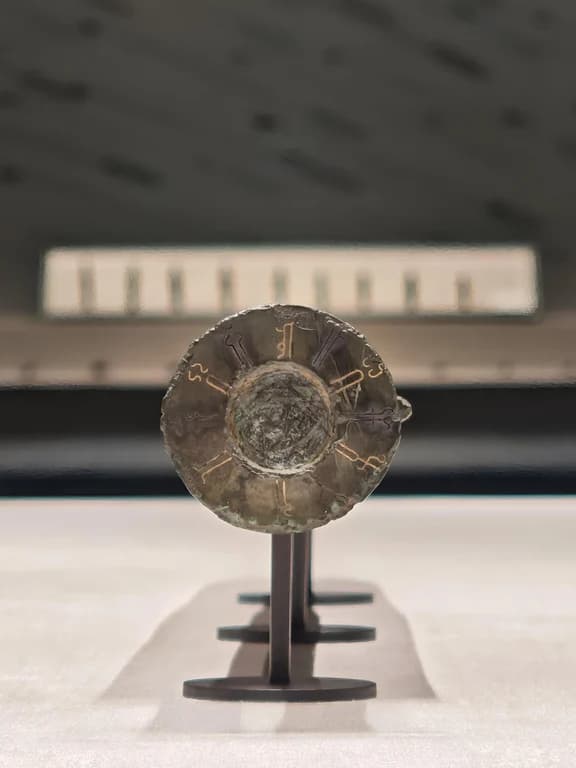
Shaoxing Museum
绍兴博物馆
Shaoxing Museum introduces ancient Yue archaeological culture and urban development through weapons, ritual vessels, ceramics, and regional tomb and settlement materials. The compact chronology explains the political world behind familiar stories such as Gou Jian, and also helps understand later canals, bridges and craft traditions. Museum evidence allows for a deeper presentation of pre-Qin history beyond the tourism of literary celebrities.
Local snacks
What to eat in Shaoxing
These cards describe dishes, not restaurants.
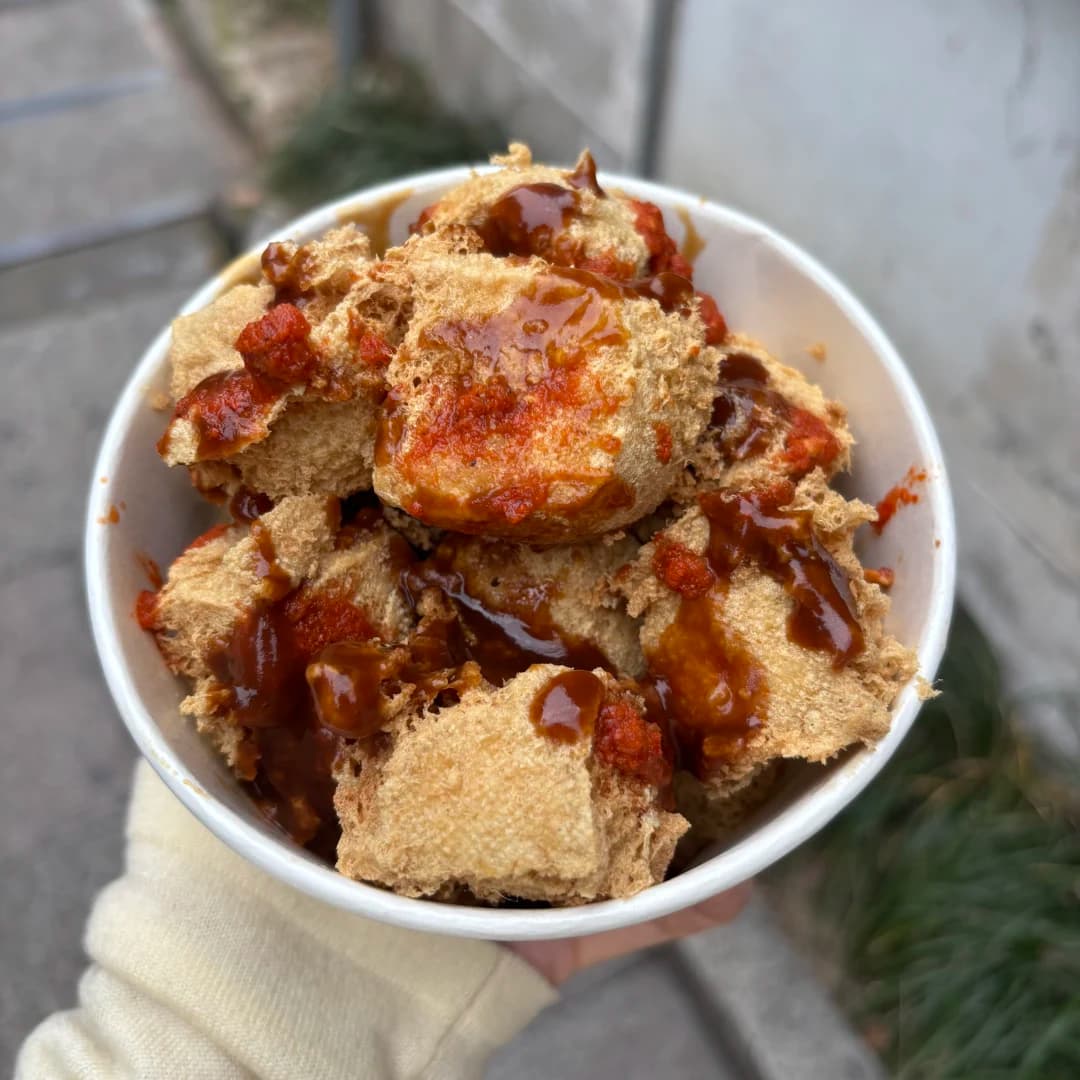
Strong fermentation flavor, crispy outside and salty flavor, spicy and sweet options
Shaoxing Stinky Tofu
绍兴臭豆腐
Marinated fermented tofu is fried until crispy on the outside and tender on the inside, and served with hot sauce or sweet fermented sauce. The special smell comes from controlled fermentation.
It should be eaten hot and choose a stall with a steady flow of customers and sanitary brine and frying operations; it contains soybeans and the sauce may contain gluten.
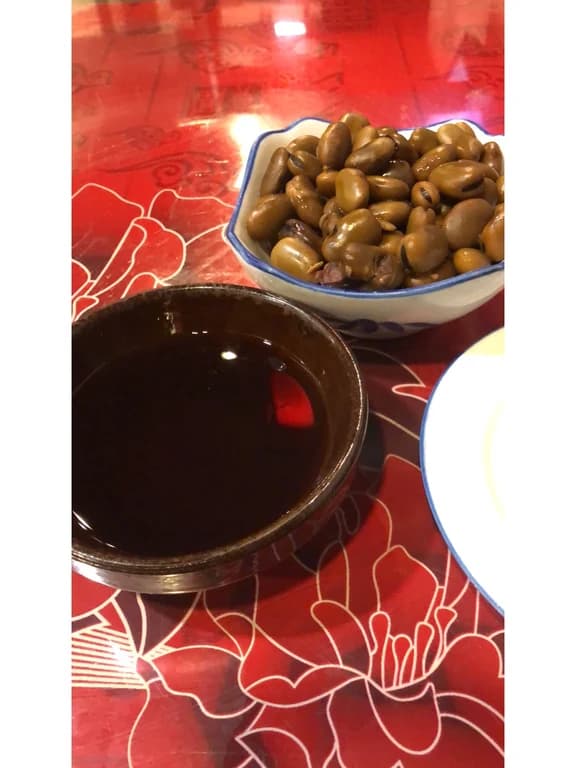
Savory herbs, slightly chewy
Fennel Beans
茴香豆
Broad beans are cooked with fennel, salt and other spices until salty and slightly chewy. It is a simple snack closely linked to Shaoxing tavern culture and the works of Lu Xun.
It should be consumed in small amounts and must be avoided by broad bean patients; packaged products may contain higher sodium content.
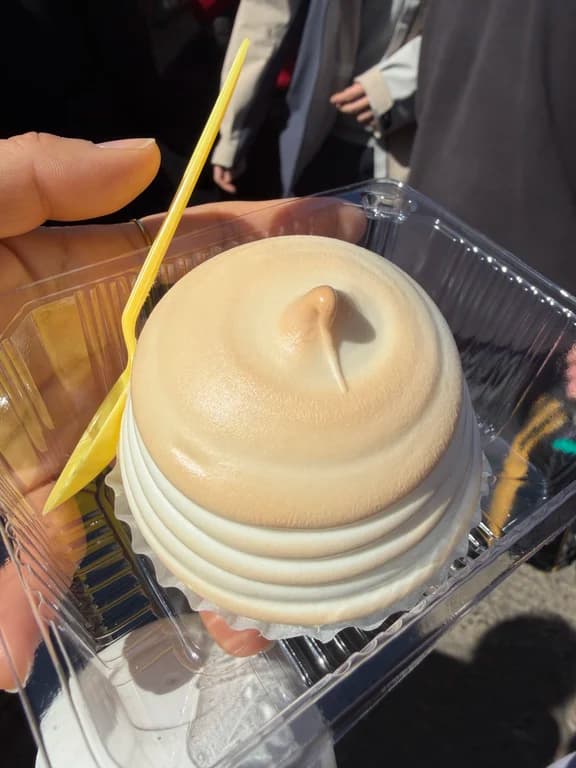
Sweet and creamy, crispy base and light filling
Shaoxing Cream Pastry
奶油小攀
A small tart-shaped pastry shell holds a sweet meringue or cream filling, and is baked or shaped until lightly colored. It has both a crispy base and a light filling.
Best eaten fresh the same day and often contain gluten, eggs, and dairy; be sure to keep the cream-filled version refrigerated.
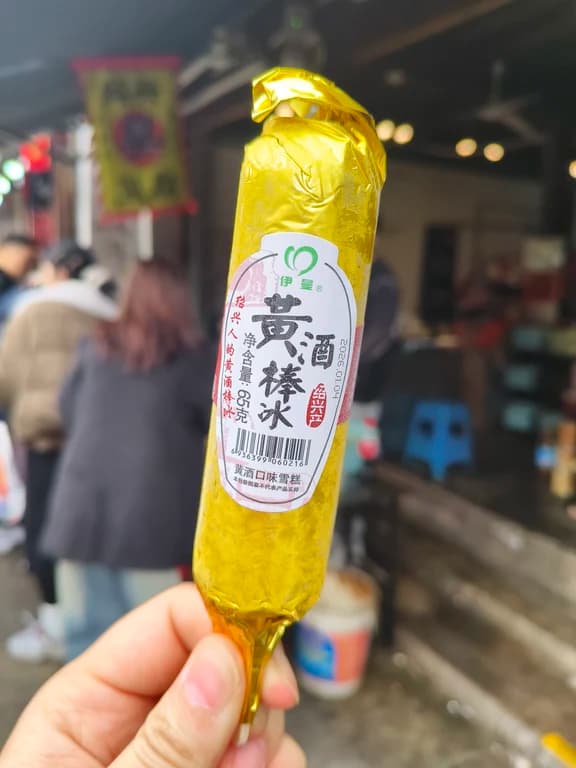
Cool and creamy, malty aroma of distiller's yeast, may contain trace amounts of alcohol
Shaoxing Yellow-wine Popsicle
黄酒棒冰
Modern ice products combine the flavor of Shaoxing rice wine with a milk or sweet ice base, transforming urban winemaking culture into a summer dessert.
You should check the label to confirm the true alcohol and dairy content; if you use alcoholic rice wine, it is not suitable for children, pregnant women, before driving, or those who need to stop drinking.