
广州
Guangzhou
Guangzhou is a Pearl River trading city with more than 2,000 years of maritime exchange history coexisting with high-density modern urban areas. Lingnan ancestral halls, archaeological sites, arcades, markets, gardens and Cantonese cuisine culture are suitable for in-depth exploration by area. With high humidity and cross-city travel time consuming, it’s often more reasonable to focus on one or two areas each day rather than chasing a list of landmarks.
At a glance
- Stay
- 2–3 days
- Best seasons
- Oct–Dec, Mar–Apr
- Airports
- Rail or road access
- Region
- South China
Last updated: 9/29/2026
One thing to check before you arrive
Confirm your terminal at Baiyun Airport
Baiyun Airport T1 ceased operations on 7 May 2026. T3 currently has no direct metro service: take Metro Line 3 or 9 to Gaozeng station, then use exit B for the T3 shuttle. Before setting off, recheck your airline’s notice, your terminal and the latest official shuttle arrangements.
Read the official visitor guidance (opens in a new tab)Arrival tips checked on 16 October 2026. The Chongqing section is itinerary advice, not a guarantee of accessible facilities.
Plan your visit
Plan 2–3 days in Guangzhou: Yongqing Fang, Shamian and the Pearl River skyline, with neighbourhood choices, airport arrival checks and practical travel links.
How could I spend two or three days in Guangzhou?
Suggested itinerary: spend day one exploring Xiguan, with Yongqing Fang and Enning Road as a walking cluster; add Shamian if your pace and transport allow. Use day two for Zhujiang New Town and the Pearl River skyline, choosing Canton Tower only if you want a ticketed viewpoint. Keep a third day for a museum, food stops or a slower return to a favourite neighbourhood. These are editorial suggestions, not a packaged tour.
Which neighbourhood should I stay in?
Consider Liwan/Xiguan if old streets and Cantonese food are your priority; consider Tianhe/Zhujiang New Town if your plans centre on the modern city. Compare the hotel's actual metro connection, walking distance with luggage and your arrival station. Canton Fair dates can affect availability, so compare your dates before booking.
What should I check for the airport transfer?
Check the terminal on your flight booking first. Baiyun Airport has different terminal access arrangements: the airport authority's October 2026 notice describes a T3 connection via Gaozeng, so do not assume every terminal uses the same metro stop. Recheck the current route and last service for your arrival time, and keep the hotel's Chinese address for the onward journey.
Can I combine every attraction as a walking route?
Group Yongqing Fang and Enning Road together, but plan a separate transfer to the modern skyline area. Check travel between Shamian, your chosen museum and Canton Tower rather than interpreting the city list as a walkable itinerary. Museum admission, tower tickets and river cruises have separate arrangements; allow time for the return journey after an evening visit.
Reviewed 19 October 2026. Itinerary and accommodation areas are editorial suggestions. Confirm current terminal transport, opening and booking arrangements before travel.
First visit
Arrive and settle in Guangzhou
Start with arrival and where to stay, then choose your sights. Recheck transport and accommodation details before booking.
Getting there+
Baiyun (CAN) is 30 kilometres north; metro line 3 reaches the centre in about 45 minutes. Guangzhou South is the high-speed hub, far to the south on metro lines 2 and 7: Hong Kong West Kowloon is under an hour, Guilin about two and a half, Changsha two and a half, Shanghai seven and a half. The old Guangzhou station in the centre is for slower trains.
Rail tip. Your passport is your ticket. Book on 12306 or Trip.com, then go straight to the gate. See Getting around. The Trip.com link earns us a small commission at no cost to you (how that works).
Stay online. Google, WhatsApp and Instagram are blocked on Chinese networks; a travel eSIM that roams gets around it. Install one before you fly — Saily takes US$5 off a first plan with the code CHINA. See Staying online. The code earns us the same amount in Saily credits, at no cost to you (how that works).
Where to stay+
Liwan and Xiguan
荔湾·西关
Arcaded streets, old teahouses, and the city's best walking. Stay here.
The old merchant quarter west of the centre: Enning Road, Yongqing Fang, Shamian Island and the streets around them. Guesthouses in restored shophouses, morning tea on every corner, and metro lines 1 and 6.
first visitfoodwalking
Yuexiu
越秀
The historic centre. Parks, museums and Beijing Road, well connected.
Around Yuexiu Park and the Sun Yat-sen Memorial Hall. Mid-range hotels, older streets, and most of the city's museums within a short walk.
conveniencesights
Tianhe and Zhujiang New Town
天河·珠江新城
Towers, malls and the opera house. Easy, and not very Cantonese.
The central business district. International hotels and the Canton Tower across the river. Fine if you need it; a metro ride from everything old.
businessskyline
Booking. Compare hotels in Guangzhou on Trip.com, filtered to its China travel essentials list: English-speaking staff, foreign cards, guest rating 8 or higher. See Where to stay. Booking through this link earns us a small commission at no cost to you (how that works).
Overview+
FUJIANGUANGXIHAINANGuangzhou
Guangzhou has been trading with the outside world for two thousand years and it shows: in the arcaded shophouses of Xiguan, the European villas on Shamian Island, the ancestral halls paid for by emigrants who did well abroad. It is a big city that does not feel like one once you are inside the old districts.
The day starts early here. Morning tea, which means dim sum and a pot of something, runs from seven until early afternoon and is the city's social institution. Do it once in a grand old teahouse and once in a neighbourhood place where the trolleys come to the table.
The climate is the thing to plan around. Summers are hot, wet and long, with typhoons from July to September. October to December is dry and mild and the best time to walk.
Where next?
Save places you like, then use your saved list to build a trip.
Practical travel guides
Places to explore in Guangzhou

Yongqing Fang and Enning Road
永庆坊·恩宁路
No. 99 Enning Road, Liwan District, is a model of revitalization and transformation of Xiguan Qilou Street, integrating old Xiguan style and modern cultural creativity. Key attractions: Night view of Moon Bridge, Cantonese Opera Art Museum, Bruce Lee’s ancestral residence, Zhongshuge, Enning Road Qilou Street.
Beijing Road and the old centre
北京路
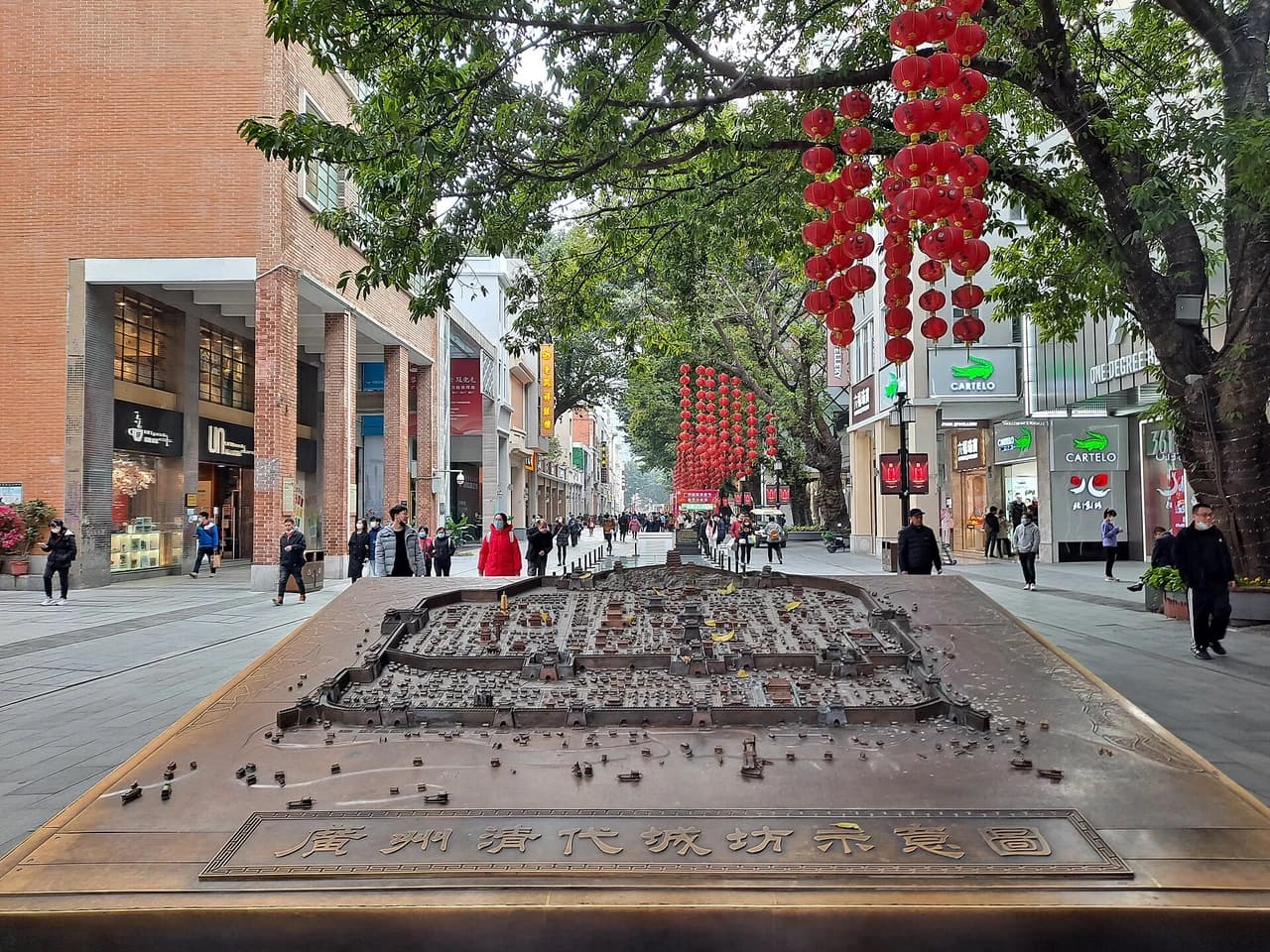
The Millennium Commercial Pedestrian Street in Yuexiu District has a total length of about 1,500 meters and a core tourist section of about 1 kilometer. It is the core section of the urban central axis of Guangzhou that has not shifted for more than two thousand years. The highlights are the thousand-year-old ancient road ruins under the glass cover at your feet, the night view of the Great Buddha Temple and the Huifu East Road Food Street.
Kaiping diaolou
开平碉楼
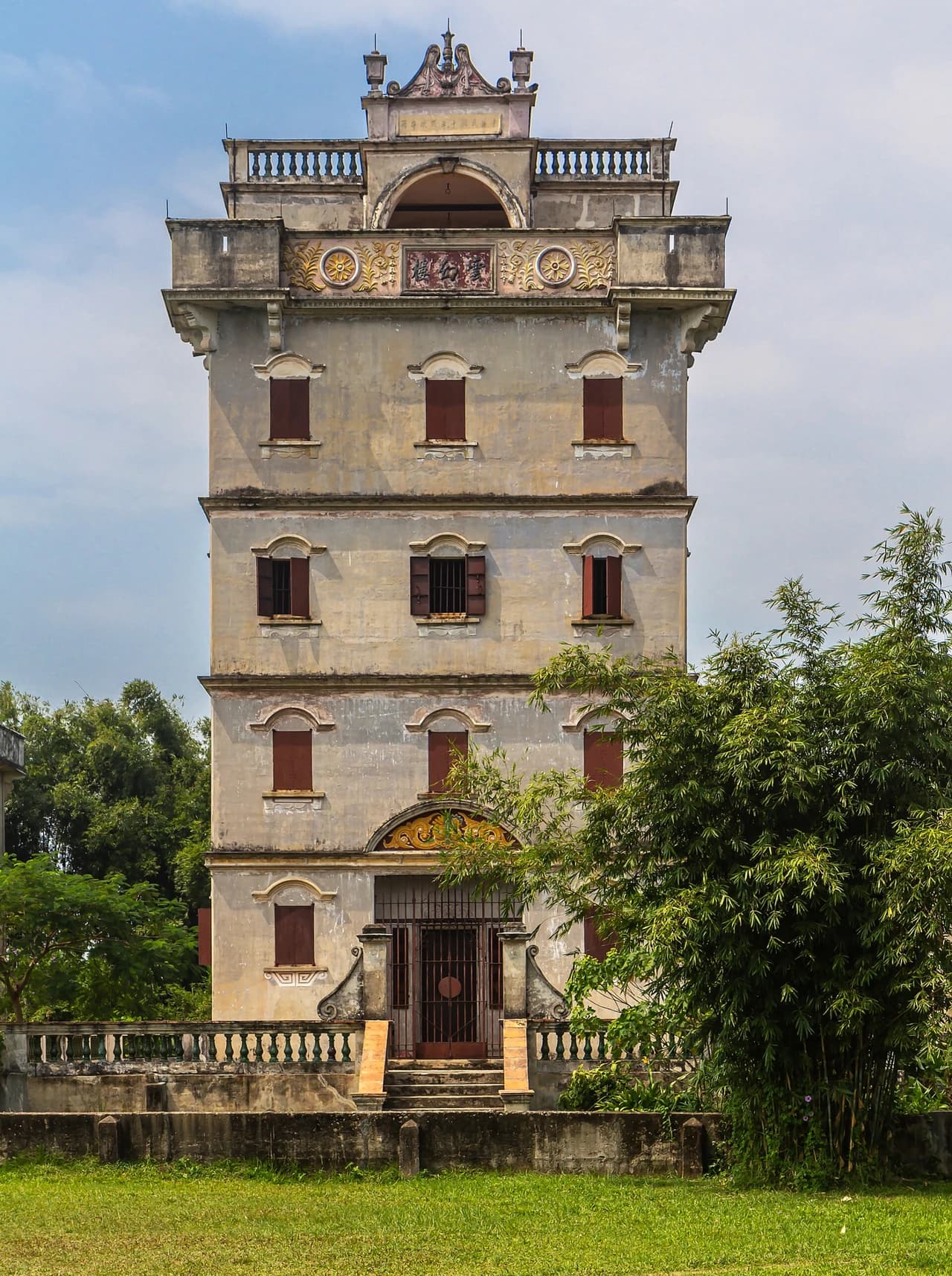
Kaiping Diaolou and Villages is a UNESCO World Heritage site in Kaiping, outside Guangzhou. Its fortified village towers combine local building traditions with overseas influences. Plan this as a separate excursion with transport between the chosen villages and a confirmed return journey, rather than a stop on a Guangzhou city walk.
Guangzhou Chimelong Tourist Resort
广州长隆旅游度假区
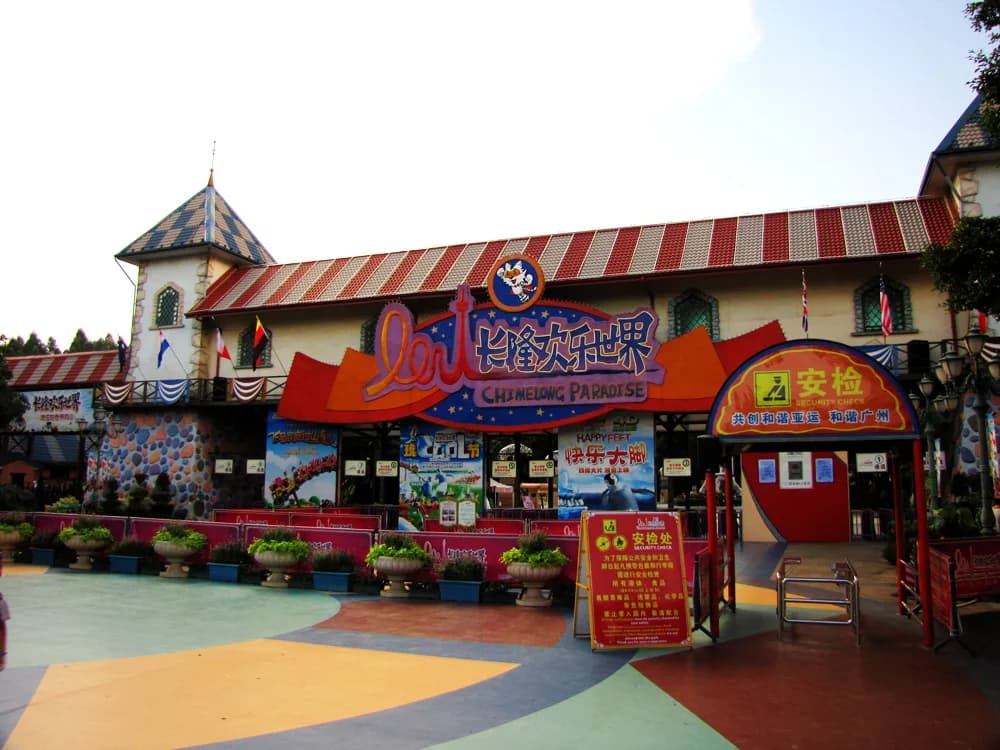
Guangzhou Chimelong Tourist Resort includes the Safari Park, Paradise amusement park, Water Park, Birds Park, performances and hotels. Visiting arrangements and tickets differ between parks. Decide on your main experiences before planning a day or several days. Current reference images concentrate on historical rides in Chimelong Paradise; they do not represent every park or attractions open today. This is not Zhuhai Chimelong.
Canton Tower
广州塔
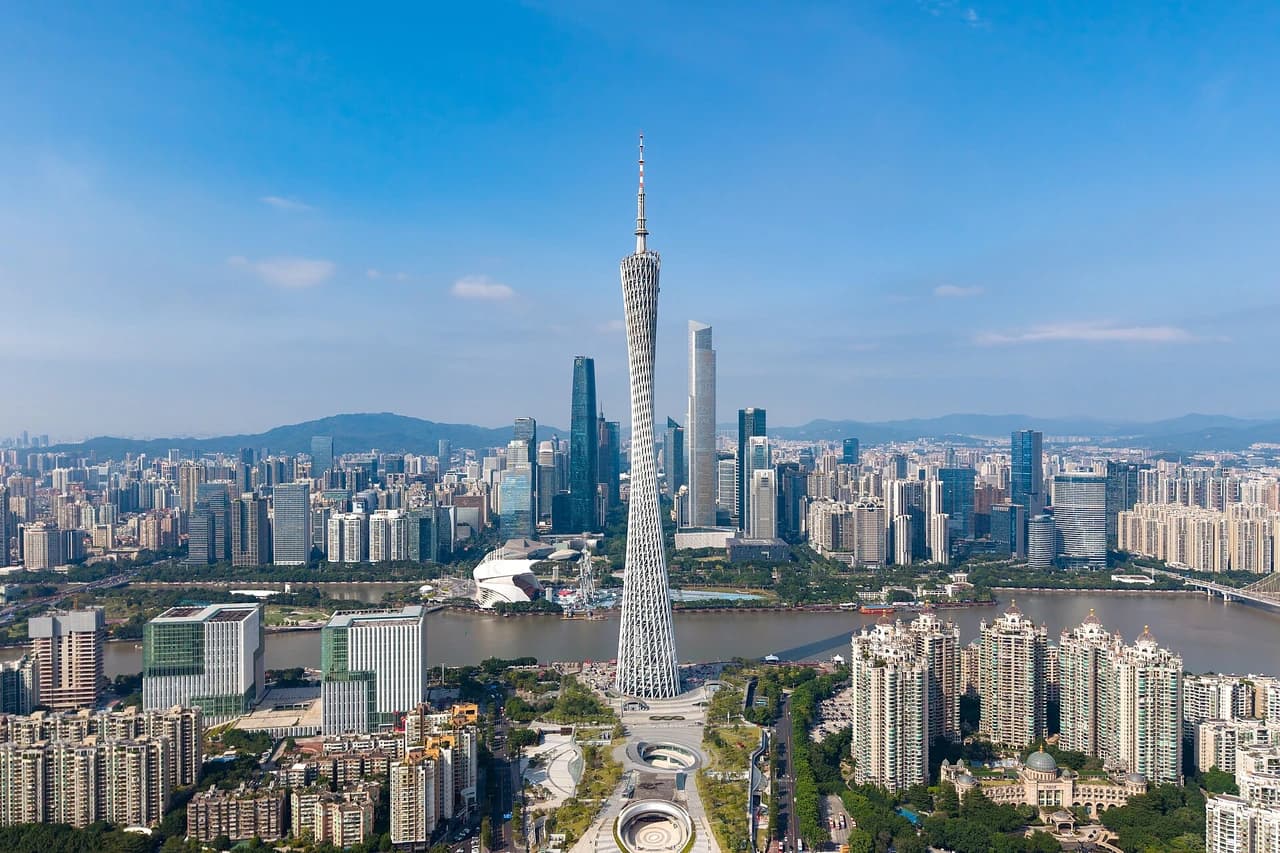
The landmark "Xiaomanyao" at No. 222 Yuejiang West Road, Haizhu District. Climbing the tower offers a panoramic view of both sides of the Pearl River and Guangzhou City. There are 433-meter white cloud starry sky observation hall, 460-meter Ferris wheel, 480-meter high-speed sky, 488-meter outdoor observation deck and other projects in the tower.
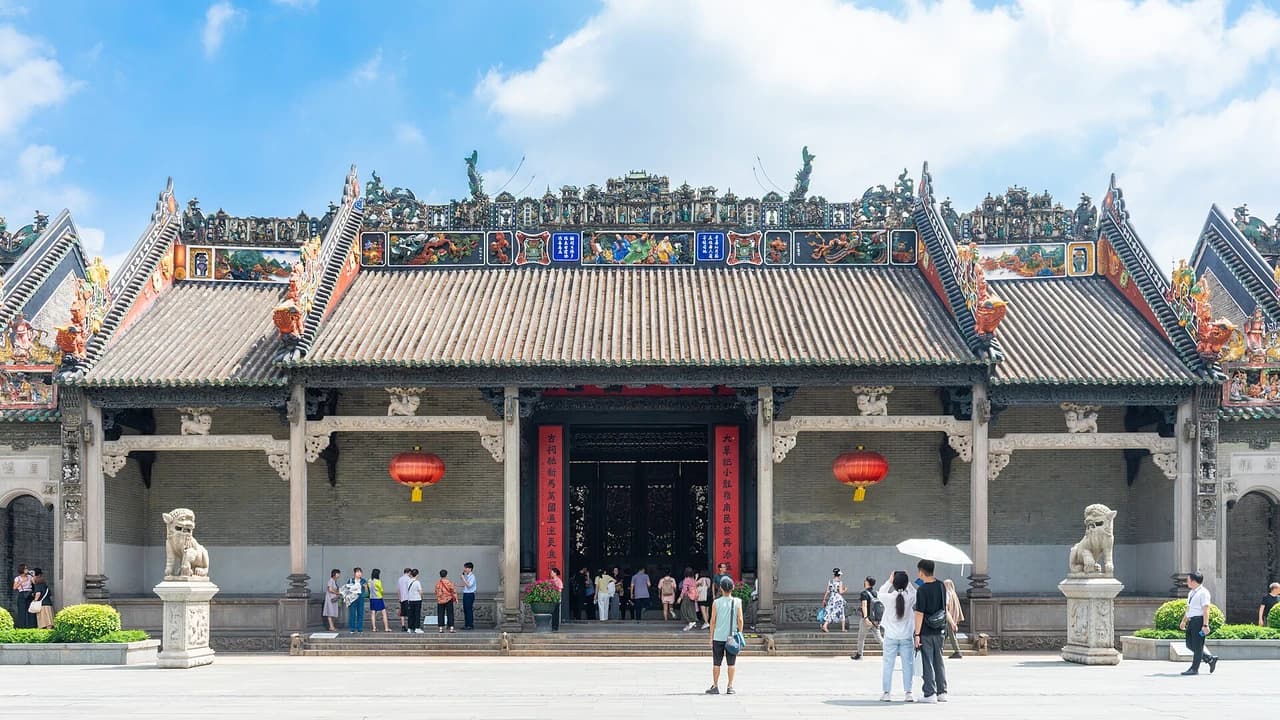
Chen Clan Ancestral Hall
陈家祠
The Chen Family Ancestral Hall was jointly built by Chen clans from all over Guangdong in the late Qing Dynasty. It has the functions of both an ancestral hall and an academy. The courtyard focuses on displaying Lingnan wood carvings, stone carvings, brick carvings, pottery sculptures and gray sculptures, and is now used as a Guangdong Folk Craft Museum. Visiting should not only look at a single piece of decoration, but also understand the ceremonial sequence composed of the roof, hall and patio.

Nanyue King Museum
南越王博物院王墓展区
The museum was built around the original site of the tomb of the Nanyue King in the early Western Han Dynasty. Jade objects, seals, bronzes and foreign materials show the connection between the Lingnan Kingdom and the political and maritime exchanges of the Han Dynasty. Entering the original site of the protected burial chamber provides a context of the archaeological space that ordinary display cabinets cannot provide.
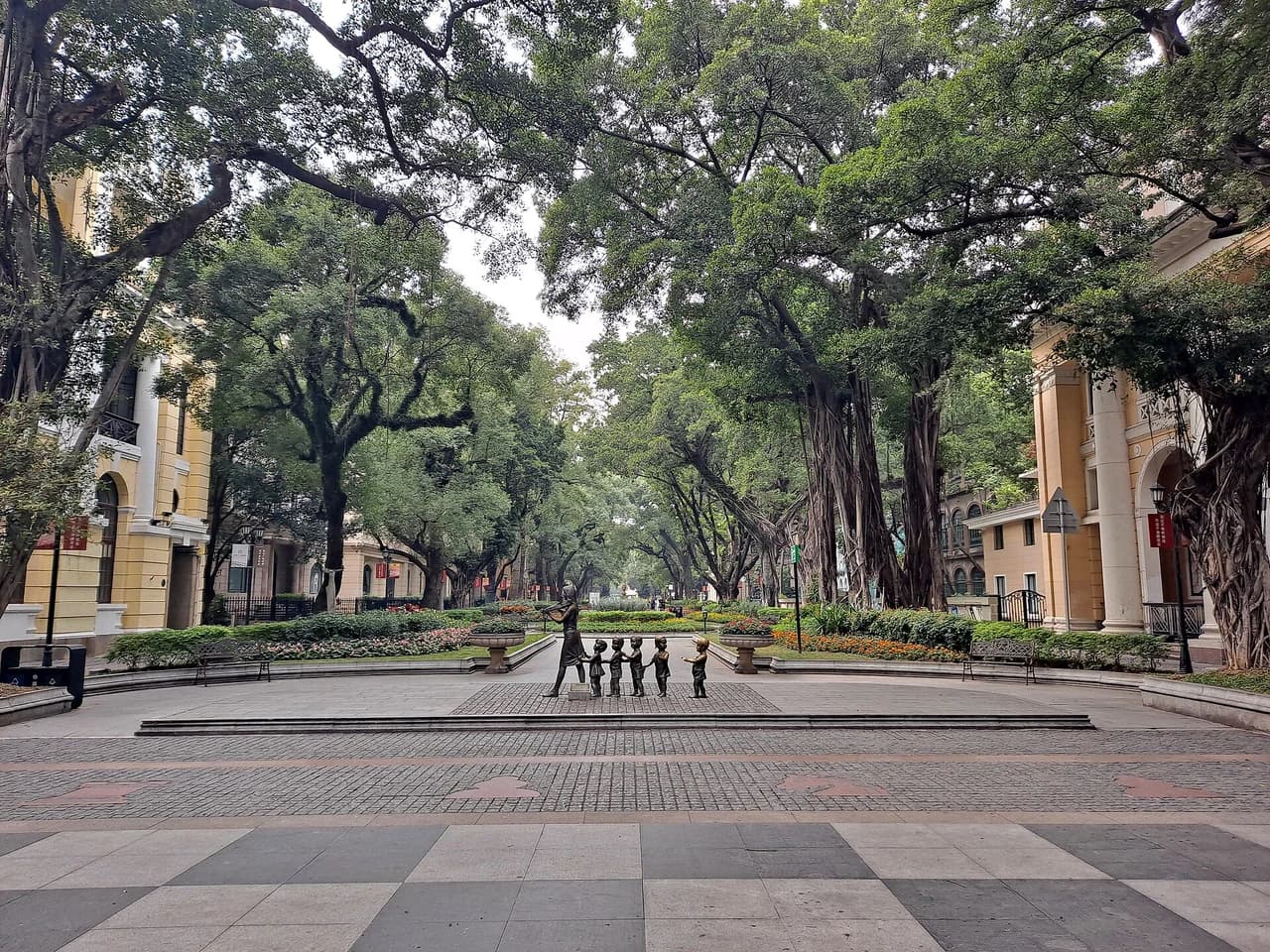
Shamian Island
沙面
Shamian is a small island by the Pearl River. Its checkered blocks, mature old trees, and the concentrated distribution of consulates, banks, and residential buildings from the 19th to the early 20th century record the modern history of Guangzhou's opening as a port. The public spaces may seem leisurely, but these buildings also carry the unequal background of foreign concessions and the complex process of China facing modern global trade.

Baiyun Mountain
白云山
Baiyun Mountain is the main urban mountain on the north side of the central city of Guangzhou. Forest trails, reservoirs, gardens, temples and scenic spots are distributed over a large area. The altitude of the mountain is not extreme, but the hot and humid weather and the scale of the scenic spot make route selection important; the daily mountaineering lifestyle of local citizens is also part of the experience.

Guangdong Museum
广东省博物馆
The Guangdong Provincial Museum displays the context of the province through archaeology, ceramics, calligraphy and painting, natural history and the changes in the Pearl River Delta, placing Guangzhou into a larger area extending from the inland mountains to the South China Sea. The contemporary buildings in Zhujiang New Town also form a valuable contrast with the historical sites in Liwan and Yuexiu.
Local snacks
What to eat in Guangzhou
These cards describe dishes, not restaurants.

Various flavors, can be fresh, salty, sweet or crispy
Cantonese Dim Sum
广式点心
Cantonese-style tea drinking combines tea with steamed, baked, fried and other small snacks. Shrimp dumplings, siomai, rice rolls and steamed buns are just the starting point; ordering slowly in rounds and sharing with multiple people is the way of dining in itself.
It is better to order a few cages at a time while it is hot. You should check the pork and crustacean fillings. Many teahouses will also charge a tea seat fee.

Smooth and salty, slightly sweet with soy sauce
Cantonese Steamed Rice Rolls
布拉肠粉
Thin rice paste is steamed on cloth, rolled in eggs, beef, pork or shrimp, and then drizzled with light soy sauce. The ideal texture is smooth and slightly tough.
It should be eaten immediately while hot and the fillings chosen clearly; even if one orders vegetarian sausages, strict eaters should confirm the sauce ingredients.

Fresh and salty, obvious seafood flavor, noodles are chewy and chewy
Shrimp Wonton Noodles
鲜虾云吞面
Thin bamboo noodles and shrimp-based wontons are placed in a fresh soup base. Traditionally, the portions are small to keep the noodles elastic. Dried seafood is often used in the soup to add depth.
Check for shrimp, pork and egg allergens and eat before the noodles absorb the soup and soften.

Creamy, smooth and moderately sweet
Double-skin Milk Pudding
双皮奶
Sweetened milk and egg whites are gently steamed to create a smooth curd with a thin skin on the surface. This Pearl River Delta dessert can be served hot or cold. It looks simple but has a rich milk flavor.
You can choose hot or cold food. If you are allergic to dairy products or eggs, please inform us. The sweetness may vary in different stores.