洛阳
Luoyang
The importance of Luoyang comes from the many capital constructions and repeated reconstructions in the Yellow River Civilization, rather than from a completely preserved ancient city. Longmen records Buddhist patronage in the Northern Wei and Tang dynasties, Erlitou discusses early state formation, and the museum and archaeological site park explain the subsequent capital structure. Archaeological remains, protected grotto art and modern display reconstructions should be distinguished, and sufficient travel time should be reserved for dispersed points.
At a glance
- Stay
- 2–2 days
- Best seasons
- Apr, Sep–Oct
- Airports
- Rail or road access
- Region
- Central China
Last updated: 9/29/2026
First visit
Arrive and settle in Luoyang
Start with arrival and where to stay, then choose your sights. Recheck transport and accommodation details before booking.
Getting there+
Luoyang Longmen station is on the high-speed line, south of the centre and a short ride from the grottoes: Xi'an in about an hour and a half, Zhengzhou 40 minutes, Beijing three and a half to four hours. The older Luoyang station in the north serves slower trains. Beijiao (LYA) airport, ten kilometres north, has a few domestic flights; most people come by train.
Rail tip. Your passport is your ticket. Book on 12306 or Trip.com, then go straight to the gate. See Getting around. The Trip.com link earns us a small commission at no cost to you (how that works).
Stay online. Google, WhatsApp and Instagram are blocked on Chinese networks; a travel eSIM that roams gets around it. Install one before you fly — Saily takes US$5 off a first plan with the code CHINA. See Staying online. The code earns us the same amount in Saily credits, at no cost to you (how that works).
Where to stay+
Old town
老城
Inside the old east walls: the night market, Lijing Gate, water banquet restaurants.
Guesthouses in the lanes off Shizi Street. Metro line 1 reaches the centre; taxis to Longmen take half an hour.
first visitfoodatmosphere
Luolong and the south
洛龙
The new district between the high-speed station and the grottoes. Efficient.
Modern hotels near Luoyang Longmen station and the Luoyang Museum, ten minutes from the caves.
transitconvenience
Booking. Compare hotels in Luoyang on Trip.com, filtered to its China travel essentials list: English-speaking staff, foreign cards, guest rating 8 or higher. See Where to stay. Booking through this link earns us a small commission at no cost to you (how that works).
Overview+
SHANXIJIANGSUANHUISHANDONGHUBEISHAANXILuoyang
For much of the first millennium Luoyang was the eastern capital, and the Tang empress Wu Zetian ruled from here. The city she knew is under the modern one, but the Buddhas she paid for are still in the cliffs at Longmen, twelve kilometres south, where the Yi River cuts through limestone and a hundred thousand figures look out over the water.
The old walled town in the east has a night market, a rebuilt gate and the restaurants that serve the water banquet, a Tang-era procession of soups. The Sui and Tang palace site has been excavated and partly rebuilt in the centre, with the Yingtianmen gate lit at night.
April is peony month. The city has grown them for fifteen hundred years and every park is full of them and of visitors. Autumn is the quiet alternative.
Where next?
Save places you like, then use your saved list to build a trip.
Practical travel guides
Places to explore in Luoyang

Longtan Grand Canyon
龙潭大峡谷
Longtan Grand Canyon in Xin’an County features red rock walls, a narrow gorge, streams, pools and waterfalls. Walking through the valley reveals changes in cliffs carved by flowing water. The route includes steps and narrow sections; allow time for stops and the return. Distinguish it from similarly named gorges in other provinces: this entry refers to the attraction in Luoyang, Henan.
Shaolin Temple
少林寺
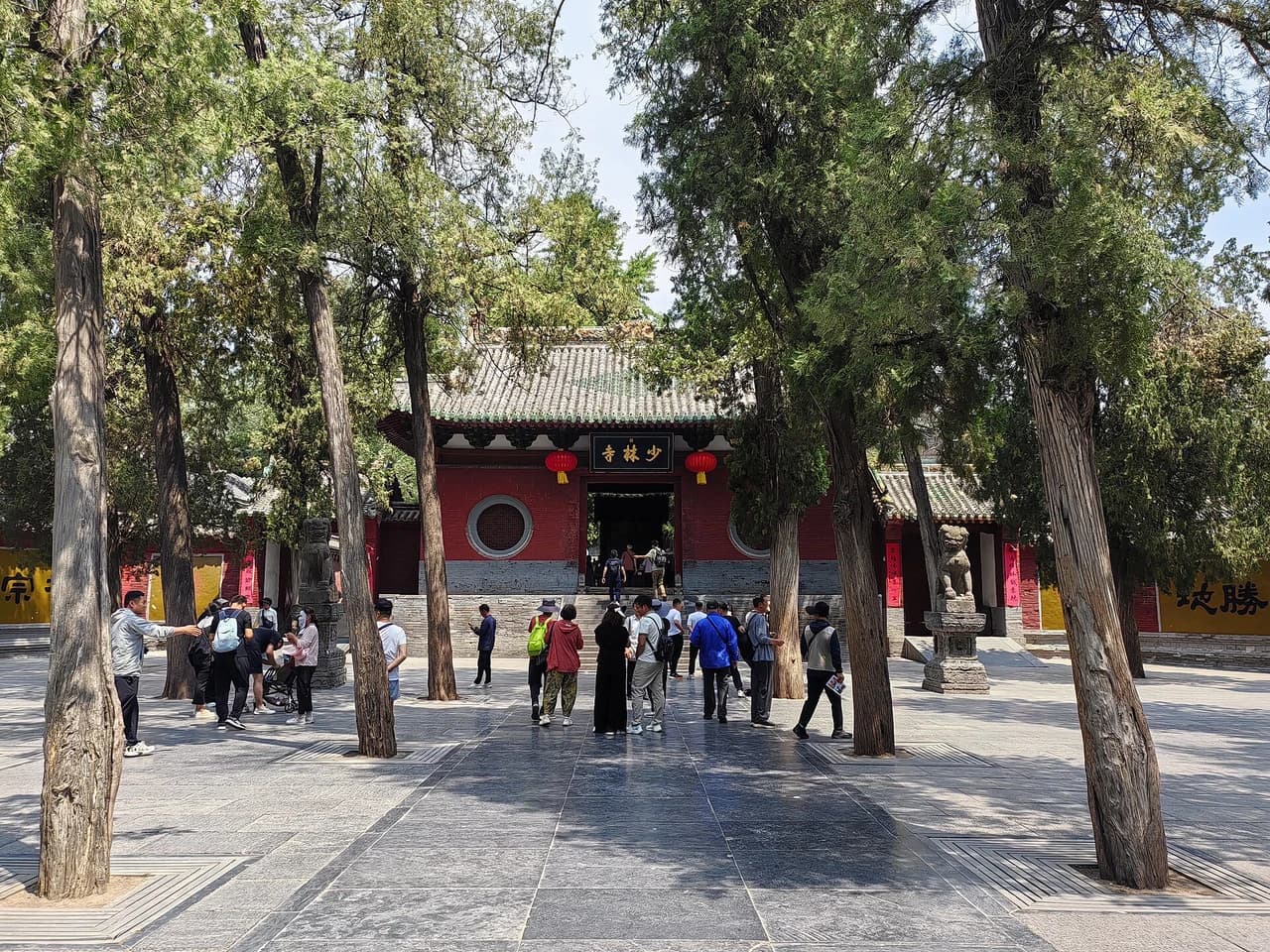
8. Shaolin Temple (Dengfeng, Zhengzhou, cross-city tour) History and culture: Shaolin Temple is located at the northern foot of Shaoshi Mountain in Songshan Mountain, Dengfeng, Zhengzhou. The temple was built in the 19th year of Taihe in the Northern Wei Dynasty (495). It is the ancestral home of Zen and the birthplace of Shaolin Kung Fu. There are more than 240 tombs of eminent monks in the pagoda forest in the temple, which is the largest group of ancient pagodas in China; the Thousand Buddha Hall has the mural "Five Hundred Arhats Chao Vairocana" in the Ming Dynasty and 48 foot pits made by monks practicing martial arts. In 2010, it was listed as a world cultural heritage as the "Heaven and Earth" historical building complex in Dengfeng.

Luoyang Baiyun Mountain
洛阳白云山
Baiyun Mountain in Song County is a forested mountain scenic area in the Funiu range. Combine mountain views at Yuhuang Summit with streams, waterfalls and forest walks. It is not Baiyun Mountain in Guangzhou; specify Song County, Luoyang in your itinerary. Summit views are strongly affected by weather, and seas of clouds in photographs should not be treated as daily sights. Reference photographs mainly show Yuhuang Summit’s mountain scenery.
White Horse Temple
白马寺
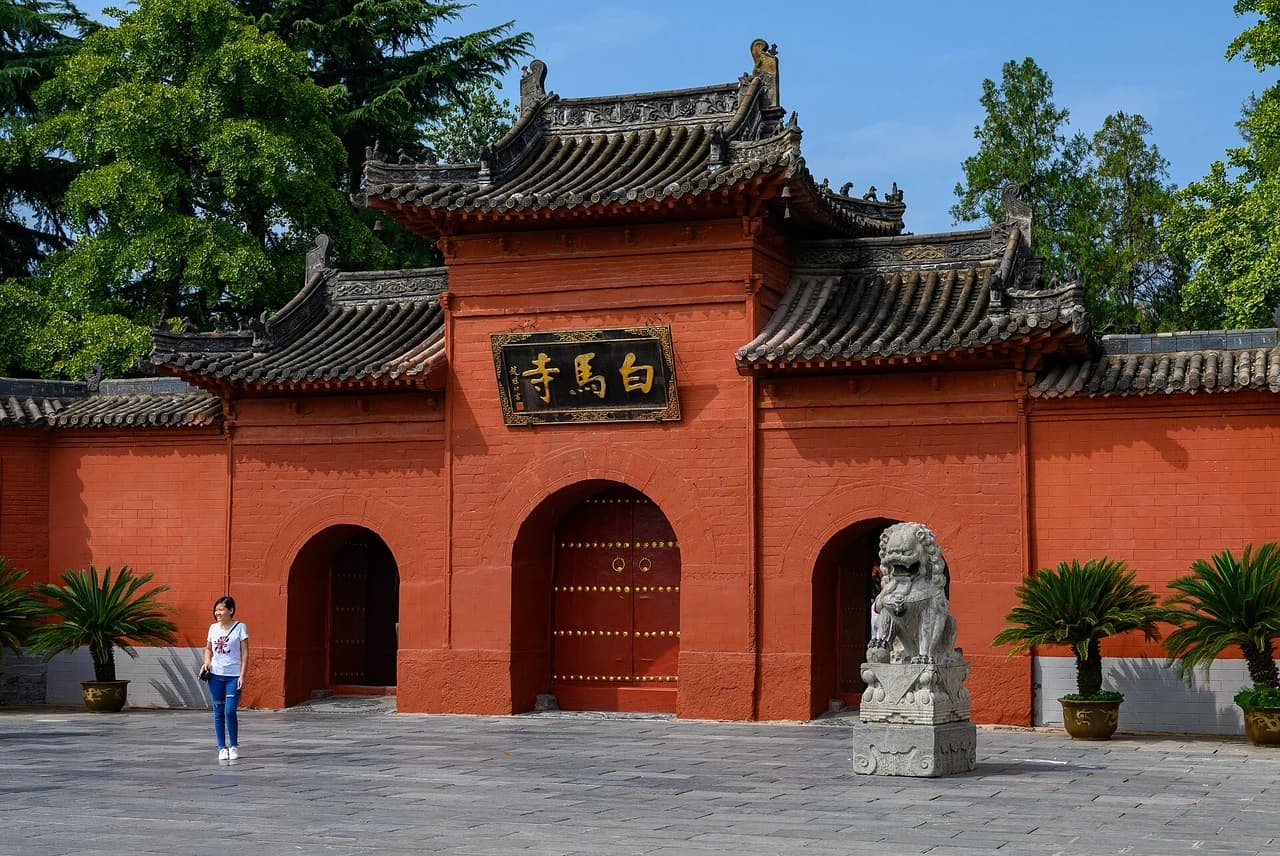
3. White Horse Temple History and Culture: White Horse Temple was built in the 11th year of Yongping in the Eastern Han Dynasty (68 years). It was named after the White Horse carrying sutras. It is the first government-run temple in China and is revered as the "source of Buddhism" and "ancestral court". The first Chinese translation of the Buddhist scripture "The Forty-Two Chapter Sutra" was translated here. The temple has a collection of Buddhist temples in the styles of Thailand, Myanmar, and India. It is the only temple in the world that has Buddhist temples in the styles of China, India, Myanmar, and Thailand. Qiyun Pagoda is an ancient brick pagoda from the Jin Dynasty. You can hear the echoes of frogs croaking when you clap. Di Renjie's tomb is also in the temple. You can get 3 sticks of incense for free at the gate, and the Zhiyu Teahouse inside the temple provides free tea. The tour takes about 2.5–3 hours.
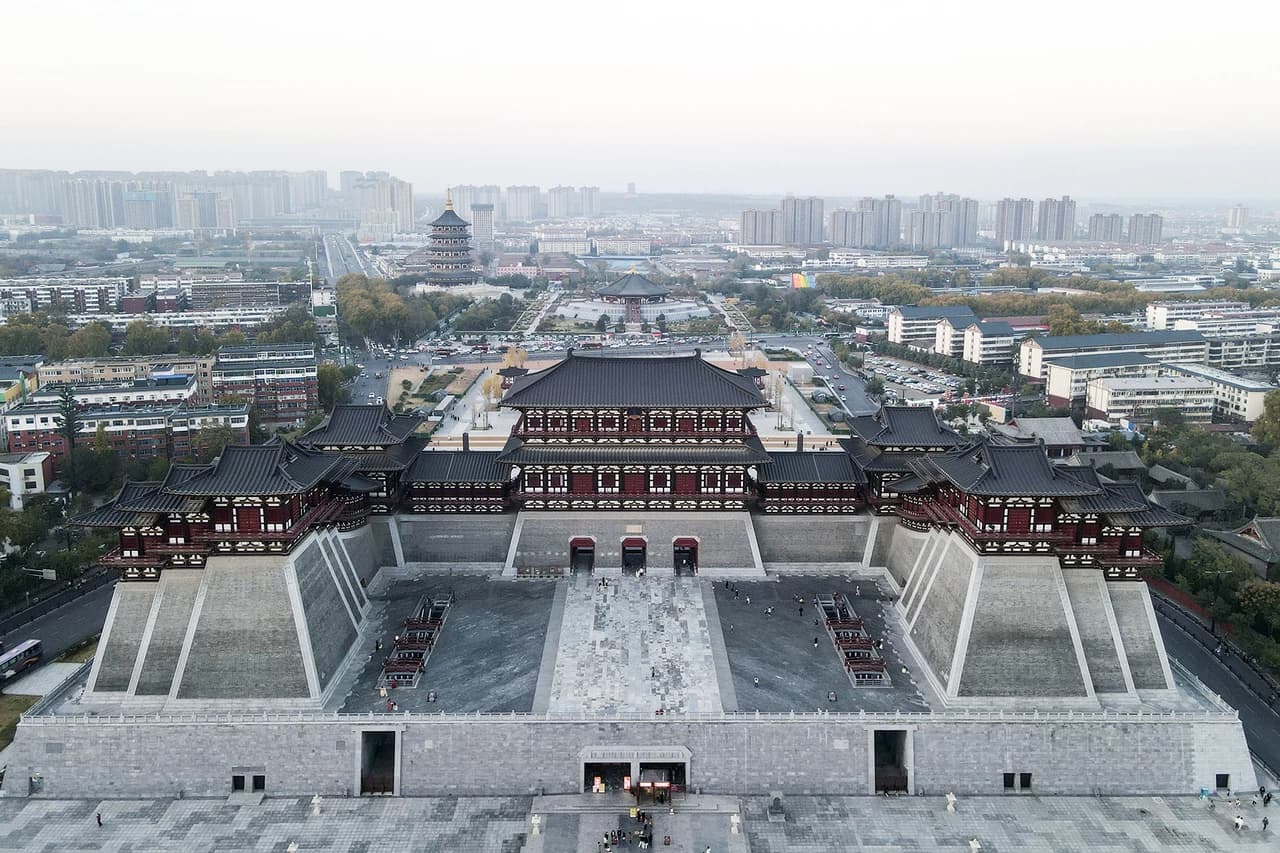
Yingtianmen and the Sui-Tang palace site
应天门·隋唐洛阳城
4. Yingtianmen and Luoyang City in the Sui and Tang Dynasties History and culture: Yingtianmen was the south gate of the Luoyang City Palace in the Sui and Tang Dynasties. It was built in the first year of Daye in the Sui Dynasty (605). Wu Zetian ascended the throne and proclaimed himself emperor here. The highest-level city gate regulation of "two views and three exits" was adopted, which influenced the layout of the Meridian Gate of the Forbidden City in later generations. The Luoyang City Heritage Park of the Sui and Tang Dynasties contains three major scenic spots: Yingtianmen, Mingtang Paradise, and Jiuzhou Pool. Mingtang is the "Wanxiang Shrine" where Wu Zetian governed, and Paradise is the Buddhist Pagoda. Public transportation: Take Metro Line 1 to Yingtianmen Station, exit A/C.
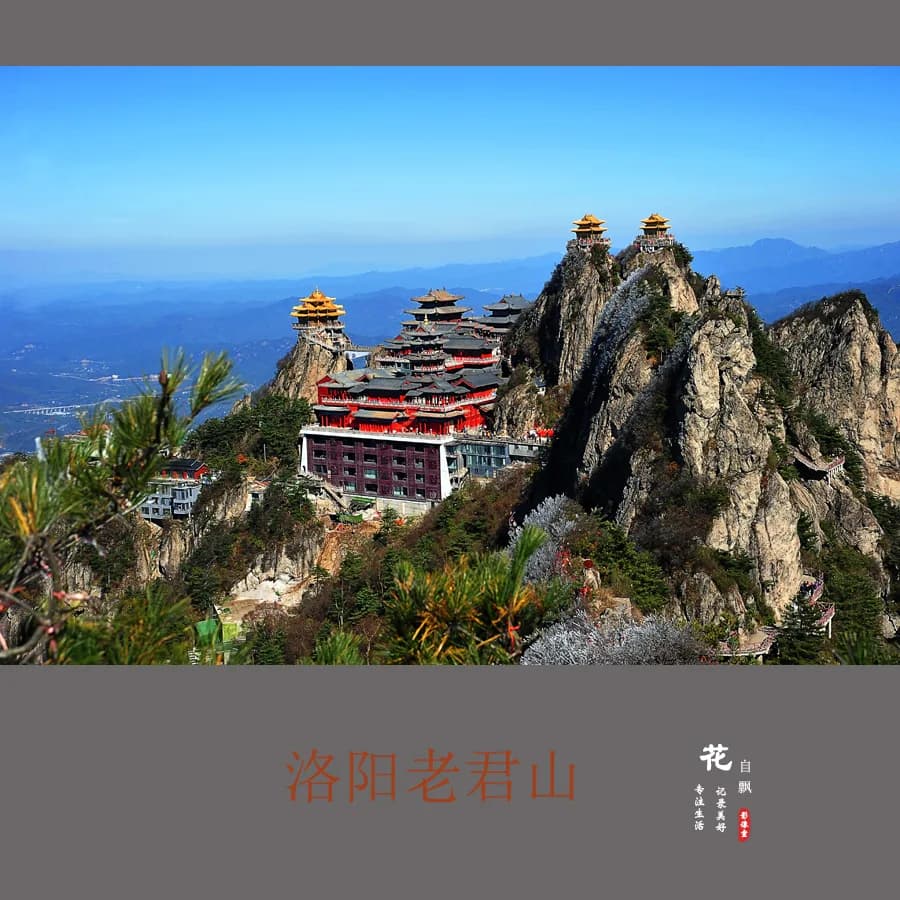
Laojun Mountain–Jiguan Cave Tourism Area
老君山—鸡冠洞旅游区
This joint tourism area comprises Laojun Mountain and Jiguan Cave. One features mountains, clusters of peaks and Taoist buildings; the other reveals natural cave formations. They do not share an entrance and are best planned as separate stages or days. Even with cable cars, Laojun Mountain requires walking time appropriate to your route. The current reference gallery shows Laojun Mountain; Jiguan Cave images are still to be added.
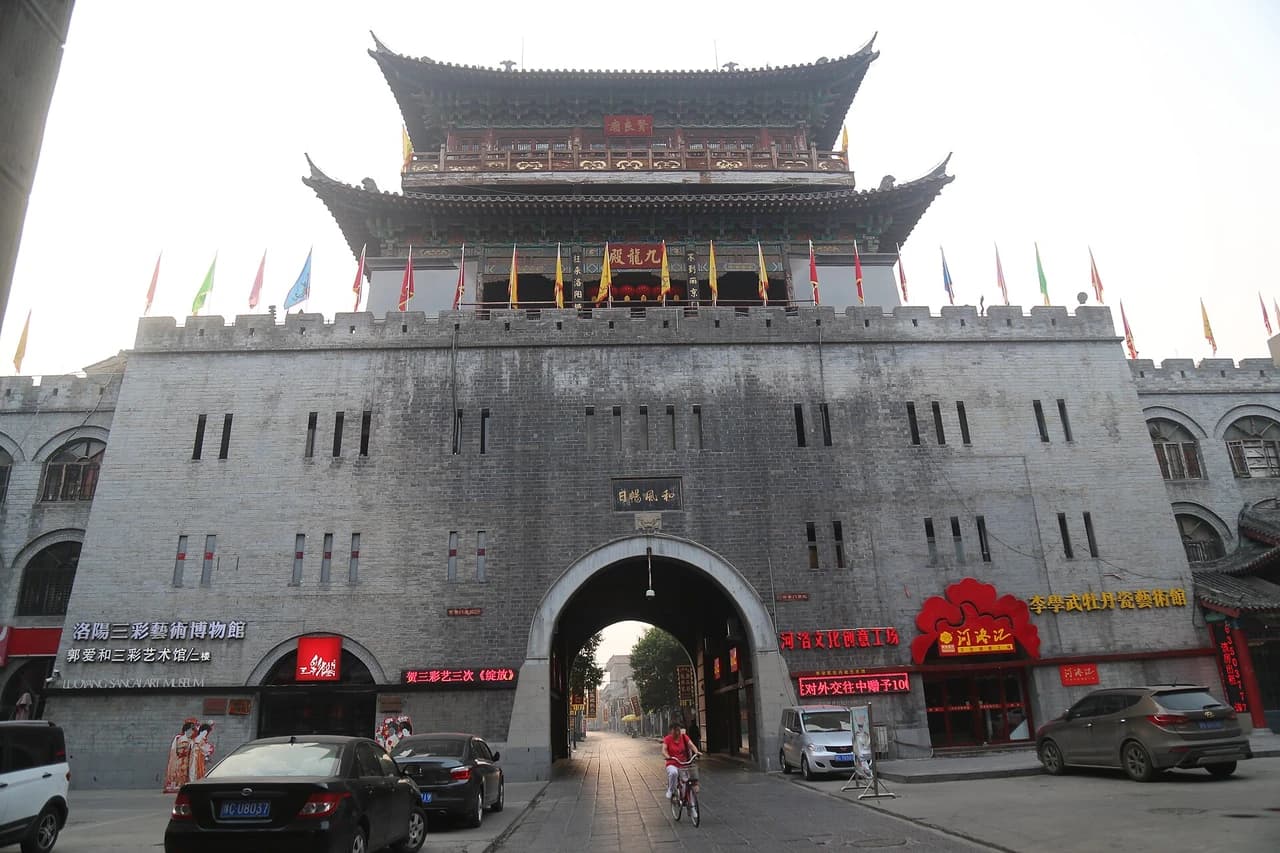
Old town and Lijing Gate
老城·丽景门
2. Luoyang Old City and Lijing Gate History and culture: Lijing Gate is the west gate of Luoyang Old City. It was first built in the Jin Dynasty (1217). The existing city tower was rebuilt on the original site in 2002. It consists of the city gate tower, barbican, city wall and moat. The barbican's "catching turtles in the urn" defense pattern is very recognizable. The Imperial History Museum in the city tower displays historical materials on 104 emperors who established their capitals in Luoyang. Public transportation: Take Exit A of Lijingmen Station on Metro Line 1 and walk for about 3–5 minutes.
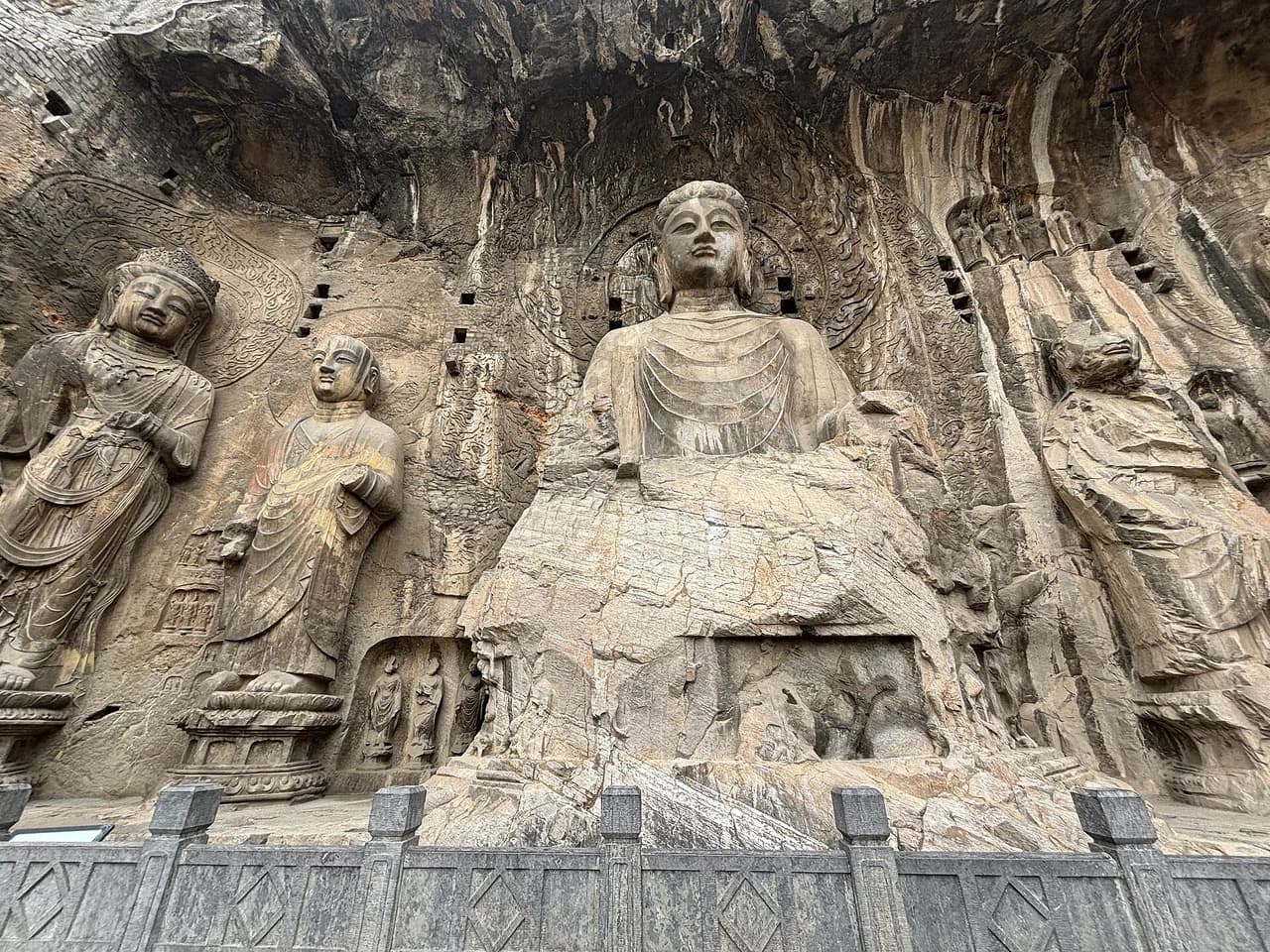
Longmen Grottoes
龙门石窟
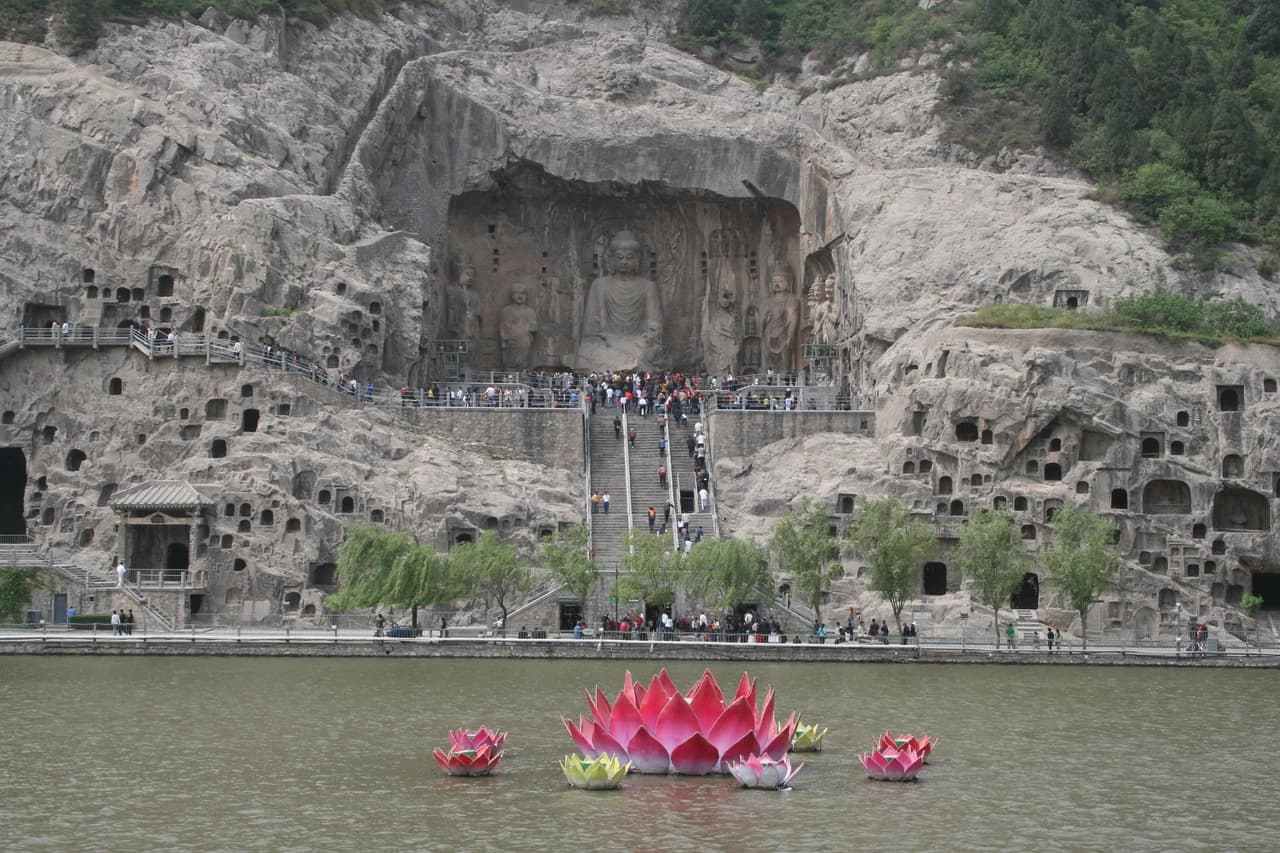
More than 2,000 caves and niches are spread out along the limestone cliffs of the Yihe River. The most intensive excavation period lasted from the late Northern Wei Dynasty to the prosperous Tang Dynasty. The early works reflect the changes in palace status after the capital was moved to Luoyang, while Fengxian Temple represents the mature royal scale and shape of the Tang Dynasty. The inscriptions, donors and medicinal prescriptions make this place a record of society and belief, rather than just a string of giant Buddhas.
Luoyang Museum
洛阳博物馆
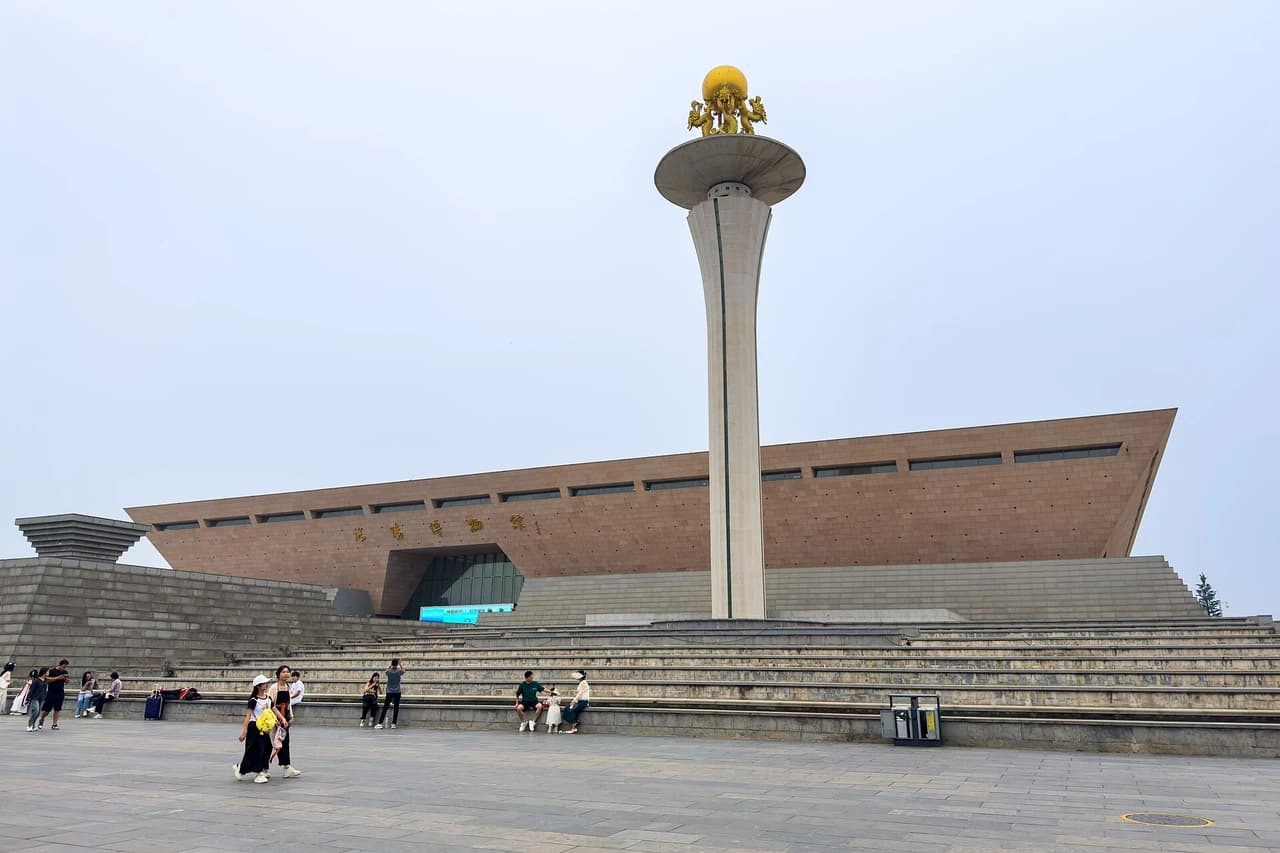
Luoyang Museum organizes the extremely long period of urban archeology according to prehistoric and early state, Han, Wei, Sui and Tang periods. Bronze, pottery, stone carvings and burial artifacts reveal multiple changes in political centres, trade and rituals. The core value lies in the chronological sequence: viewing each layer at the same time can prevent famous dynasties from being reduced to irrelevant labels, and also lay the foundation for understanding the scattered ruins of the city.

Erlitou Site Museum of the Xia Capital
二里头夏都遗址博物馆
The museum displays the archaeological culture and large-scale planned settlements of Erlitou in the early second millennium BC. Turquoise craftsmanship, bronze production, palace areas, roads, and rammed earth foundations support discussions of specialized crafts and early state formation. The correspondence between the site and the Xia Dynasty recorded in documents still involves interpretation, and excavation evidence should be distinguished from later textual identification.

Sui–Tang Luoyang City Archaeological Park
隋唐洛阳城国家遗址公园
The heritage park explains the important remains of the central axis of the eastern capital city of the Sui and Tang Dynasties, including archaeological areas related to Mingtang, Tiantang and Yingtianmen. Large modern restored buildings help present the scale of the lost capital, and protected foundation sites and excavation evidence are the archaeological basis. When visiting, you should distinguish between the original ground remains, academic interpretations and new performing arts buildings, rather than treating every tall building as an original from the Tang Dynasty.
Local snacks
What to eat in Luoyang
These cards describe dishes, not restaurants.

The soup is rich, spicy, sour and peppery, with many variations
Luoyang Water Banquet
洛阳水席
Served as a series of soups and sauces, often including the spicy and sour "peony agar", it is a set of banquet traditions rather than a single set menu.
Suitable for multiple people to share. Please confirm the pork, seafood and banquet portions before ordering; the order of dishes in different stores is not exactly the same.

Beef is fragrant, peppery and stomach-warming
Luoyang Beef Soup
洛阳牛肉汤
Slow-cooked beef soup with beef slices, herbs and shortbread crumbs, or served with cakes, especially for early morning breakfast.
It is advisable to eat the soup in the early morning when it is fresh, and choose the amount of meat and cake. Contains beef, the patties contain gluten and may be high in salt.

Hot, sour, salty and soft soup
Bufan Soup
不翻汤
Put the mung bean pancake into the hot and sour soup and eat it with vermicelli, kelp, shrimp skin and spices. The pancake gradually becomes soft after absorbing the soup.
You should ask about shrimp skin, soup base meat and spiciness; depending on the cake flour and seasonings, it may contain shellfish and gluten.

The flowers are sweet and the crust is crispy.
Peony Cake
牡丹饼
Crispy or soft pastry filled with sweet bean paste, nuts or fruit fillings, and flavored with peony-related aromas, is a modern local souvenir snack.
The ingredient list should be checked, as "peony" products vary widely and may contain nuts, dairy products or just flavored ingredients; the production date should be compared more than the packaging.