
苏州
Suzhou
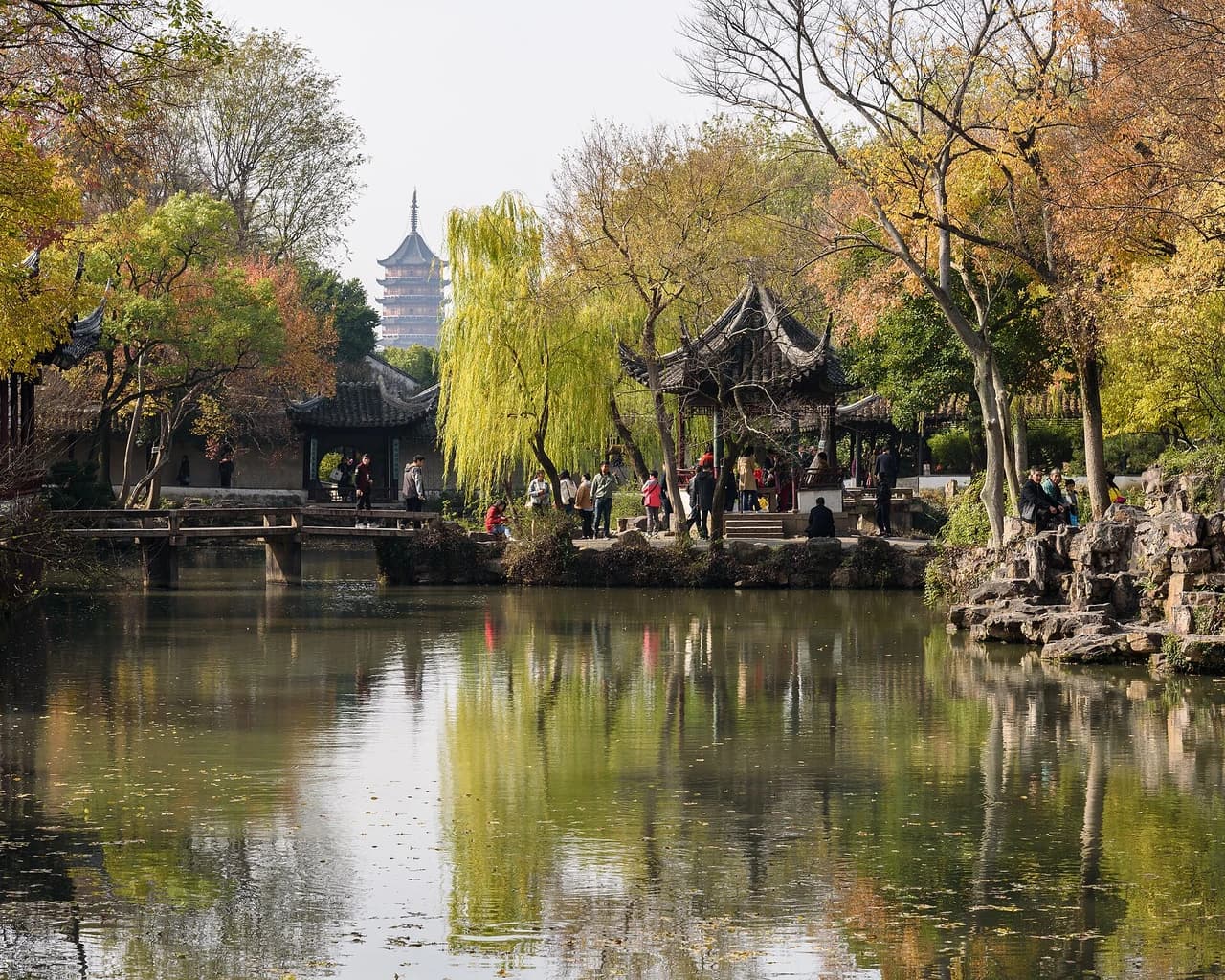
Suzhou is suitable for slowing down and observing: private gardens condense the landscape into a limited space, while canals, bridges, museums and streets where people still live extend the story beyond the pavilions. Staying one night allows you to see the gardens before the day visitors arrive, and you can also experience a quieter community in the evening.
At a glance
- Stay
- 2–2 days
- Best seasons
- Mar–May, Sep–Nov
- Airports
- Rail or road access
- Region
- East China
Last updated: 9/29/2026
First visit
Arrive and settle in Suzhou
Start with arrival and where to stay, then choose your sights. Recheck transport and accommodation details before booking.
Getting there+
No airport of its own; Shanghai Hongqiao is 25 minutes away by high-speed train to Suzhou station on the north edge of the old town, or Suzhou North for some services. Hangzhou is about 1.5 hours.
Rail tip. Your passport is your ticket. Book on 12306 or Trip.com, then go straight to the gate. See Getting around. The Trip.com link earns us a small commission at no cost to you (how that works).
Stay online. Google, WhatsApp and Instagram are blocked on Chinese networks; a travel eSIM that roams gets around it. Install one before you fly — Saily takes US$5 off a first plan with the code CHINA. See Staying online. The code earns us the same amount in Saily credits, at no cost to you (how that works).
Where to stay+
Pingjiang Road
平江路
Canalside old town. Guesthouses in restored houses.
The classic base. Busy on the main lane, quiet a street away, and several gardens within walking distance.
first visitcanalswalking
Shantang Street
山塘街
Northwest old town, more local, near Tiger Hill.
Another canal street with fewer tourists on its far end. Good for a second night.
local lifevalue
Booking. Compare hotels in Suzhou on Trip.com, filtered to its China travel essentials list: English-speaking staff, foreign cards, guest rating 8 or higher. See Where to stay. Booking through this link earns us a small commission at no cost to you (how that works).
Overview+
ANHUISHANDONGSuzhou
Suzhou's classical gardens are UNESCO-listed and deservedly so, but visiting five in a day is a mistake. Pick two, arrive when they open, and give each an hour. The rest of the time, walk the canals of Pingjiang Road and the quieter lanes west of it.
The old town is a rectangle of canals and low buildings; the new town, with the tall Gate to the East, is a metro ride away. Stay old.
Suzhou is also the silk city. The museum is good and the shops on the tourist streets are not.
Where next?
Save places you like, then use your saved list to build a trip.
Practical travel guides
Places to explore in Suzhou

Shajiabang–Yushan Shanghu Tourist Area
沙家浜—虞山尚湖旅游区
Shajiabang, Yushan and Shanghu jointly form this tourist area, but they are not a single park connected through one entrance. Shajiabang focuses on reed wetlands and related historical and cultural experiences; Yushan offers forested mountain walks; Shanghu is known for lake gardens. Choose one or two according to your interests. To visit all of them, plan separate stages and allow travel time between areas. These photographs cover Shajiabang and Shanghu; check Yushan hiking routes separately.

Zhouzhuang Ancient Town Scenic Area
周庄古镇景区
Zhouzhuang’s waterways, stone bridges and waterside homes form a Jiangnan water-town landscape. Walk through the riverside streets or, when available, take a sculled boat to see bridge arches and landing steps from the water. This is not a street in Suzhou’s old town: plan separate transport to Zhouzhuang in Kunshan.

Wuzhong Taihu Tourist Area
吴中太湖旅游区
Wuzhong Taihu Tourist Area extends across Lake Taihu’s landscapes southwest of Suzhou, rather than being one enclosed attraction that can be covered on foot. Dongshan combines lakeshores and gardens; Wangshan favors wooded villages and leisurely walks; Qionglong Mountain needs a separate hiking session. Choose one main section per day, then decide whether to extend your visit according to your fitness and accommodation. Do not squeeze every seemingly nearby lakeshore point on the map into one day. Reference photographs show Dongshan’s Qi Garden and parts of Wangshan, not every section. Flowers, weather and open spaces in the photographs do not represent conditions on your visit date.
Tongli water town
同里
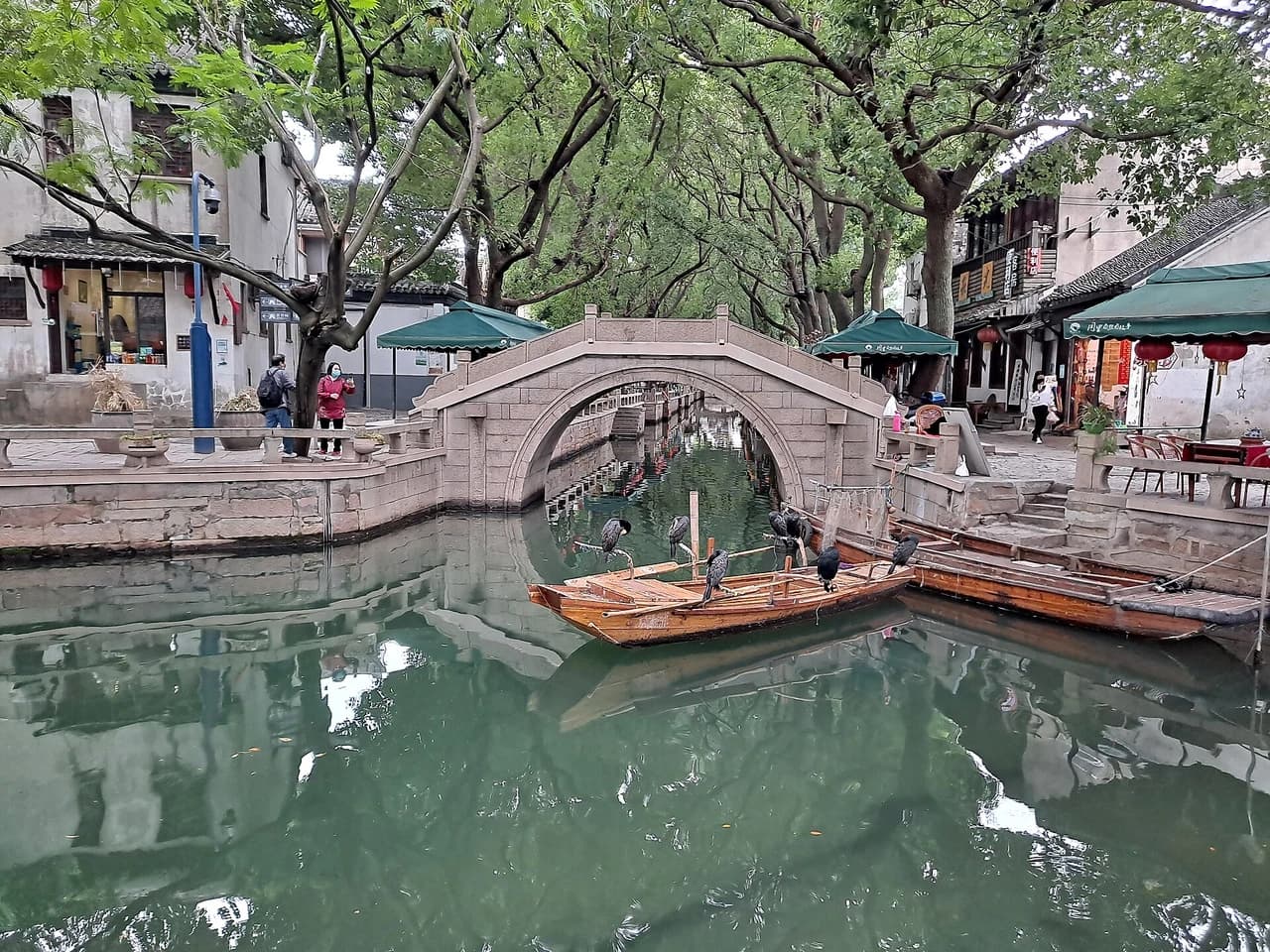
Tongli is a traditional water town in Suzhou's Wujiang District, known for canals, stone bridges, whitewashed houses and everyday life along narrow lanes. Visit its old houses and bridges by day, then stay to see lanterns reflected in the water after dark. Tuisi Garden and the Pearl Tower are among its best-known sites; allow a full day if you want both daytime walks and the evening atmosphere.
Humble Administrator's Garden
拙政园
The Humble Administrator's Garden was built in the Ming Dynasty. It is one of the four famous gardens in China and a representative work of Jiangnan classical gardens. With water as the center, the mountains and rivers are lingering, dense and dense, and the atmosphere of the literati is very strong. In early summer, the lotus leaves are just unfolding, and it is full of green. The wonderful thing is "changing the scene with each step". Standing at one place is a painting, and taking two steps is another world.

Master of the Nets Garden
网师园
Master of the Nets Garden is a representative of Suzhou's small and exquisite gardens. Each step has a view, and it contains a century-old house. It is a small but extremely exquisite garden among the gardens in the south of the Yangtze River. With the pool as the center, the pavilions and pavilions are scattered in an orderly manner. It is best to visit in spring and autumn. Recommended tour is 1–1.5 hours.

Jinji Lake Scenic Area
金鸡湖景区
Jinji Lake combines a modern skyline, lakeside promenades, public art and cultural and commercial spaces. The Gate of the Orient, Ligong Causeway, Culture and Arts Centre and Moonlight Wharf occupy different shores. Choose a section for an unhurried walk rather than attempting the entire circuit. Musical fountains and events depend on official same-day announcements, and lake activities are not necessarily free.
Suzhou Museum
苏州博物馆
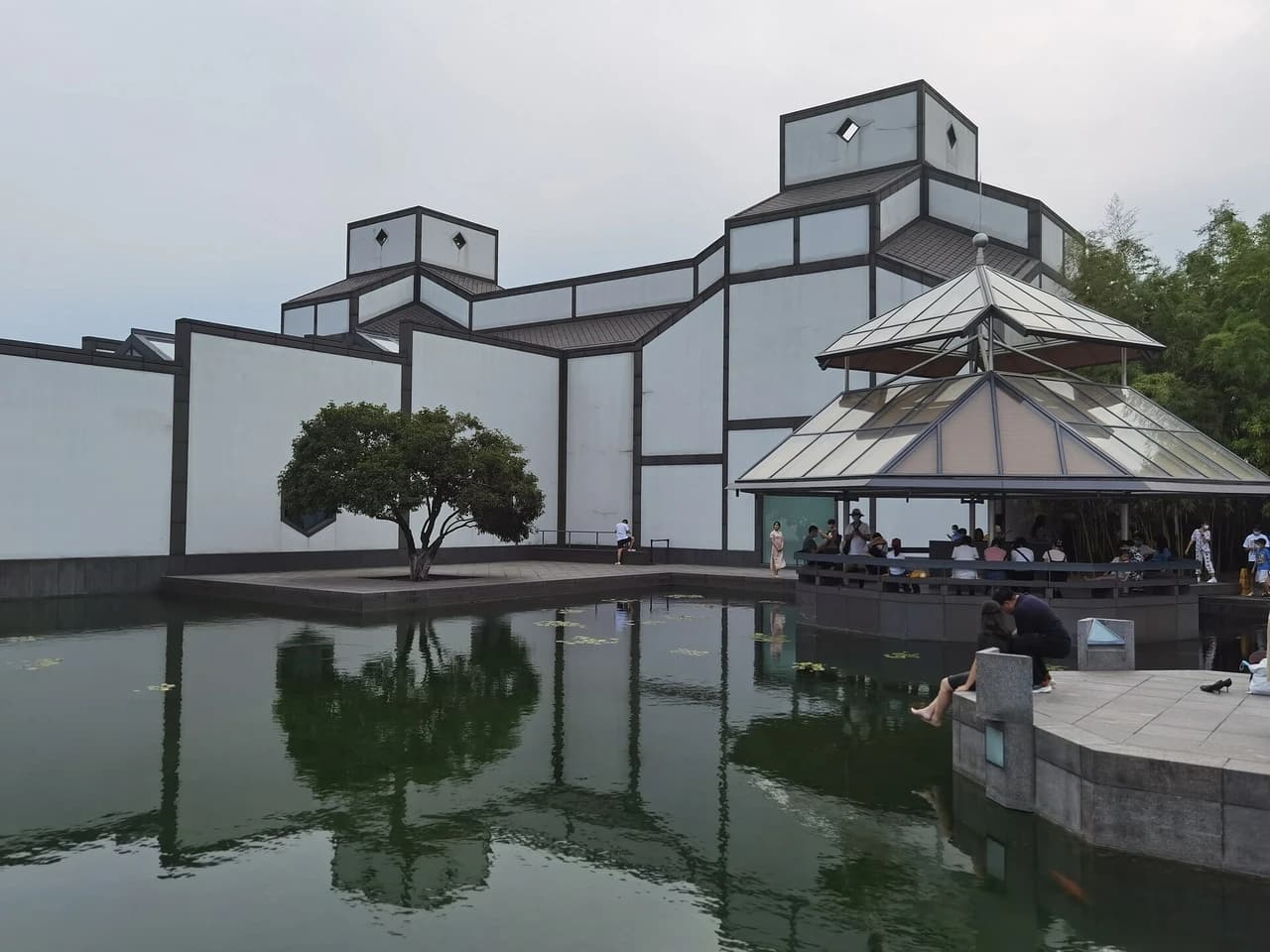
The Suzhou Museum combines Wudi's historical art collection with Pei's modern interpretation of whitewashed walls, dark roofs, courtyards and framed water. Archeology, calligraphy, painting and crafts provide the background for Wu culture, and another layer of historical buildings is preserved adjacent to Prince Zhong's Mansion; the architecture and collections should be understood together.
Pingjiang Road
平江路
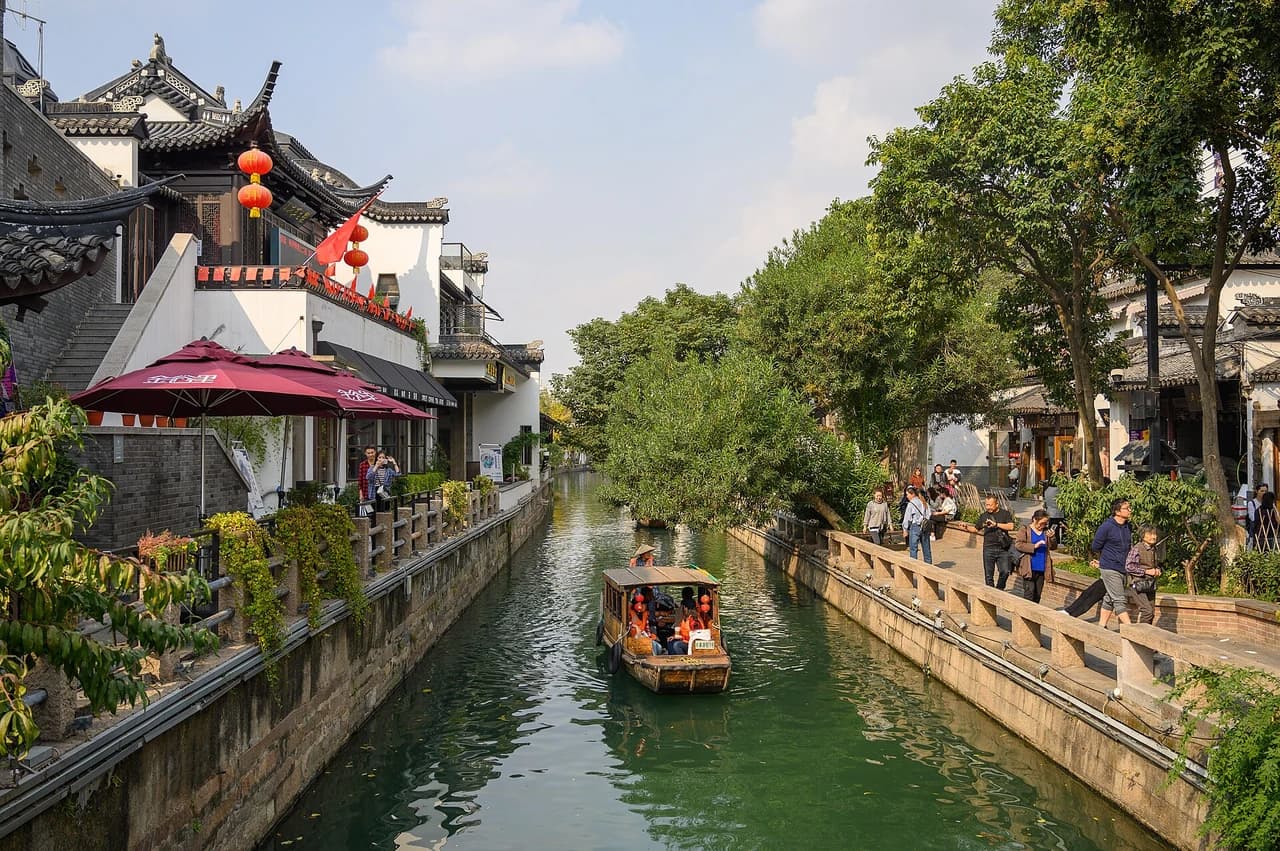
Pingjiang Road runs along the river through the relatively well-preserved old city area of Suzhou. Narrow bridges, laneways, courtyard houses, small museums and residents' lives continue the parallel relationship between streets and rivers in the historical map. The main road is obviously commercialized, but the urban fabric that is quieter and continues to be used as a community can still be seen in the branch lanes.

Tiger Hill
虎丘
Huqiu is not a high mountain, but it carries the early history and local memory of Suzhou. The tilted Yunyan Temple Tower, sword pool, cliff inscriptions, temple ruins and garden space are superimposed with legends, archeology and memorials for later generations. It is not difficult to climb up, but it is worth observing how the same mountain was used repeatedly in different eras.

Lingering Garden
留园
The Lingering Garden is a world heritage classical garden, famous for its sophisticated organization of buildings, rocks and scale changes. The long and narrow entrance gradually opens up to the courtyard and water surface, and the leaky windows, winding corridors and Guanyun Peak establish a line of sight. It is more compact than the Humble Administrator's Garden, but often presents more complex spatial transformations.
Local snacks
What to eat in Suzhou
These cards describe dishes, not restaurants.

Fresh and mellow, often with a Soviet-style sweetness
Suzhou-style Soup Noodles
苏式汤面
Thin noodles are served with carefully prepared red or white soup, and you can choose from braised meat, fried fish or seasonal toppings. Soup base, noodle softness and hardness, and toppings are three independent choices.
Traditionally served for breakfast; indicate red or white soup when ordering, and confirm whether the soup base contains pork if necessary.

Juicy, salty, slightly sweet, crispy on the bottom
Suzhou Pan-fried Buns
苏州生煎
Wrap pork and soup in fermented buns and fry in a pan with a lid to form a soft top layer and crispy bottom. Suzhou style is often slightly sweeter and may be cooked more mildly than some Shanghai versions.
Let cool slightly before biting into it carefully, as the soup inside the filling may be very hot.

Crispy and fragrant, can be sweet or salty depending on the fillings
Crab-shell Pastry
蟹壳黄
Small puff pastry pancakes are sprinkled with sesame seeds and baked until golden like crab shells. They can be filled with sweet or salty fillings. The name mainly describes the appearance and does not necessarily mean that it contains crab meat.
Check fillings before purchasing and serve warm to preserve the crispy layer.

Osmanthus fragrant, sweet, glutinous and crispy
Osmanthus Glutinous Rice Lotus Root
桂花糖藕
Glutinous rice is stuffed into the lotus root holes, slowly cooked, sliced, and topped with osmanthus sugar juice. It is a classic Jiangnan cold dessert.
It is usually eaten cold and cut into slices. The sweetness and softness will vary depending on the cooking method.