
哈尔滨
Harbin
Harbin developed on railroads, immigration, and Northeast Asian trade, and Orthodox churches, commercial and industrial buildings coexisted with distinctive Chinese urban life. While the snow and ice architecture in winter is spectacular but seasonal, the museums, riverfront landscape and 20th-century history are important year-round. The city spans a large area, especially the 731 Site, which is far from the center. The itinerary should be organized according to areas, rather than treating all scenic spots as city center points.
At a glance
- Stay
- 2–3 days
- Best seasons
- Dec–Feb, Jun–Aug
- Airports
- Rail or road access
- Region
- Northeast China
Last updated: 9/29/2026
First visit
Arrive and settle in Harbin
Start with arrival and where to stay, then choose your sights. Recheck transport and accommodation details before booking.
Getting there+
High-speed trains from Beijing take about five hours to Harbin West , on metro line 3; from Shenyang two hours, from Changchun one. Harbin station in the centre also takes fast trains and is walkable to Central Street. Taiping (HRB) airport is 35 kilometres south-west; the airport bus takes about an hour and taxis are metered.
Rail tip. Your passport is your ticket. Book on 12306 or Trip.com, then go straight to the gate. See Getting around. The Trip.com link earns us a small commission at no cost to you (how that works).
Stay online. Google, WhatsApp and Instagram are blocked on Chinese networks; a travel eSIM that roams gets around it. Install one before you fly — Saily takes US$5 off a first plan with the code CHINA. See Staying online. The code earns us the same amount in Saily credits, at no cost to you (how that works).
Where to stay+
Daoli and Central Street
道里·中央大街
The cobbled main street and the cathedral. Everything within a walk.
Hotels in old Russian buildings along and off Central Street. The river is at the end of the street, Sophia Cathedral ten minutes east.
first visitarchitectureconvenience
Nangang and Guogeli Street
南岗·果戈里大街
The railway quarter: churches, the old station area, a quieter Russian street.
Around Gogol Street and the Church of the Intercession. A metro ride or a long walk from Central Street.
quietcafés
Booking. Compare hotels in Harbin on Trip.com, filtered to its China travel essentials list: English-speaking staff, foreign cards, guest rating 8 or higher. See Where to stay. Booking through this link earns us a small commission at no cost to you (how that works).
Overview+
INNER MONGOLIAHarbin
The Chinese Eastern Railway reached the Songhua River in 1898 and Harbin was laid out by Russians, then filled by Jews, Poles and White émigrés fleeing the revolution. The old districts of Daoli and Nangang keep the buildings; the Daowai quarter across the tracks has the Chinese answer to them, a grid of courtyard houses with baroque façades.
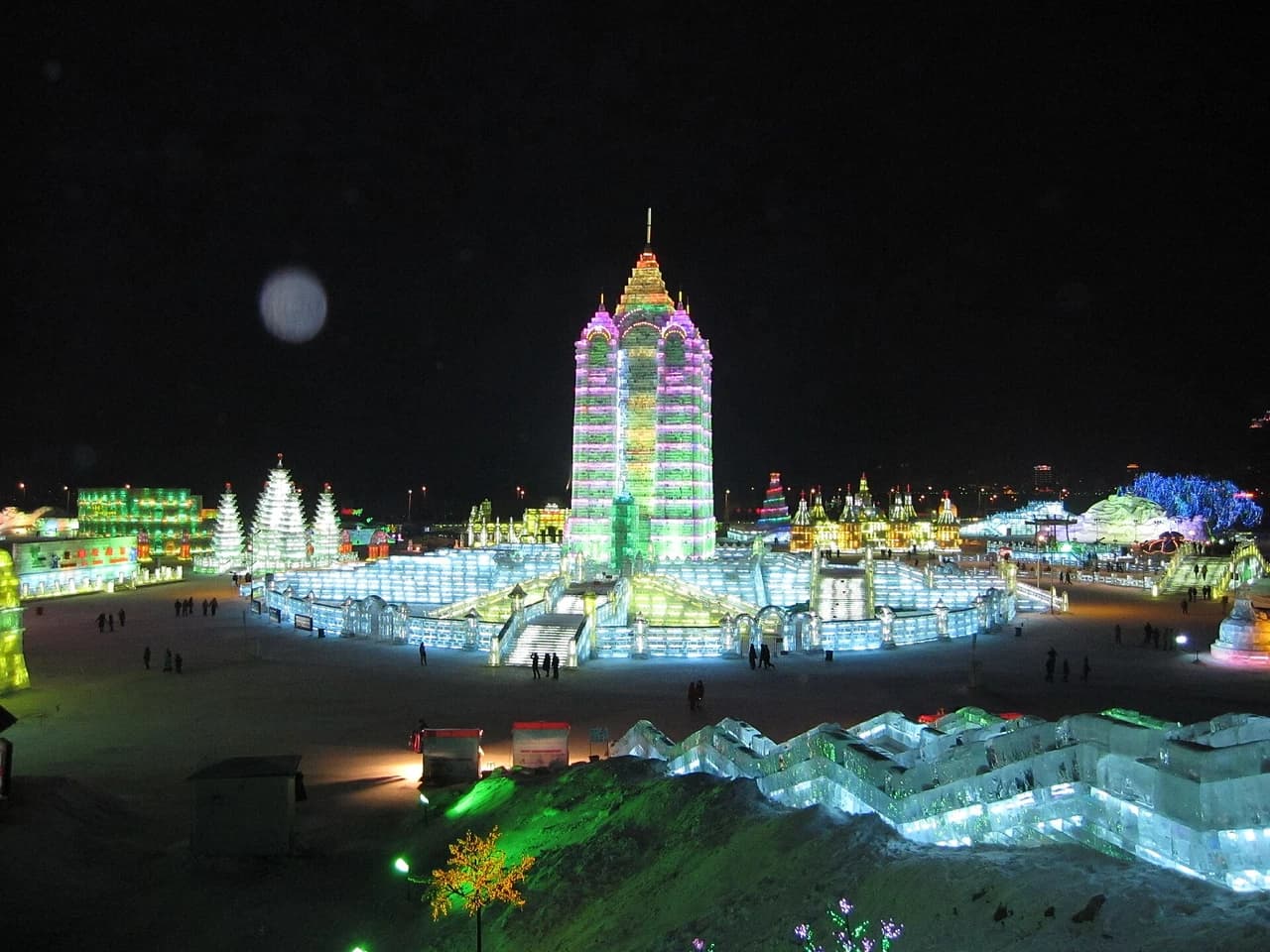
Winter is the reason most people come. From late December to February it is twenty below, the river is a road, and the Ice and Snow World lights up a whole town of carved ice after dark. Bring proper boots, layers, and hand warmers for your phone.
Summer Harbin is a different city: river beaches, beer gardens on Central Street, and long light evenings at 45 degrees north.
Where next?
Save places you like, then use your saved list to build a trip.
Practical travel guides
Places to explore in Harbin
Old Daowai
道外中华巴洛克
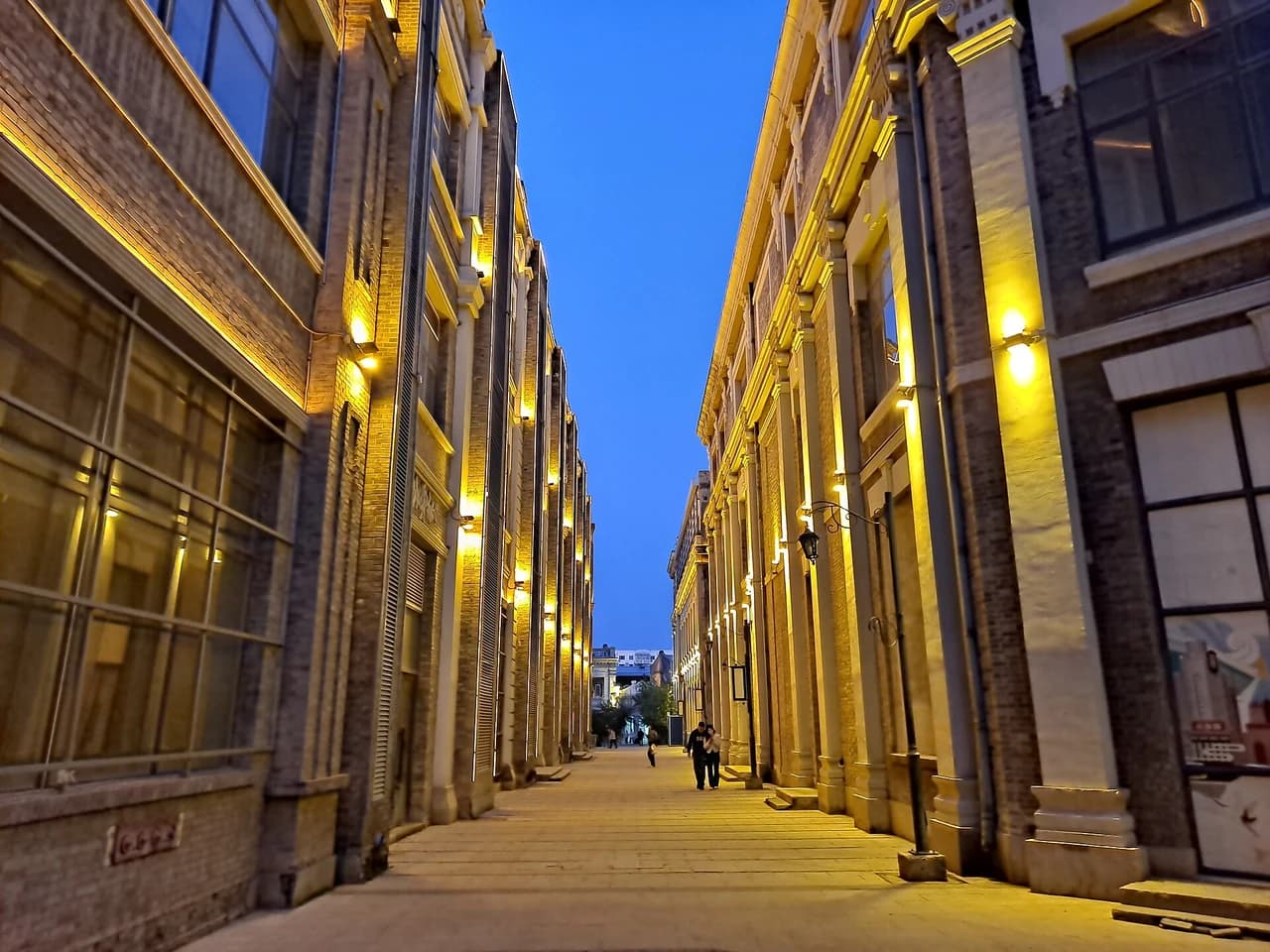
Daowai Chinese Baroque The Chinese Baroque Historical and Cultural District is located in Jingyu Street, Daowai District. It is the largest and best-preserved Chinese Baroque architectural complex in China and is also a national-level historical and cultural district. The so-called "Chinese Baroque" is a unique style created by Harbin merchants in the early 20th century based on the Western Baroque style, integrating Chinese courtyard houses, auspicious carvings and other elements. It has a front store and a house in the west, and is known as an "open-air architectural museum". Public transportation: Walk about 200 meters from the "Chinese Baroque Street Station" on Metro Line 3, or take the bus to the "Daowai Sandao Street" or "Jingyang Street" stations.
Ice and Snow World
冰雪大世界
Harbin Ice and Snow World is an ice and snow theme park open in winter, featuring large ice and snow buildings, lights and seasonal entertainment projects. Its opening dates and projects will change depending on the temperature and current schedule.
Sun Island
太阳岛
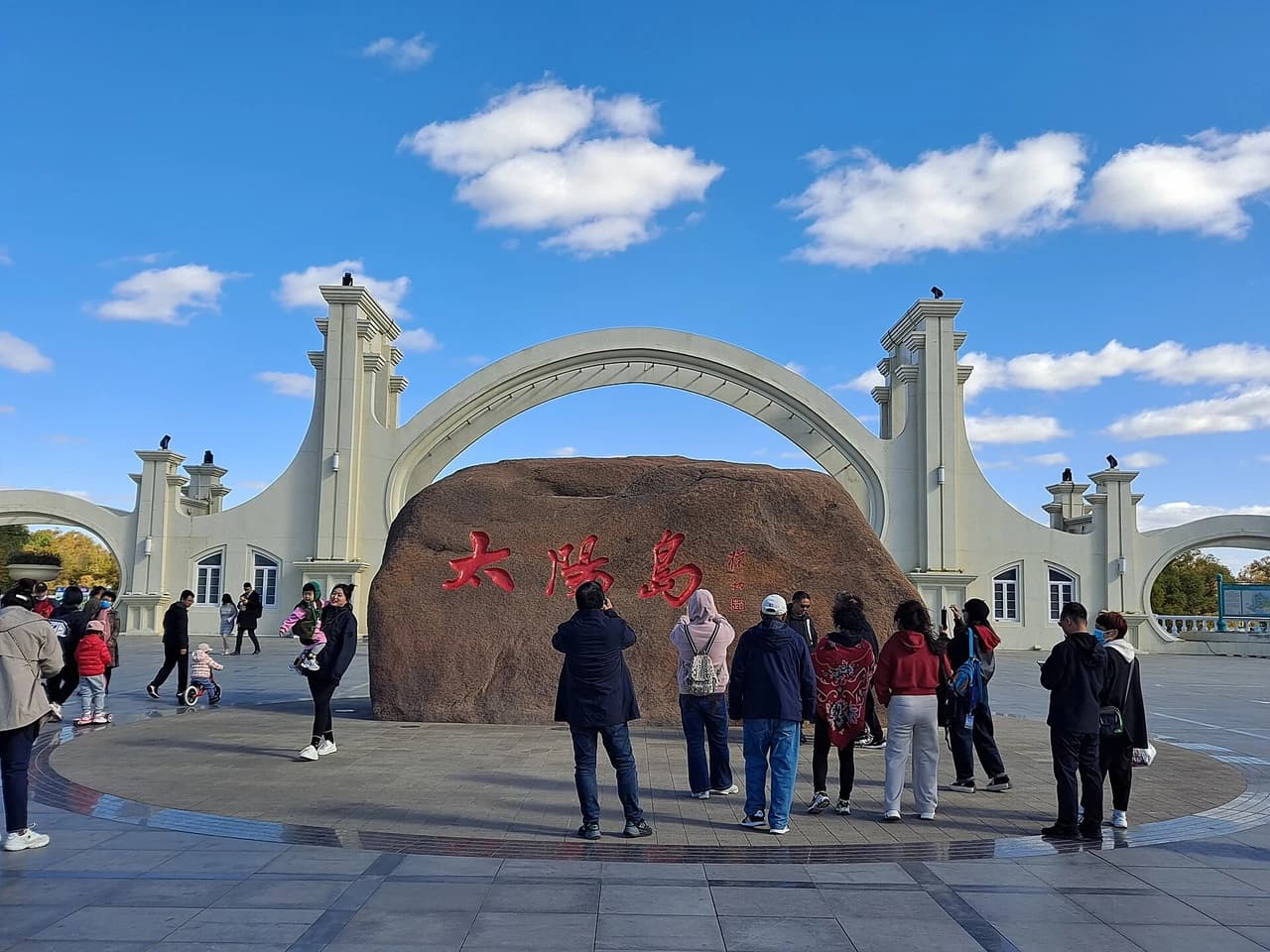
Sun Island Sun Island is located on the north bank of the Songhua River. It is a national 5A-level scenic spot and the "urban back garden" of Harbin. It has a vast area and integrates wetlands, lakes, forests and Russian-style buildings. Admission to the park is free, but there are separate charges for the Russian-style town, giant panda pavilion, deer garden and other projects inside the park. In winter, a snow expo is held on the island, where you can view giant snow sculptures.
Central Street
中央大街
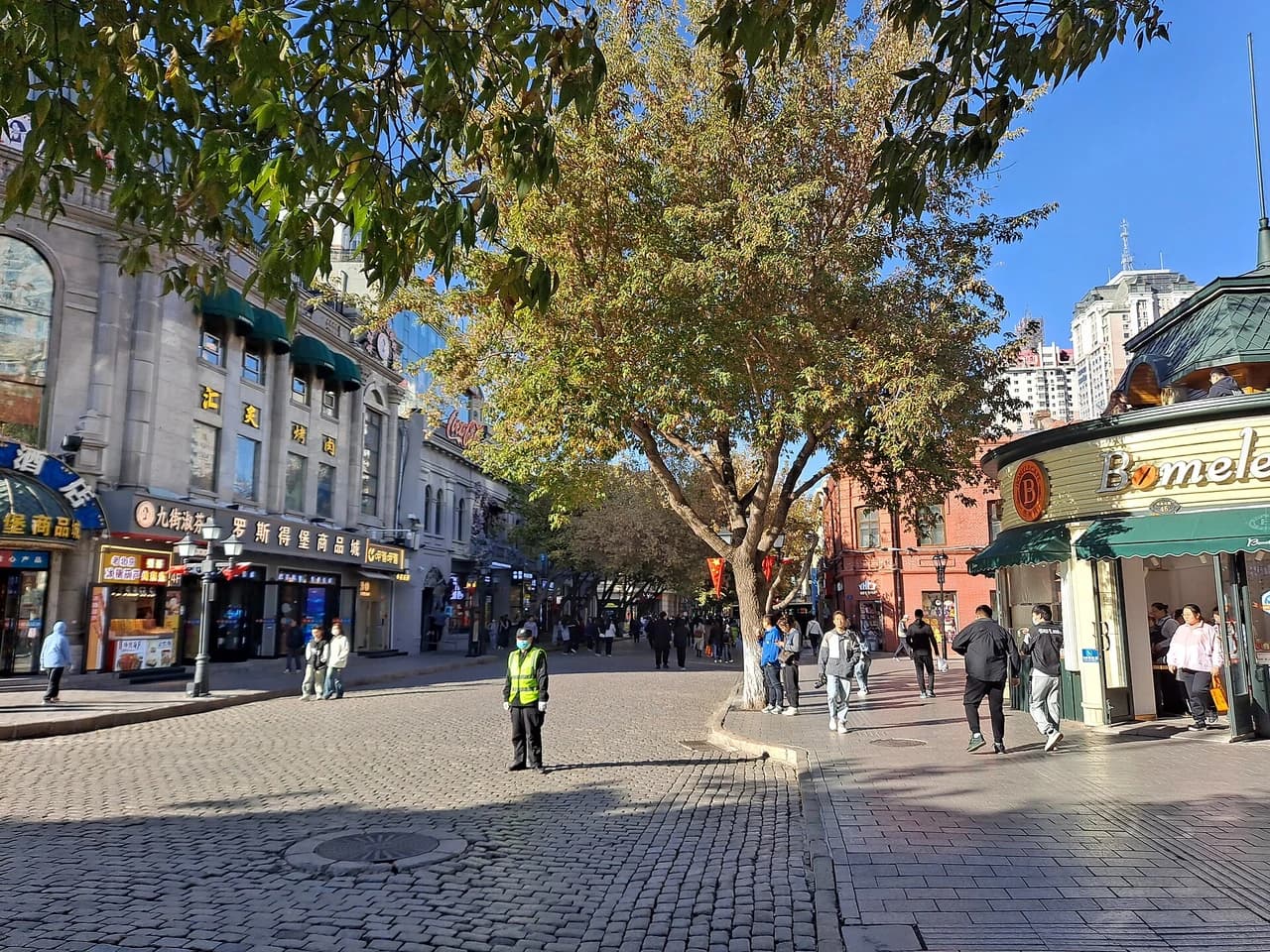
Central Street Central Street is located in Daoli District. It starts from Jingwei Street in the south and ends at the Flood Control Memorial Tower in the north. It is about 1,450 meters long and paved with about 870,000 "bread stones". It is the first pedestrian street in Asia and is also known as the open-air "Architectural Art Museum". European-style buildings such as Baroque, Renaissance, and Eclecticism are gathered on both sides of the street. Among them, the Madier Hotel (1906), Matsuura Bank, and Wanguo Bank are all century-old buildings, which condense Harbin's modern history of opening up to the outside world. Public transportation: Metro Line 2 "Central Street Station" is within walking distance, or you can take the bus to "Central Street" or "Flood Control Memorial Tower" station.
Saint Sophia Cathedral
圣索菲亚大教堂
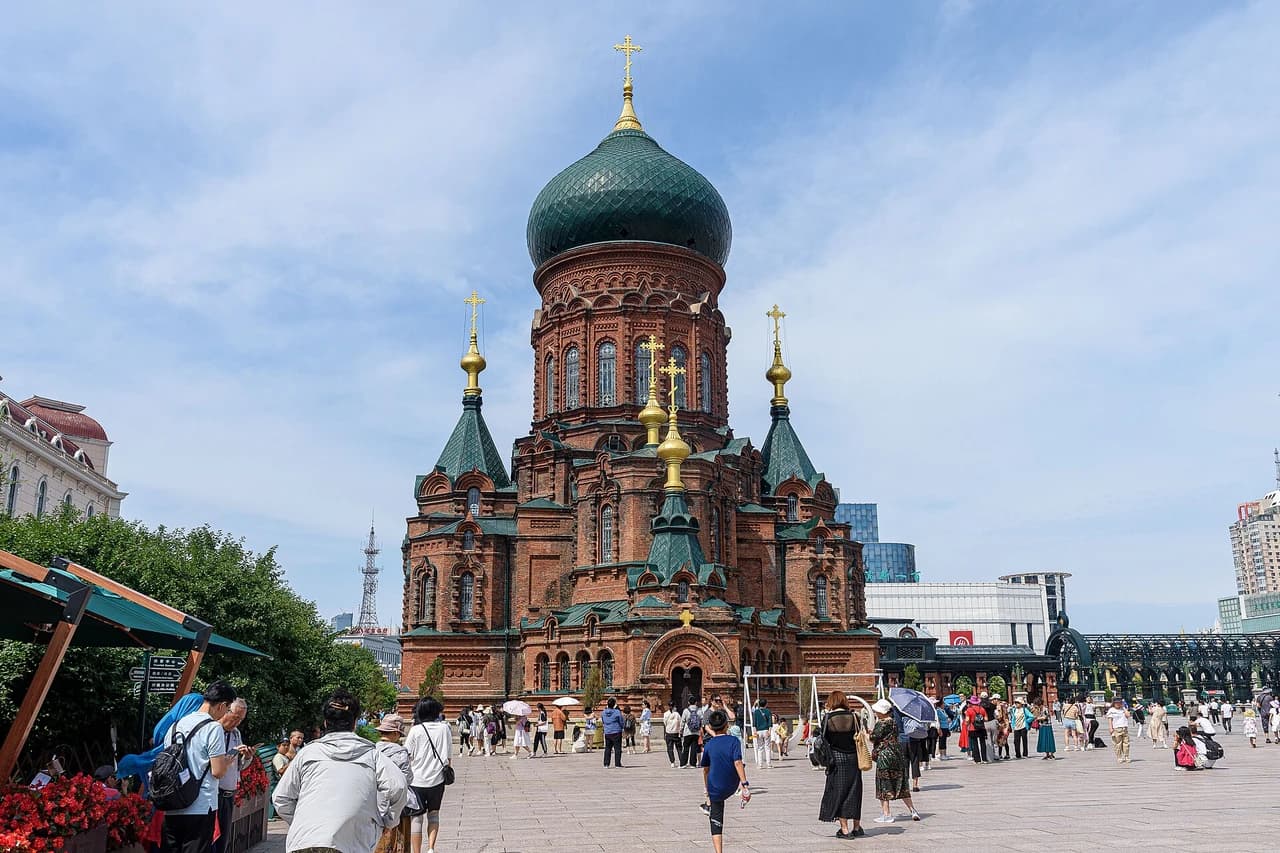
Hagia Sophia Hagia Sophia is located at No. 88 Toulong Street, Daoli District. It was built in 1907. It was originally a church for the Tsarist Russian Army. It was rebuilt in 1923 and completed in 1932. It was once the largest Orthodox church in the Far East. The church is in Byzantine style, with clear red brick walls and a green "onion" dome. It is now open to the public as the Harbin Architectural Art Museum and is a city landmark. Public transportation: Take Metro Line 2 to "Shangzhi Street Station" and walk for about 10 minutes, or take the bus to "Architectural Art Square" station.
Songhua River and Stalin Park
松花江·斯大林公园
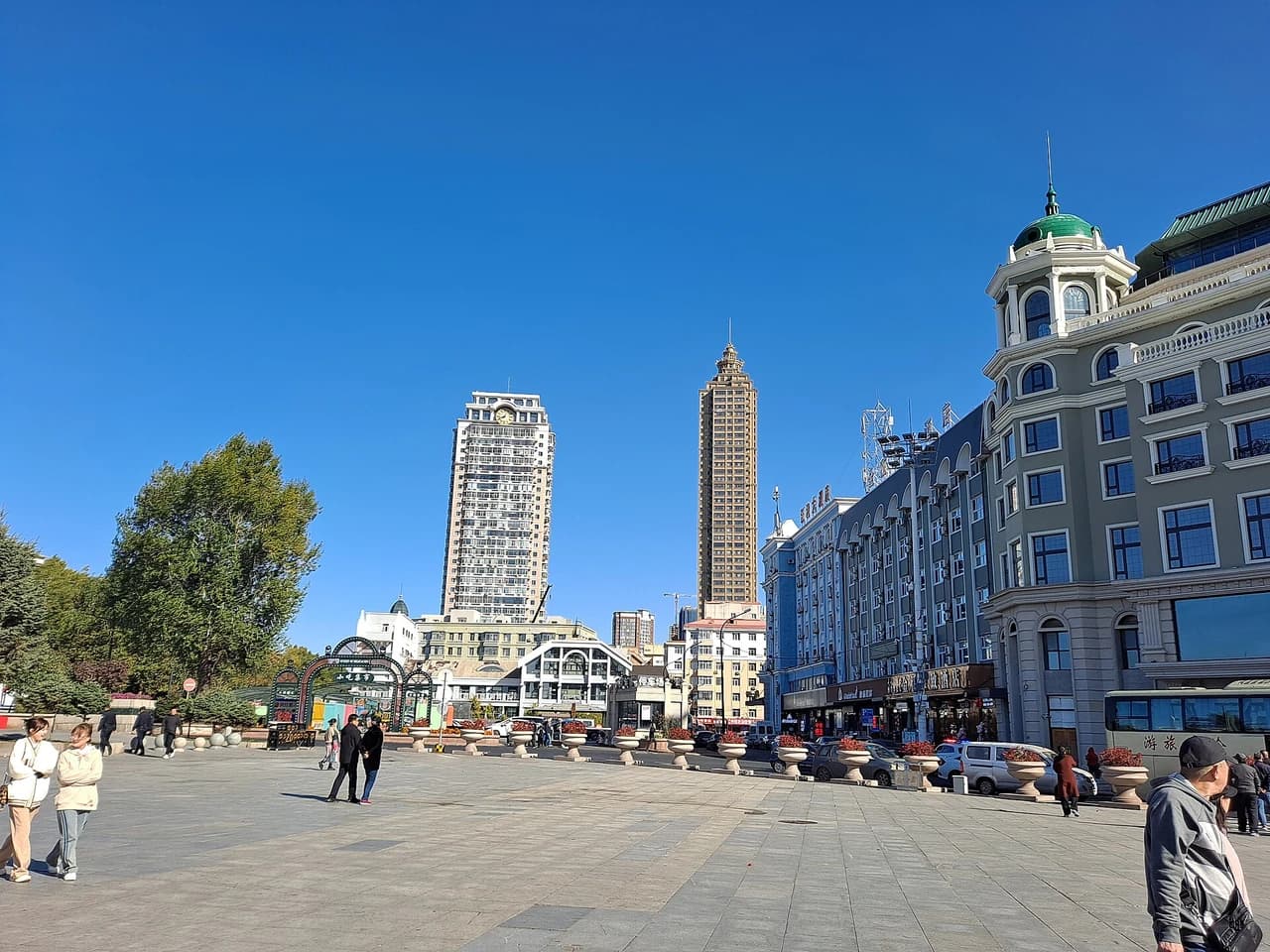
Songhua River and Stalin Park Stalin Park is located on the south bank of the Songhua River, close to the north end of Central Street. It was originally called "Riverside Park". It was renamed in 1953 and is distributed in a strip along the river. The Flood Control Memorial Tower in the park was built in 1958 to commemorate the people of Harbin's victory over the catastrophic flood in 1957. The reliefs on the tower record the history of flood resistance and is a landmark along the Songhua River. Along the river, you can overlook the Middle East Railway Bridge (Laojiang Bridge) and Sun Island on the other side.

Saint Sophia Church and Architectural Art Museum
圣·索菲亚教堂
The huge green dome and red brick volume of St. Sophia Church record the formation of the Orthodox community in Harbin with the development of the railway era. After conservation and restoration, the original church became an architectural art museum instead of a parish church that is still in use. The photos and urban construction materials in the museum help visitors understand it within the historical landscape composed of railway institutions, synagogues, commercial blocks, and Chinese and foreign residential buildings.

Sun Island Scenic Area
太阳岛风景区
Sun Island is located on the north bank of the Songhua River. It is a large-scale river island landscape composed of wetlands, woodlands, gardens and cultural facilities. It is a green space outside the central city in summer and hosts important snow sculpture activities in winter, but seasonal products cannot be confused with year-round parks; the broad scale also helps understand the role of Songhua River in urban ecology, leisure and Jiangbei development.

Harbin Ice and Snow World
哈尔滨冰雪大世界
Harbin Ice and Snow World is an ice and snow landscape redesigned and constructed every season, including lighted ice buildings, large-scale snow sculptures, performances and winter activities. It is not a permanent monument and is rebuilt each time, so pictures from previous years are not representative of the layout of the next one; this project shows how cold weather, ice harvesting techniques, lighting and mass entertainment can combine to form temporary urban-scale works of art.

Exhibition Hall of Evidence of Crime Committed by Unit 731
侵华日军第七三一部队罪证陈列馆
Through archives, artifacts, archaeology and preserved buildings, this museum and its associated sites document Unit 731's biological-warfare program, human experimentation and war crimes. It is a place of remembrance and historical responsibility, not an entertainment attraction. The exhibits can be distressing; allow enough time, visit quietly and treat the people represented with respect.
Local snacks
What to eat in Harbin
These cards describe dishes, not restaurants.

Crispy, sweet, sour, salty
Harbin Guobaorou
锅包肉
Thin slices of pork are coated in starch and fried into a crispy shell, then quickly tossed with sweet and sour sauce, shredded ginger, green onions and carrots.
It should be shared while hot as the steam will quickly soften the crust; confirm dietary requirements regarding pork and frying oil before ordering.

Smoky garlic, salty meat flavor
Harbin Red Sausage
哈尔滨红肠
Influenced by Harbin's cross-border food tradition, the smoked garlic sausage has a tight casing and thick pork filling. It is often sliced and served cold.
You should check the production date and refrigeration requirements. It contains pork and may have high sodium content; the texture varies significantly between brands.

Roasted wheat aroma, slightly sour and solid
Harbin Dalieba Bread
大列巴
A large round bread influenced by Russian bread, it has a dark and solid outer shell and a dense wheat-flavored interior, sometimes with malt, raisins or nuts added.
Ask if it contains nuts, dairy or dried fruit. Whole loaves are large, available to buy sliced or shared, and sealed to prevent them from hardening quickly in dry air.

Cool, juicy, sweet and slightly sour
Frozen Pear
冻梨
The outer skin of pears turns black after being repeatedly frozen. When slightly thawed, the flesh becomes soft, cold and has concentrated juice. This is a typical way to eat pears in winter in the Northeast.
It can be softened in clean water until it can be bitten, and then carefully broken or peeled, the juice will flow out quickly; those whose teeth are afraid of cold should be cautious.