
郑州
Zhengzhou
Zhengzhou is the capital of Henan Province and the central city of the country. It is located in the hinterland of the Central Plains and the middle and lower reaches of the Yellow River. It is an important birthplace of Chinese civilization. Zhengzhou has a history of 3,600 years of unchanging capital. The Shang Dynasty established its capital here (Zhengzhou Mall). It is a representative city of the "city upon city" phenomenon. Locals call it the key to "understanding China". Zhengzhou is a "city brought by trains" and an important comprehensive transportation hub in the country. The two main railway lines of Longhai and Beijing-Guangzhou meet here.
At a glance
- Stay
- 2–2 days
- Best seasons
- Apr–May, Sep–Oct
- Airports
- Rail or road access
- Region
- Central China
Last updated: 9/29/2026
First visit
Arrive and settle in Zhengzhou
Start with arrival and where to stay, then choose your sights. Recheck transport and accommodation details before booking.
Getting there+
Zhengzhou East (郑州东) is one of the country's busiest stations, where the Beijing–Guangzhou and Xuzhou–Lanzhou high-speed lines cross: Beijing and Xi'an two to two and a half hours, Wuhan two, Shanghai four, Luoyang 40 minutes, Kaifeng 20. The older Zhengzhou station, on metro lines 1 and 10, is better placed for the old centre and slower trains. Xinzheng (CGO) is 19 minutes from Zhengzhou East on the airport intercity train, or an hour by metro line 2 running through to the Chengjiao line.
Rail tip. Your passport is your ticket. Book on 12306 or Trip.com, then go straight to the gate. See Getting around. The Trip.com link earns us a small commission at no cost to you (how that works).
Stay online. Google, WhatsApp and Instagram are blocked on Chinese networks; a travel eSIM that roams gets around it. Install one before you fly — Saily takes US$5 off a first plan with the code CHINA. See Staying online. The code earns us the same amount in Saily credits, at no cost to you (how that works).
Where to stay+
Erqi and the old centre
二七·老城
Around the Erqi tower and Dehua Street, with the old railway station a few blocks west.
The densest part of the city and the easiest without a car: metro lines 1 and 3 meet under Erqi Square, the Shang walls are twenty minutes' walk east, and the noodle houses are all here. Hotels run from railway-station cheap to mid-range business.
first visitfoodwalking
Zhengdong New District
郑东新区
The CBD around Ruyi Lake and Zhengzhou East station. Wide, new and efficient.
Business hotels within walking distance of the high-speed station, which matters if you are here to change trains or leaving early for the airport. Little street life; metro line 1 takes twenty minutes back to the centre.
transitconvenience
Jinshui
金水
North of the centre, around the Henan Museum and the tree-lined avenues. Quieter.
Residential blocks, parks and the city's older embassy-era hotels. Good if the museum is your reason for coming; Guanhutun on metro line 2 is a ten-minute walk away.
quietmuseumsparks
Booking. Compare hotels in Zhengzhou on Trip.com, filtered to its China travel essentials list: English-speaking staff, foreign cards, guest rating 8 or higher. See Where to stay. Booking through this link earns us a small commission at no cost to you (how that works).
Overview+
SHANXIJIANGSUANHUISHANDONGHUBEISHAANXIZhengzhou
Zhengzhou is young as Chinese cities go. It was a county town until the Beijing–Hankou and Longhai railways crossed here in the 1900s, and everything since — the provincial capital, twelve million people, the glass towers east of the centre — grew out of that junction.
The ground under it is much older. A Shang capital stood here from about 1600 BC and left rammed-earth walls eight metres high and seven kilometres around; they run through the Guancheng district as a long green ridge with a park on top and traffic on both sides. The Henan Museum, an hour's walk north, holds what the whole province has dug up: bone flutes nine thousand years old that still play, the Fu Hao owl vessel, a Spring and Autumn bronze pot with a crane on the lid.
Most people treat the city as a base. Dengfeng and the Songshan monuments are ninety minutes south-west, Kaifeng twenty minutes east, Luoyang forty minutes west. Two days is enough, and the museum deserves half of one.
Where next?
Save places you like, then use your saved list to build a trip.
Practical travel guides
Places to explore in Zhengzhou
Erqi Tower and Dehua Street
二七纪念塔·德化街
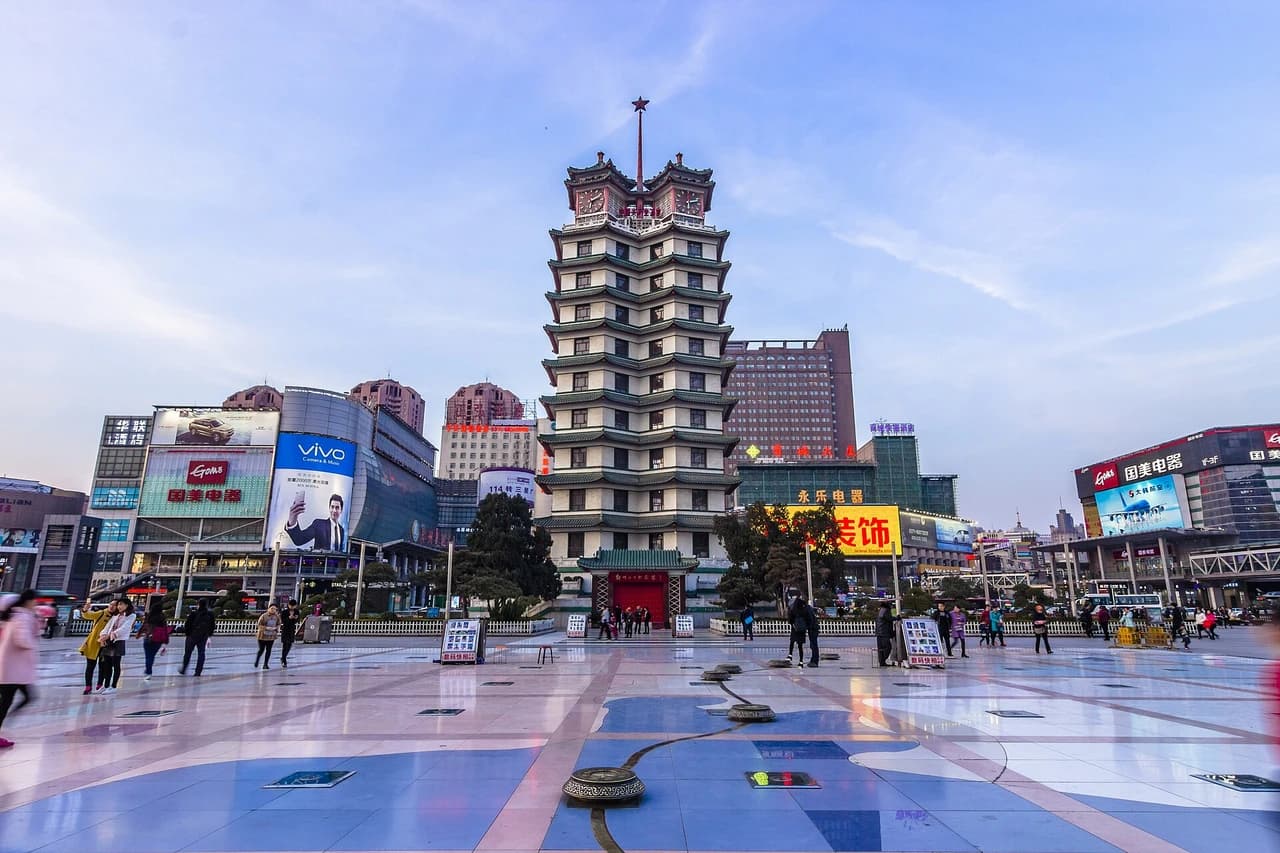
The Erqi Memorial Tower is the spiritual landmark of Zhengzhou. It was built to commemorate the Beijing-Hankow Railway workers' strike. The twin towers stand side by side and have a unique shape. The adjacent Dehua Pedestrian Street is the most prosperous commercial street in Zhengzhou. It is full of snacks and crowded with people at night. You can also encounter night performances such as "Dream Return to Dehua". The Erqi Square area is the core of Zhengzhou’s urban everyday atmosphere.
Yellow River Cultural Park
黄河文化公园
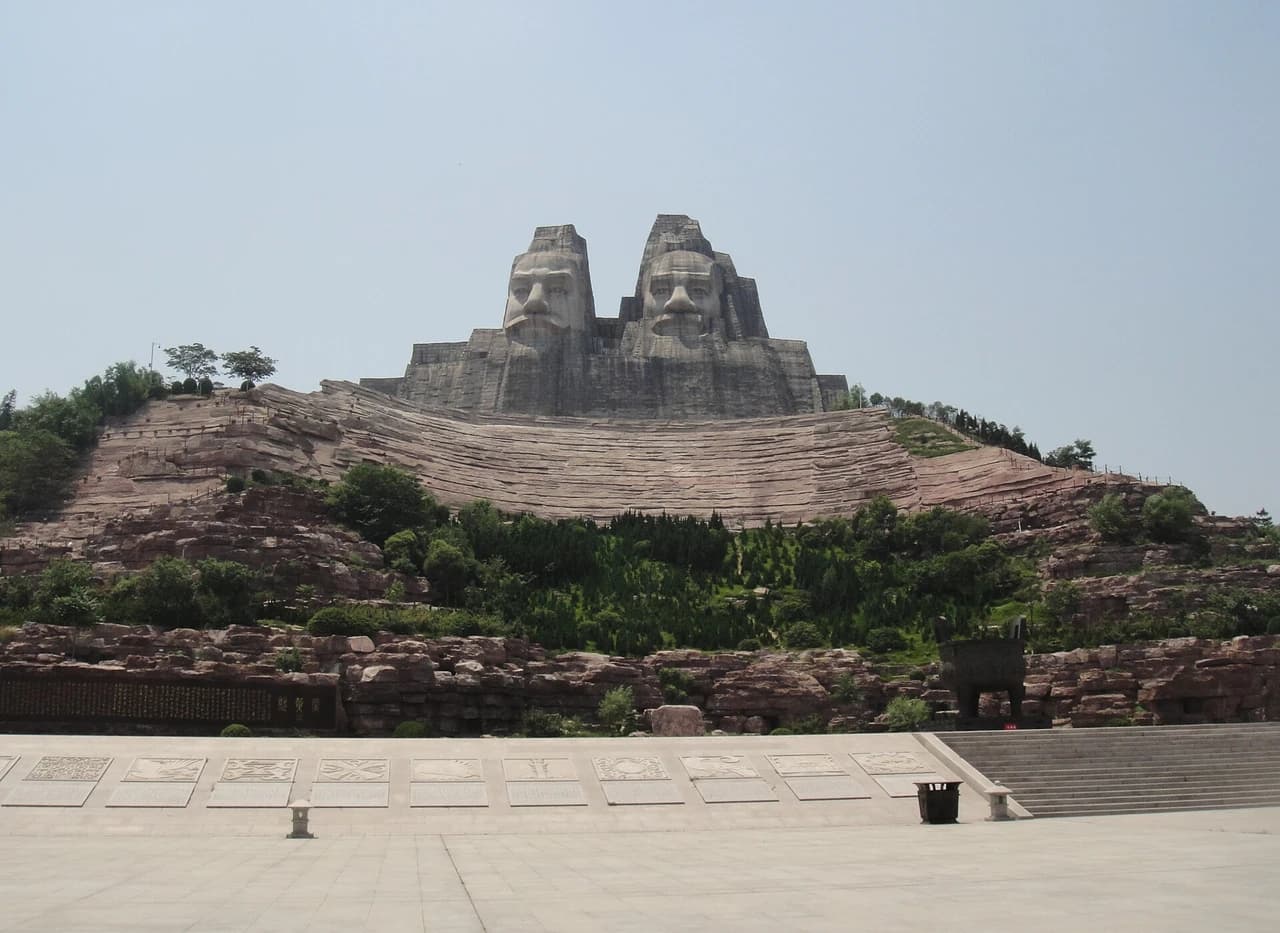
Zhengzhou Yellow River Cultural Park is located on the bank of the Yellow River. It is a scenic spot for viewing the Yellow River and experiencing the origin of Chinese civilization. The core attractions include the giant sculptures of the Yan and Huang Emperors (majestic), the Yellow River Geological Museum, the human evolution series of stone sculptures, the Yellow River Cableway, etc. The Yellow River has a wide view and calm waves here, and you can overlook the Yellow River beach in the distance.
Henan Museum
河南博物院
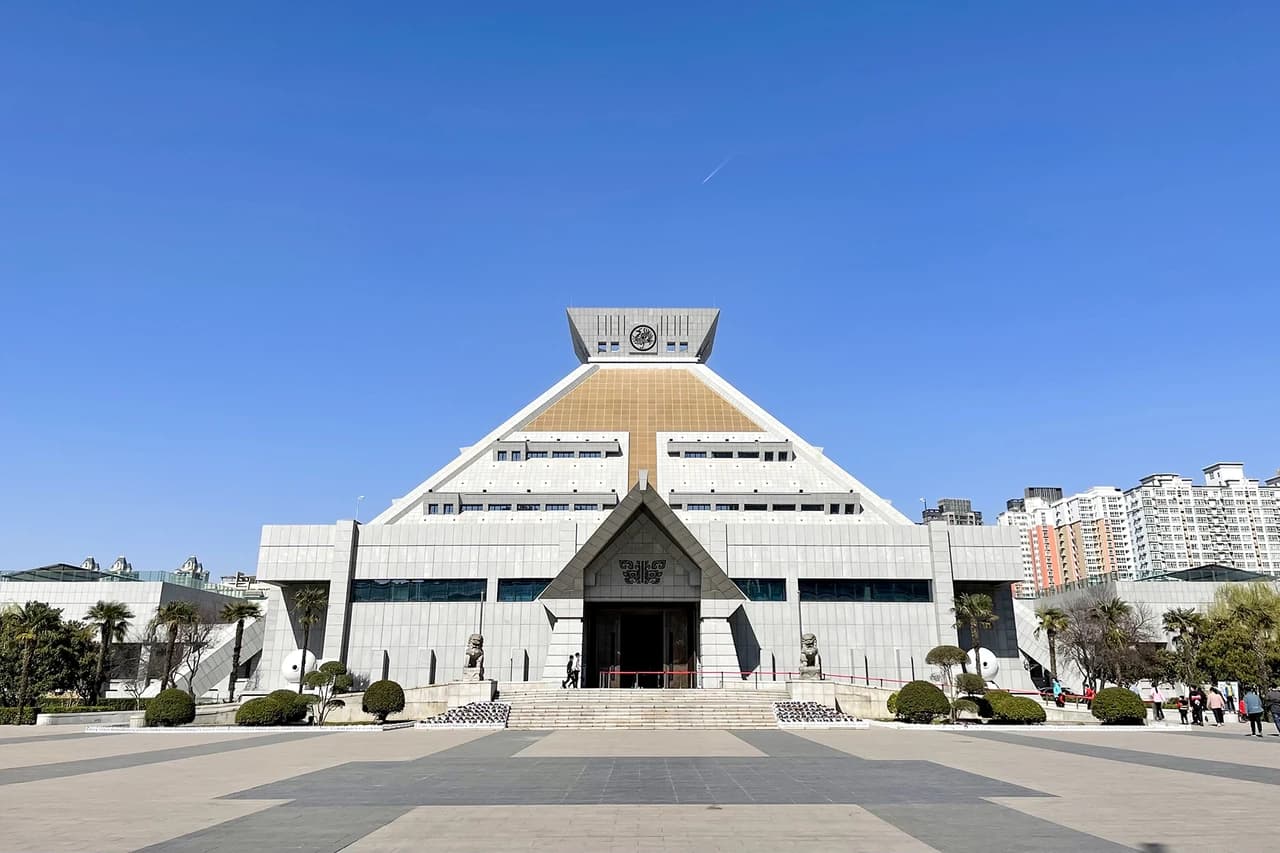
Henan Museum explores the history of the Central Plains through archaeology, bronzes, ceramics and other collections. Highlights include the Jiahu bone flute, the Fu Hao owl-shaped bronze vessel and the lotus-and-crane bronze vessel. Choose a few galleries in advance if your time is limited, and check the current exhibition program before visiting.
Shang City walls and the Shangdu Museum
郑州商城·商都遗址博物院
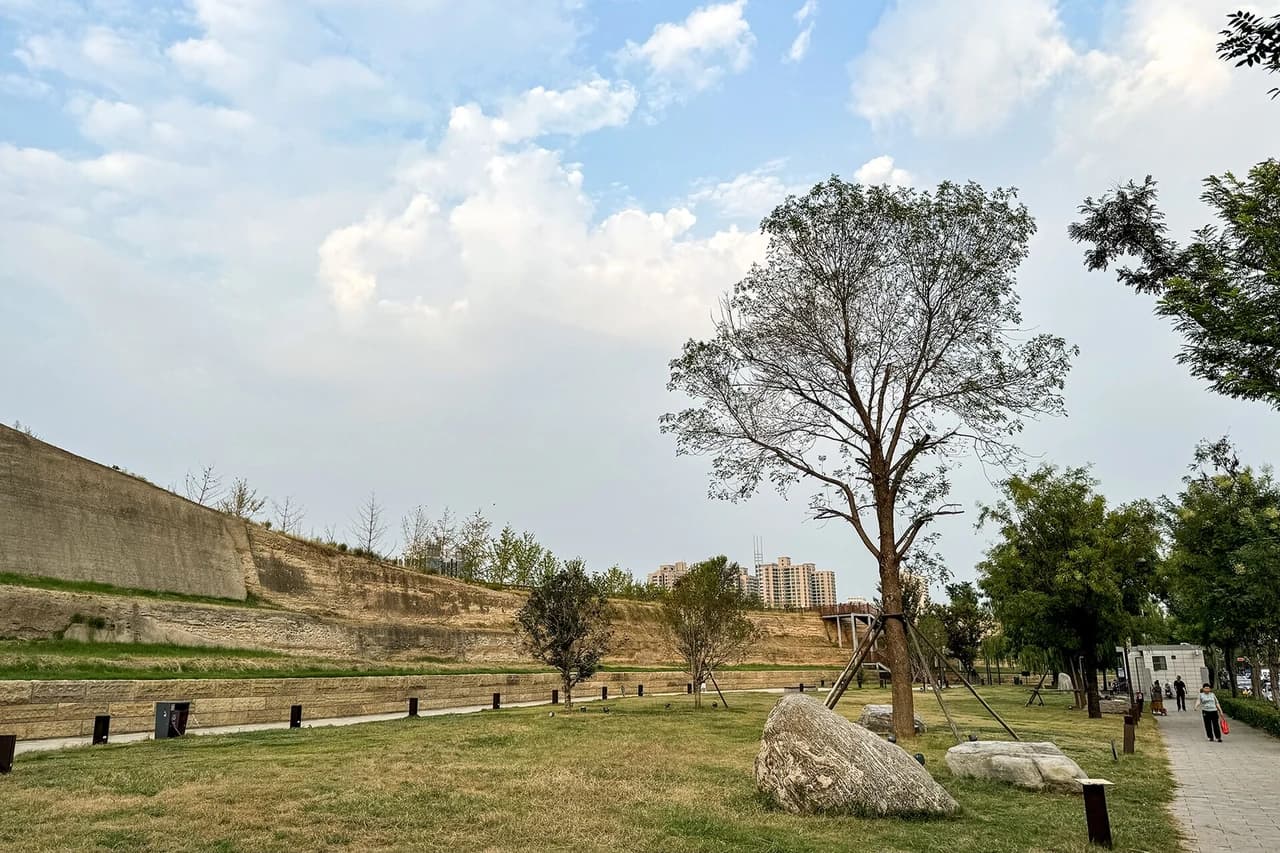
Zhengzhou Shangcheng is the site of the early royal capital of the Shang Dynasty, dating back about 3,600 years. It is the core of the "city upon city" phenomenon in Zhengzhou - today's old city of Zhengzhou is directly superimposed on the royal capital of the Shang Dynasty. The Shangdu Ruins Museum (Zhengzhou Shang Dynasty Capital Ruins Museum) displays the archaeological results of the Shang City. It is close to the Shangdu National Archaeological Site Park and you can touch the rammed Shang Dynasty city walls in person. The museum is connected to the city wall ruins by walking 100 meters and is fully connected.
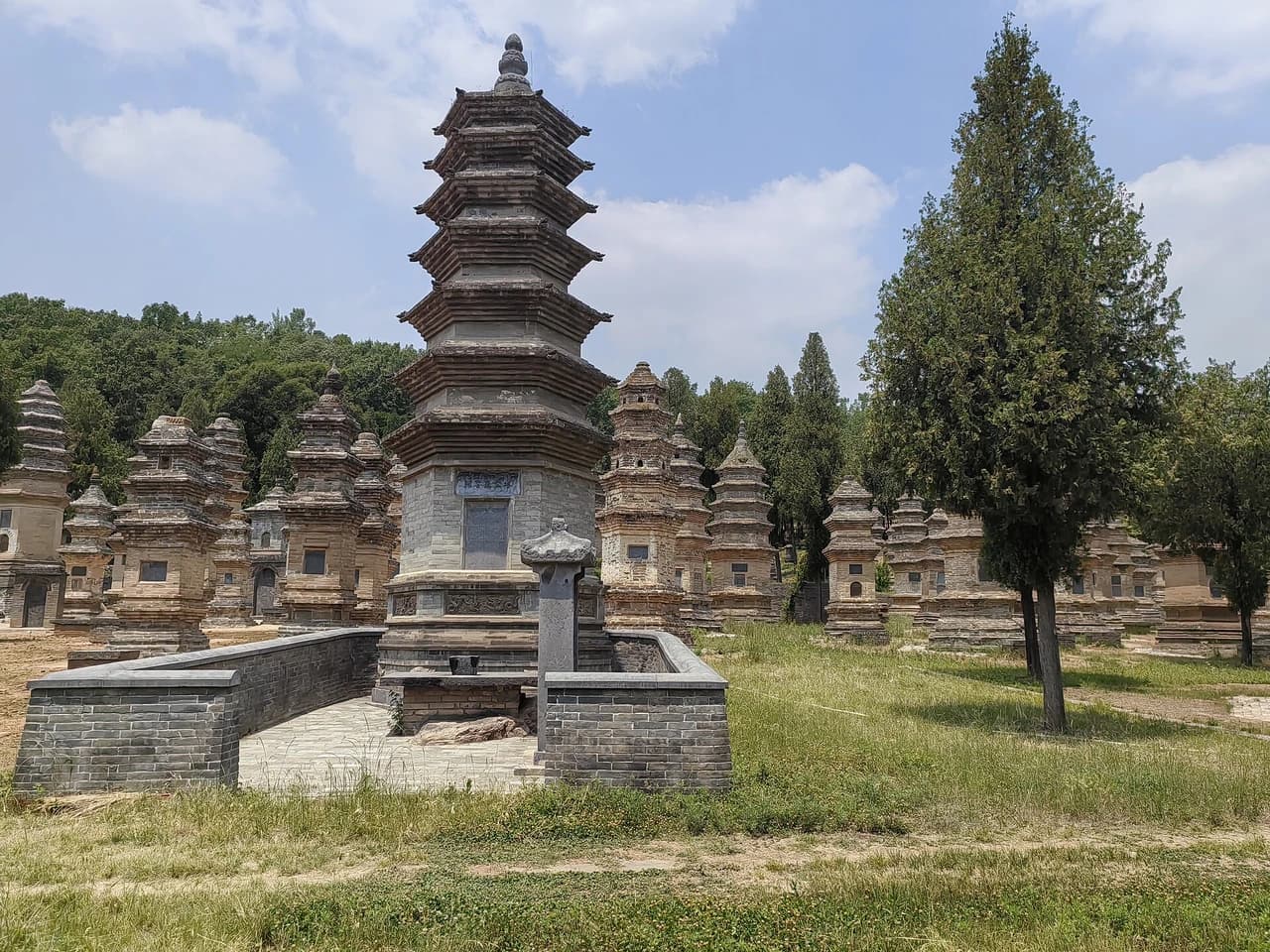
Dengfeng: Shaolin and the Songshan monuments
登封·嵩山
Songshan Mountain is located in Dengfeng City, Zhengzhou. It is one of the five mountains in China and is divided into two major mountains: Taishi Mountain and Shaoshi Mountain. Shaoshi Mountain is home to the Shaolin Temple, the ancestral home of Zen Buddhism and the source of world Kung Fu. The resident courtyard, pagoda forest, and martial arts performances are the core attractions; the suspended plank road of Sanhuangzhai and Book Cliff are the natural essence of Songshan Mountain. There are historical sites such as Songyang Academy and Fawang Temple in Taishi Mountain.
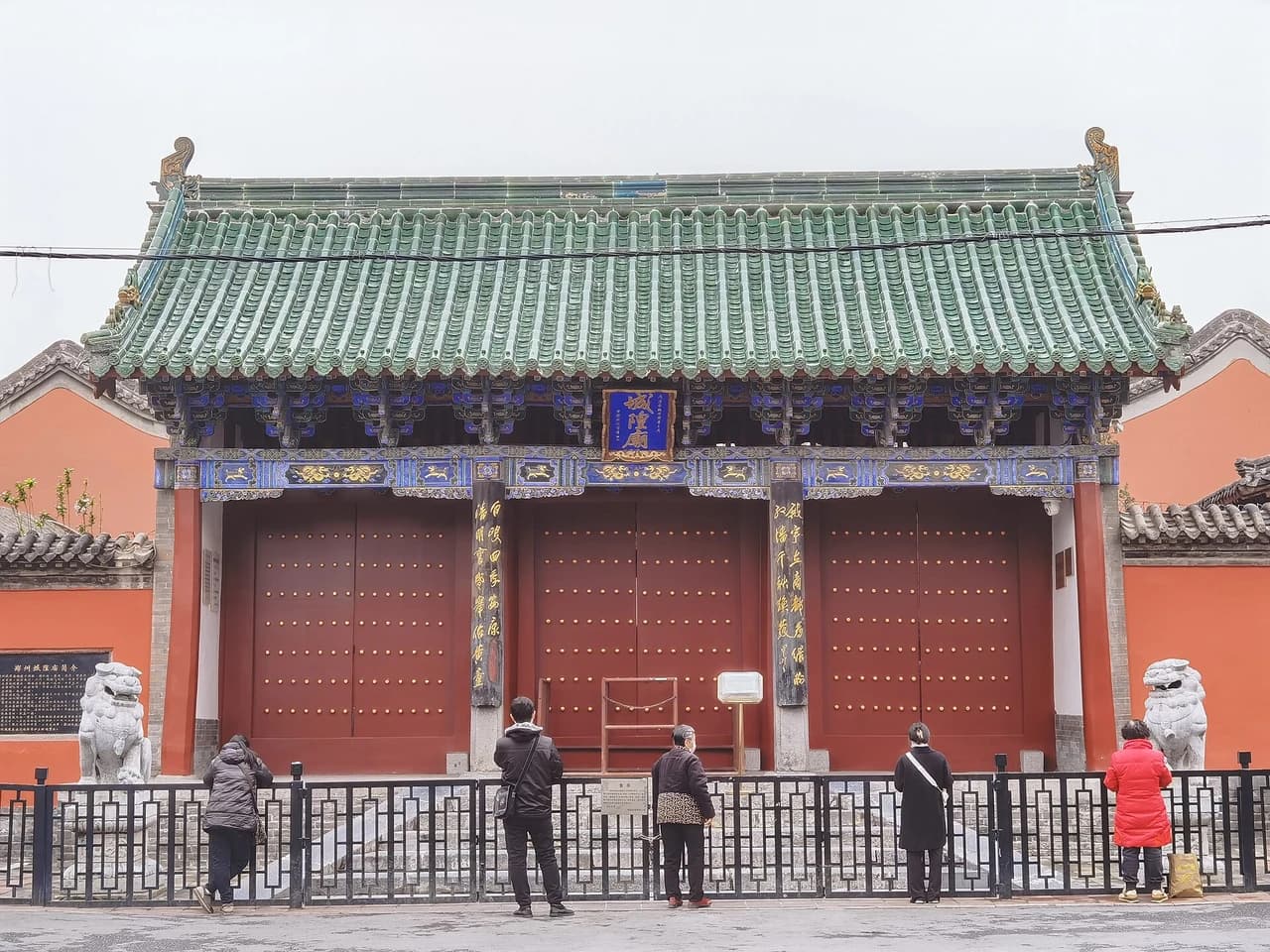
Zhengzhou City God Temple
郑州城隍庙
The Zhengzhou City God's Temple was built during the Hongwu period of the Ming Dynasty, more than 600 years ago. It is the largest and best-preserved ancient building complex of the Ming and Qing Dynasties in Zhengzhou and a national key cultural protection unit. The temple is dedicated to the loyalty and martyrs of the Han Dynasty and is revered as the patron saint of Zhengzhou City God. Along the central axis are arranged the mountain gate, the instrument gate, the theater building, the main hall, and the back sleeping hall. The ancient theater building (double mountain-style, glazed tile roof) is the core essence.