
桂林
Guilin
Guilin is a compact landscape city surrounded by protruding limestone peaks, caves and urban lakes. It is not only suitable for observing the urban karst landscape, but also a transportation base to the Li River, Longji Rice Terraces and the northern Guangxi region; when planning, the actual driving distance and seasonal water levels are often as important as the distance on the map.
At a glance
- Stay
- 3–4 days
- Best seasons
- Apr–May, Sep–Nov
- Airports
- Rail or road access
- Region
- South China
Last updated: 9/29/2026
First visit
Arrive and settle in Guilin
Start with arrival and where to stay, then choose your sights. Recheck transport and accommodation details before booking.
Getting there+
Liangjiang (KWL) has flights from the major cities. High-speed trains stop at Guilin (several stations; Guilin West and Guilin North are the main ones) and at Yangshuo station, which is actually in Xingping, 40 minutes from Yangshuo town by bus.
Rail tip. Your passport is your ticket. Book on 12306 or Trip.com, then go straight to the gate. See Getting around. The Trip.com link earns us a small commission at no cost to you (how that works).
Stay online. Google, WhatsApp and Instagram are blocked on Chinese networks; a travel eSIM that roams gets around it. Install one before you fly — Saily takes US$5 off a first plan with the code CHINA. See Staying online. The code earns us the same amount in Saily credits, at no cost to you (how that works).
Where to stay+
Yangshuo countryside
阳朔乡村
Guesthouses among the peaks along the Yulong River. The reason you came.
Villages like Jiuxian and Chaolong, ten to twenty minutes from town. Bikes, river bends, and nothing to do after dark, which is the point.
scenerycyclingquiet
Xingping
兴坪
Old river town at the best stretch of the Li. Sleepy after the day-trippers leave.
The twenty-yuan view is a short walk away. Good for a night or two; limited restaurants.
river viewsquiet
Guilin city centre
桂林市区
Around Two Rivers and Four Lakes. Convenient for transport, one night is enough.
Fine for arrival or departure days. The lakes are pleasant in the evening.
transitconvenience
Booking. Compare hotels in Guilin on Trip.com, filtered to its China travel essentials list: English-speaking staff, foreign cards, guest rating 8 or higher. See Where to stay. Booking through this link earns us a small commission at no cost to you (how that works).
Overview+
HUNANGUANGDONGHAINANGUIZHOUHONG KONGMACAUGuilin
Guilin is a pleasant mid-sized city with limestone peaks poking up between the buildings, but the reason to come is the Li River and the karst country south of it. The classic plan is a morning boat or bamboo raft downstream, then a few nights in Yangshuo or one of the villages nearby.
Yangshuo town itself is loud. The villages along the Yulong River, ten minutes away, are not. Rent a bike or an electric scooter and spend your days between rice paddies and peaks.
Summer is hot and wet; the river is highest and greenest. Winter is grey and the water low. Spring and autumn are the compromise.
Where next?
Save places you like, then use your saved list to build a trip.
Practical travel guides
Places to explore in Guilin
Li River cruise
漓江
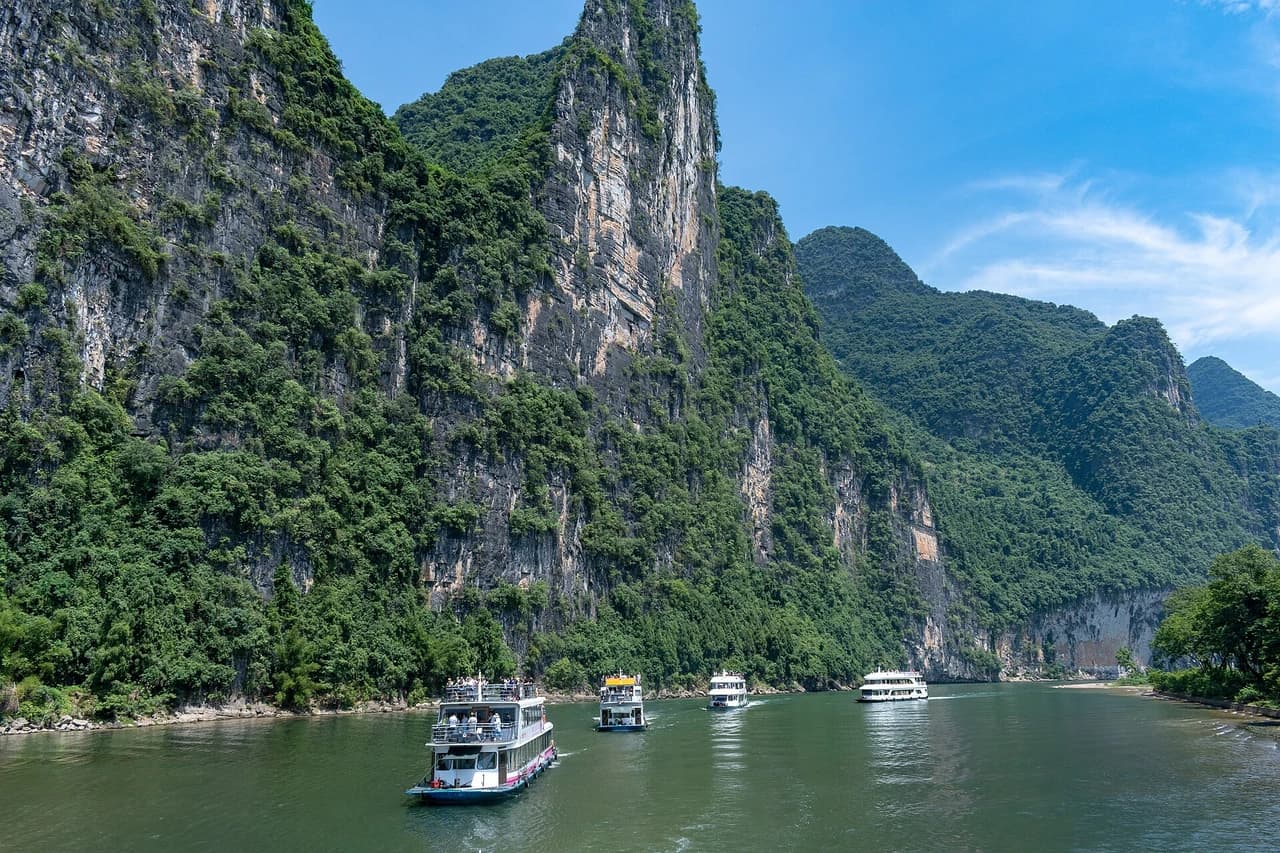
Li River cruises sail along the karst landscape from Guilin to Yangshuo. It is a common way to observe the peak forests, villages and river bays on both sides of the river. Route, dock and water level conditions may vary.
Xianggong Mountain
相公山
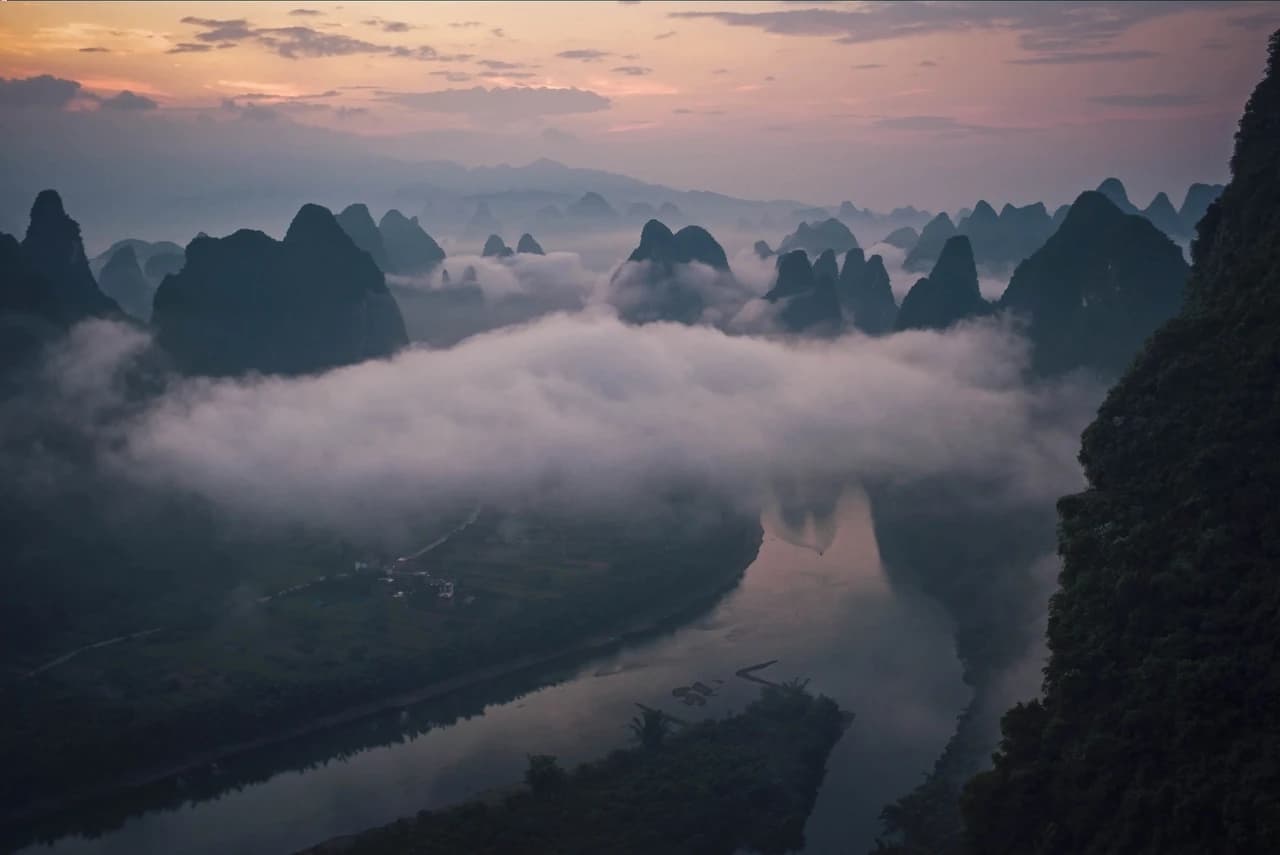
Xianggong Mountain is located in Xingping Town, Yangshuo County. It is a classic vantage point for viewing the first bay of the Li River. It is also a popular spot for watching the sunrise over the landscape of Guilin. The highlights are: Panoramic view of the first bay of the Li River: Climb to the top and overlook the big bend of the Li River and the spread of karst peaks and forests. The view is extremely broad. Sunrise in the sea of clouds: The sea of clouds rolls in the early morning, the mountains are gilded, and the probability of sunshine is the highest after the rain.
Yulong River
遇龙河
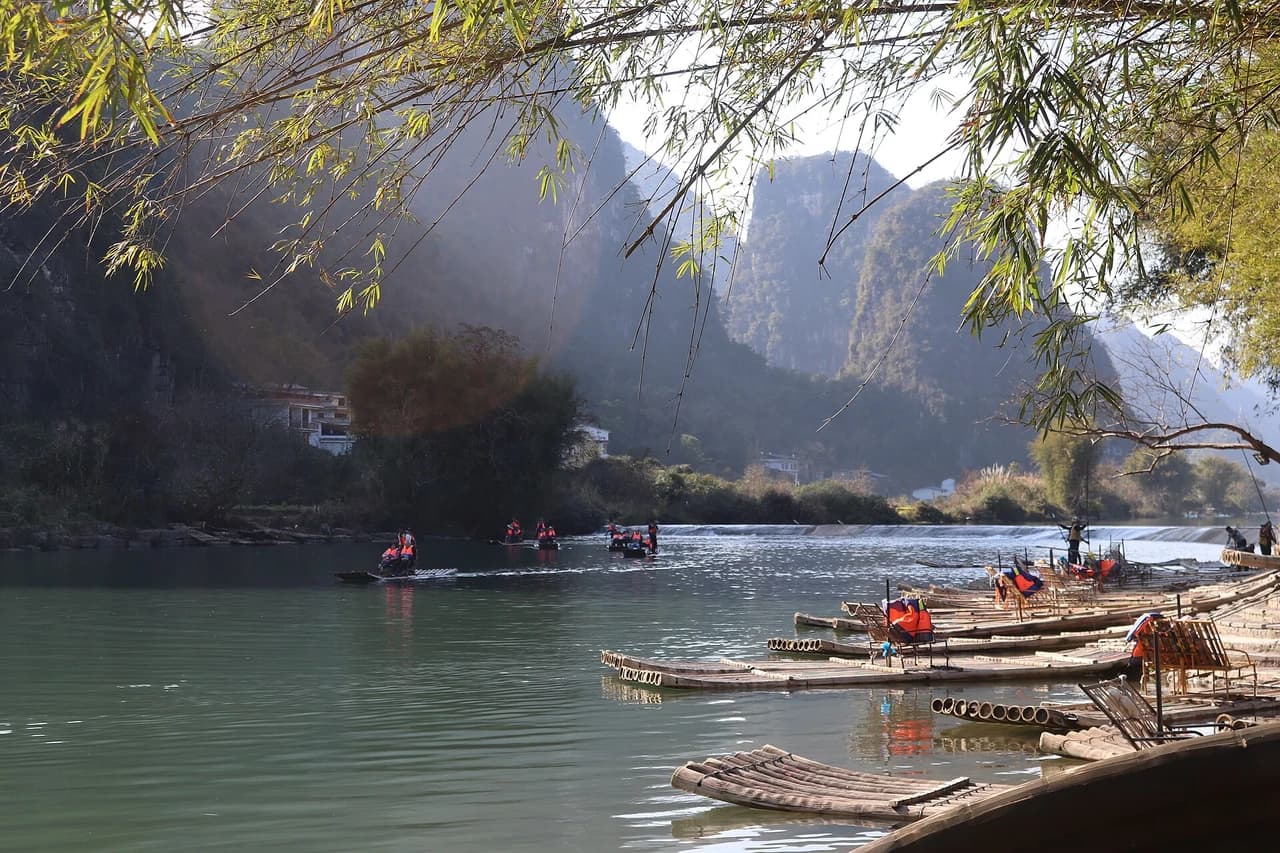
The Yulong River is a tributary of the Li River and is known as the "Little Li River". It has artificial bamboo rafts and large non-motorized boats throughout the entire journey. Karst peaks, rice fields and ancient villages are scattered on both sides of the river, creating a pastoral atmosphere. Highlights are concentrated in: Jinlong Bridge → Jiuxian County: a classic long line, about 6 kilometers, 9 dams, the most beautiful scenery and a wide river. Shui'erdi → Comprehensive Pier: The short-term essence, about 3 kilometers, 4 dams, and the most scenic section of Shili Gallery.

Two Rivers and Four Lakes–Elephant Hill Scenic Area
两江四湖·象山景区
This scenic area links Guilin’s urban waterways with Elephant Trunk Hill. Lakeside walks and boat trips offer different perspectives, with the Sun and Moon Twin Pagodas on Shan Lake among the landmarks. The current gallery mainly shows Shan Lake within the Two Rivers and Four Lakes area; Elephant Trunk Hill has a separate page. The gallery is not comprehensive coverage of the entire scenic area.

Elephant Trunk Hill
象鼻山
Elephant Trunk Hill is located where the Taohua River merges into the Li River. The entrance to the waterfront forms an outline that resembles an elephant drinking water, and has long been a symbol of Guilin. Shuiyue Cave, the inscriptions of past dynasties and the Ming Dynasty Puxian Pagoda on the top of the mountain add a humanistic layer to the compact peak; observing the overall landscape from the surrounding river banks is usually clearer than just rushing up the mountain.
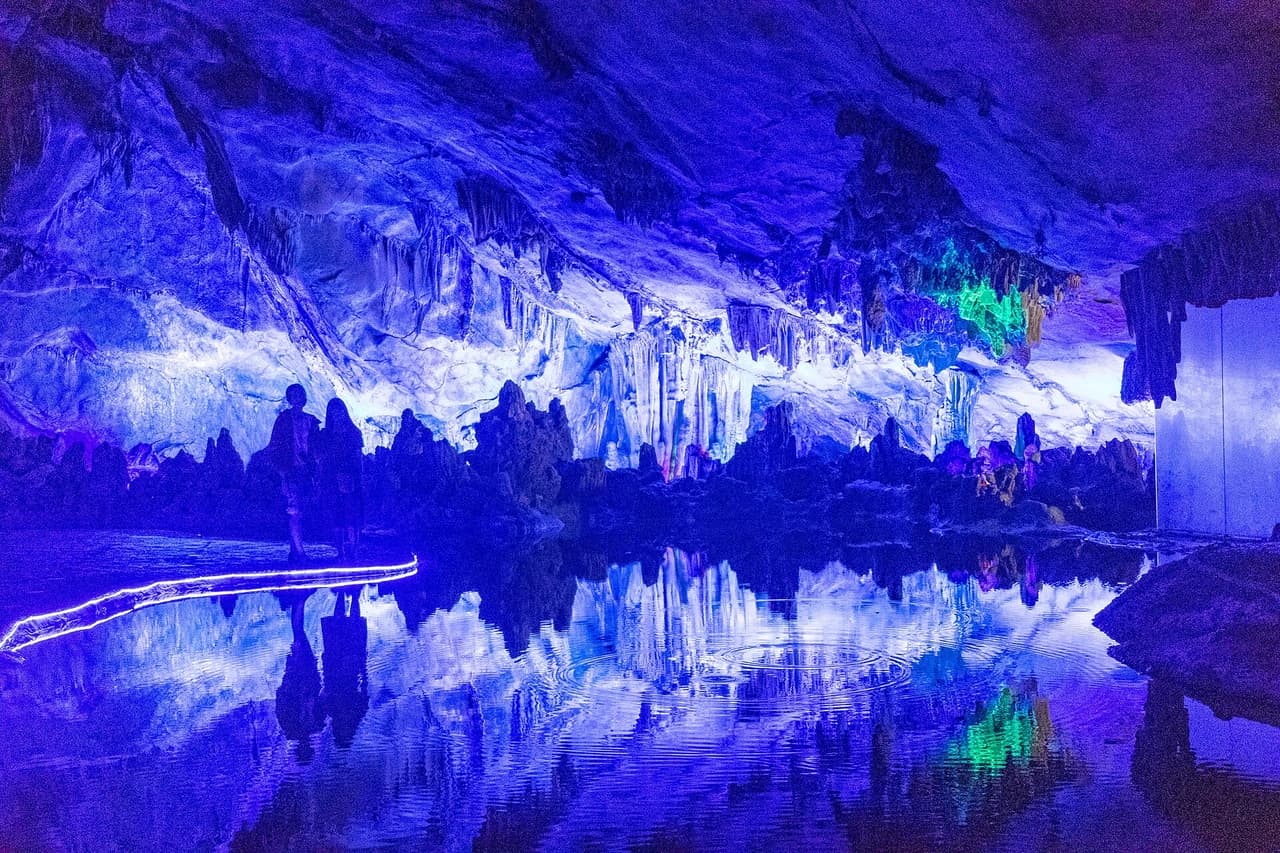
Reed Flute Cave
芦笛岩
Reed Flute Cave is a water-eroded limestone cave in the northwest of Guilin's central city. The controlled walking route passes stalactites, pillars and flowstones, with traditional site names reflecting the imagination of the place, while inscriptions on the cave walls illustrate that this place has attracted visitors for a long time before the advent of modern colored lights. Geological formations and cultural interpretation deserve more attention than lighting effects.

Li River Scenic Route
漓江山水游览线
The Li River flows south from Guilin through peak forests and villages to Yangshuo. The independent limestone peaks, cliffs, shoals and reflections will change with the water level and weather, forming a constantly moving landscape sequence. Regular boat tours, local rafting and shore walks are completely different experiences and should not be confused as one product.

Longji Rice Terraces
龙脊梯田
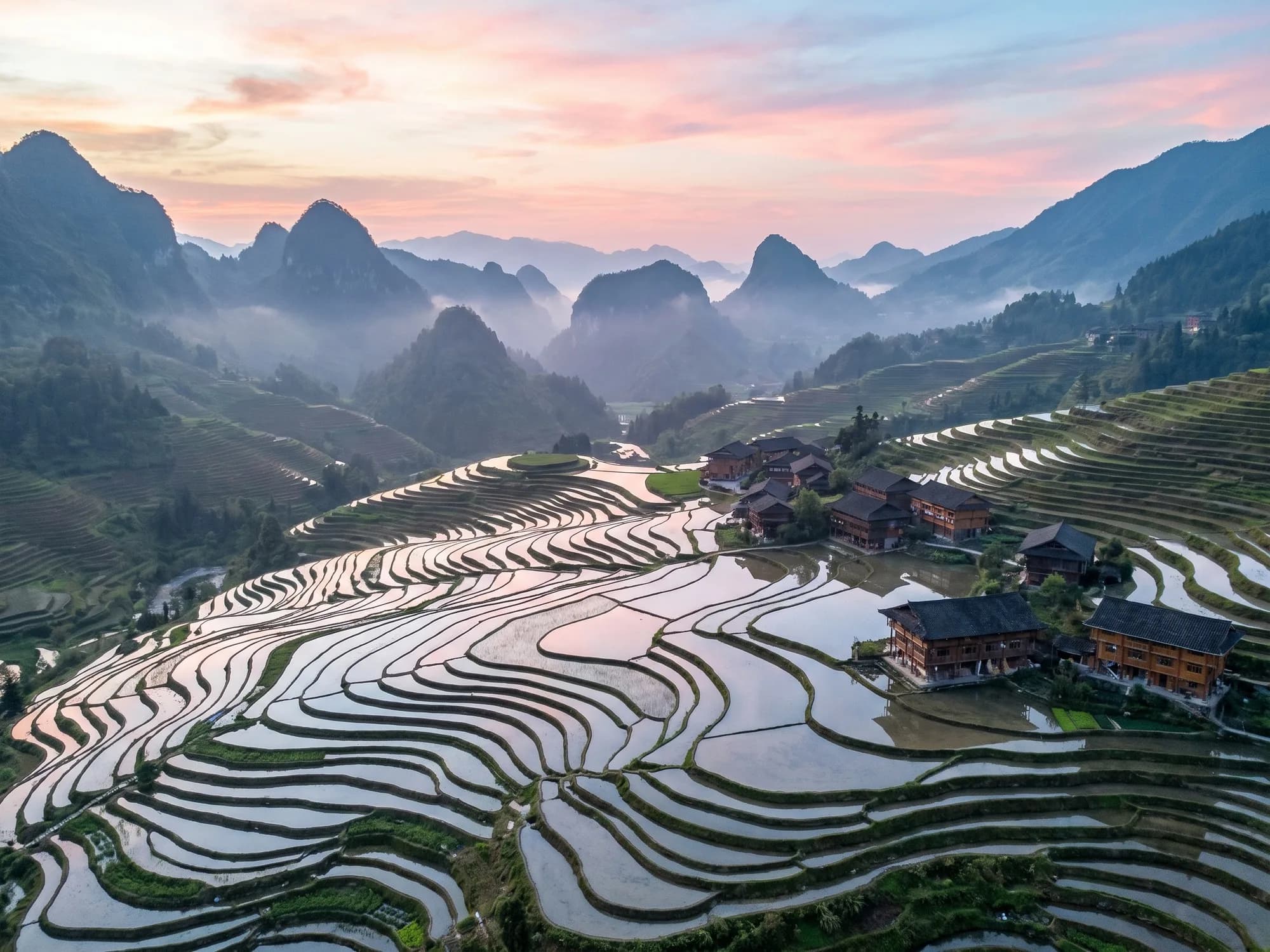
The Longji Rice Terraces are spread out in layers along the steep hillsides surrounding Zhuang and Yao villages. The irrigation of paddy fields, green rice seedlings, golden harvests and winter fallows change with the farming season, so this is first and foremost a farmland continuously cultivated by the community, rather than a postcard that remains unchanged throughout the year. The routes and viewing spots of Ping'an Rice Terraces and Jinkeng Dazhai are also different.

Jingjiang Princes' City and Solitary Beauty Peak
靖江王城与独秀峰
Jingjiang Imperial City was the seat of the Jingjiang Prince's Palace in the Ming Dynasty. It was built with Duxiu Peak in the center of Guilin as its core. Preserving the city walls, gate towers, later institutional uses and mountain inscriptions connects the vassal system with Guilin's karst urban environment; climbing the peak allows you to observe how the historical city developed among the isolated peaks from a compact scale.
Local snacks
What to eat in Guilin
These cards describe dishes, not restaurants.

Braised, salty, sour and refreshing, you can add spiciness to your taste
Guilin Rice Noodles
桂林米粉
Round rice noodles are mixed with concentrated brine and served with cut meat, fried soybeans or peanuts and sauerkraut; clear soup is usually added, and not all Guilin rice noodles appear in the form of soup noodles.
Mix the dry powder well first and then gradually add ingredients; if necessary, confirm the type of peanuts and meat.

Baked aroma, ginger aroma, herbal slightly bitter
Guilin Oil Tea
桂林油茶
Tea leaves, ginger and spices are beaten into a hot drink with a slight bitter aroma, served with fried rice, peanuts and crispy snacks. It originates from northern Guangxi and its ethnic food tradition, and is not a sweet milk tea.
You can try a small bowl for the first time. There are obvious differences in different recipes. Those who are allergic to peanuts need to confirm the ingredients.

Rich and salty, slightly sweet and glutinous
Lipu Taro with Pork Belly
荔浦芋扣肉
Pork belly and glutinous Lipu taro slices are stacked alternately and steamed until the flavors are blended. It is a common banquet dish in Guangxi. The richness of the meat is in obvious contrast with the taro that absorbs the soup.
Dishes are solid and generally suitable for sharing; check for fermented bean curd seasoning and pork if you have dietary restrictions.

Sweet, refreshing, soft and crispy
Water Chestnut Cake
马蹄糕
Water chestnut powder and fresh water chestnuts are condensed into a translucent cake with a refreshing taste and crispy texture. It can be steamed or lightly fried.
Suitable for fresh consumption, please ask whether it is steamed or fried, and whether to add syrup.